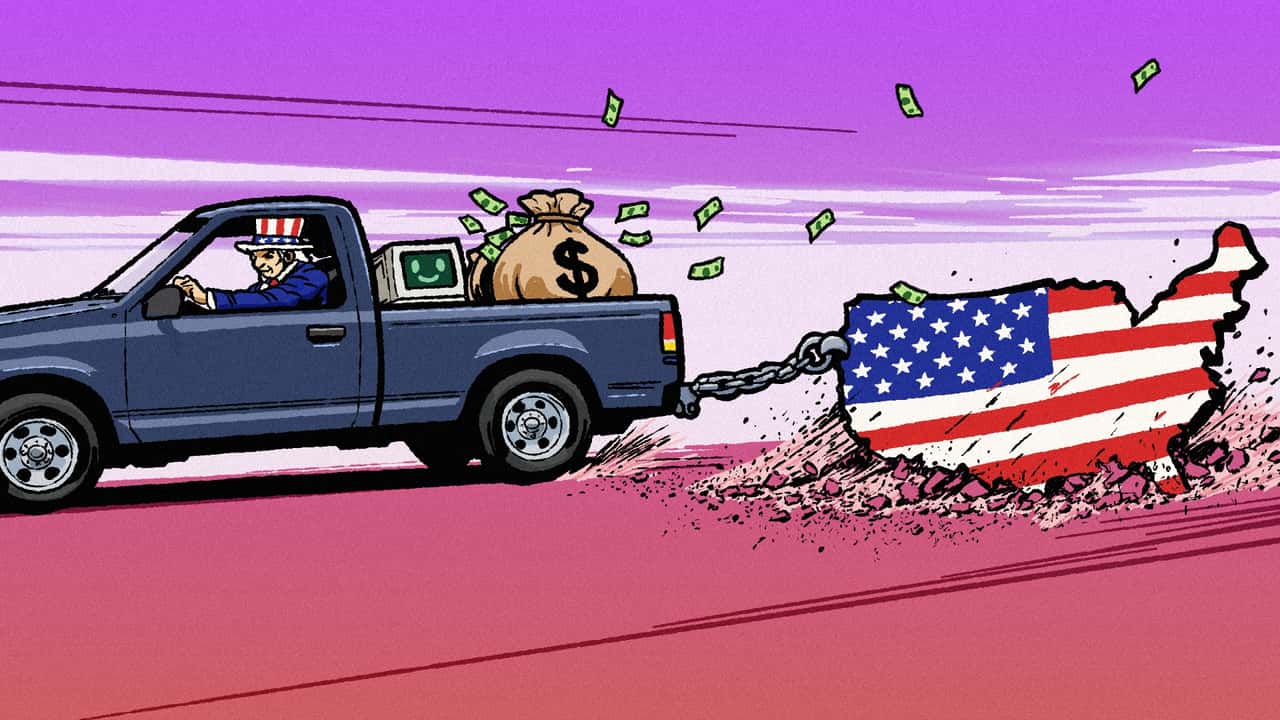
Skyrocketing prices, AI-packed cars, and the return of gas engines could make for an unpredictable year.
Welcome to 2026, glad you could make it. As we close the chapter on a tumultuous year riddled by high prices and political uncertainty, we’re holding out hope that 2026 is a much better one for the auto industry all around. Fingers crossed.
So, what can we expect for the new year? With software-defined vehicles on the rise, big questions surrounding artificial intelligence, and the surprising return of the combustion engine, there’s plenty still left unanswered as the industry looks to find its identity in 2026.
We won’t claim to have all the answers—but we do have some ideas as to what could shape the auto industry this year.
AI is already in your smartphones and TVs, and soon it will be in your car—if it isn’t already. Brands like Hyundai, Kia, Lucid, Mercedes-Benz, and Volkswagen already offer AI-powered features for things like navigation and voice control, with Ford and Stellantis not too far behind.
But as vehicles become more software-driven (more on that in a minute), AI’s integration will only improve. Your car could soon predict maintenance needs, detect potential road hazards, and even make hands-free driving safer.
Over the next few years, AI won’t just be a quirky feature—it will be deeply integrated into every single new car that’s on the road. For better or worse.
You probably heard the term “software-defined vehicle” a lot in 2025—or SDV for short. Simply put: A software-defined vehicle is more than a car with a fancy touchscreen; it controls everything, from the AC and infotainment system to the brakes. All of it can be updated over the air, learning from your driving habits, and improving over time.
But apart from a few early pioneers like Rivian and Tesla, SDVs haven’t really taken off in the mainstream. Most of the conversations that happened in 2025 were little more than marketing jargon. That’s bound to change in 2026 and beyond.
What exactly does that mean for you, the consumer? The changes might start small: smarter smartphone integration and better in-car features. But over time, SDVs could represent a major shift in how vehicles are designed, built, and bought. And we could see some major breakthroughs this year.
It almost sounds counterintuitive to say that buttons will make a big comeback right after talking about how software and AI will define the next generation of vehicles. But the ideas aren’t necessarily mutually exclusive.
Simply put, consumers are tired of fiddling with touchscreens while driving. And automakers are finally taking note. Companies like Hyundai, Mercedes-Benz, and even Ferrari have already started adding tactile dials for things like volume and climate control back into their vehicles. That concept is likely to expand into 2026.
Not only do hard buttons make for a better in-car experience, but as the data shows, it also makes driving that much safer. Some studies suggested that drivers linger on screen for an average of 40 seconds. More and better buttons should be able to fix that.
The average new car price in the US still sits at around $50,000, with monthly payments near $750. Making cars cheaper in America won’t be as simple as flipping a switch—no matter how much President Trump tries.
Rising costs, ongoing tariffs, and inflation continue to squeeze buyers. Affordability was one of the biggest issues of 2025, and it’s not bound to get much better this year. Unless something dramatic happens, more buyers are likely to be forced into lengthy loans with higher interest rates in 2026, pushing the average even higher.
In this case, I hope I’m wrong.
Despite the EV hype over the last few years, 2026 will see a renewed focus on combustion engines. Ram revived the Hemi, Chevy is working on a new V8, and even some German automakers have promised next-generation combustion engines.
But it’s not just big, powerful V8s on the horizon—hybrids and plug-in hybrids should see a revival too. Brands like Honda are already designing gas engines specifically for use in hybrid vehicles, while other companies are shifting their focus from EVs.
Yes, EV adoption is still growing globally. But as consumer woes and affordability issues linger in the US, the gas engine is bound to make a comeback in a big way. Don’t expect it to disappear anytime soon.
Chinese automakers haven’t flooded US roads yet, largely due to political tensions and security concerns. But low prices and impressive technology could make them serious contenders by the end of the decade. One of China’s biggest auto conglomerates, Geely, said it’s already planning to build Chinese cars Stateside.
Admittedly, we won’t see Chinese cars on the road in 2026—or really anytime soon. But Geely’s recent statement makes it clear that Chinese automakers are serious about bringing their brands to America. It’s only a matter of time.
The bottom line is that 2026 could be another tough one for the auto industry. Messy politics and rapidly emerging technologies could leave some automakers scrambling as they look to find more of a steadier footing than they did toward the tail end of 2025.
Granted, it’s impossible to predict exactly what will define the new year. But buckle up, it’s bound to get bumpy.
Here’s What We Think
We want your opinion!
What would you like to see on Motor1.com?
– The Motor1.com Team