
Safety

Disney Releases More Details On Its New Cars-Themed Land
Say hello to Piston Peak National Park.
Last year, Disney announced an entire land dedicated to Pixar’s Cars at its Magic Kingdom Park in Orlando. Aside from a few illustrations that, actually, looked pretty awesome, the details were otherwise scarce. But today, the company has revealed new information on its next big expansion—including a name.
Say goodbye to Tom Sawyer Island and the Rivers of America (RIP), and say hello to Piston Peak National Park (which, you probably don’t remember, was a real place in Disney’s Planes: Fire & Rescue movie). The new Cars area will be ripe with thick pine forests and snowy mountain peaks, and include a river that runs through the entire land. It will be the largest expansion in the history of the Magic Kingdom.
Disney Imagineers drew inspiration from America’s national parks for this new land, with the Piston Peak mountain range inspired by Colorado’s Rocky Mountains. The faux national park will also include a visitor’s lodge, a Ranger headquarters, and walking trails alongside two designated Cars attractions.
The first attraction, an off-road rally-style ride, will allow guests to weave through the forests and over Piston Peak on a trackless ride vehicle with new characters from the Cars franchise. Disney promises it will be “just like a real race.” A second, yet-to-be-named attraction will be geared toward smaller children and families.
Piston Peak National Park will extend from Liberty Square all the way to Tiana’s Bayou Adventure and toward the updated Thunder Mountain Railroad roller coaster, which is set to re-open sometime in 2026. Guests who want to experience Tom Sawyer Island and the Riverboat before work begins on the new land have until July 7.
Disney hasn’t said exactly when the new land will open. But for such a massive expansion, don’t expect to see anything until at least 2027 or 2028.
More Movie Cars

News
Mercedes Driver Goes To The Dealership For New Windshield. They Say It’ll Be $4,500: ‘Take Care Of It For Me’
“For a windshield for an S580.”
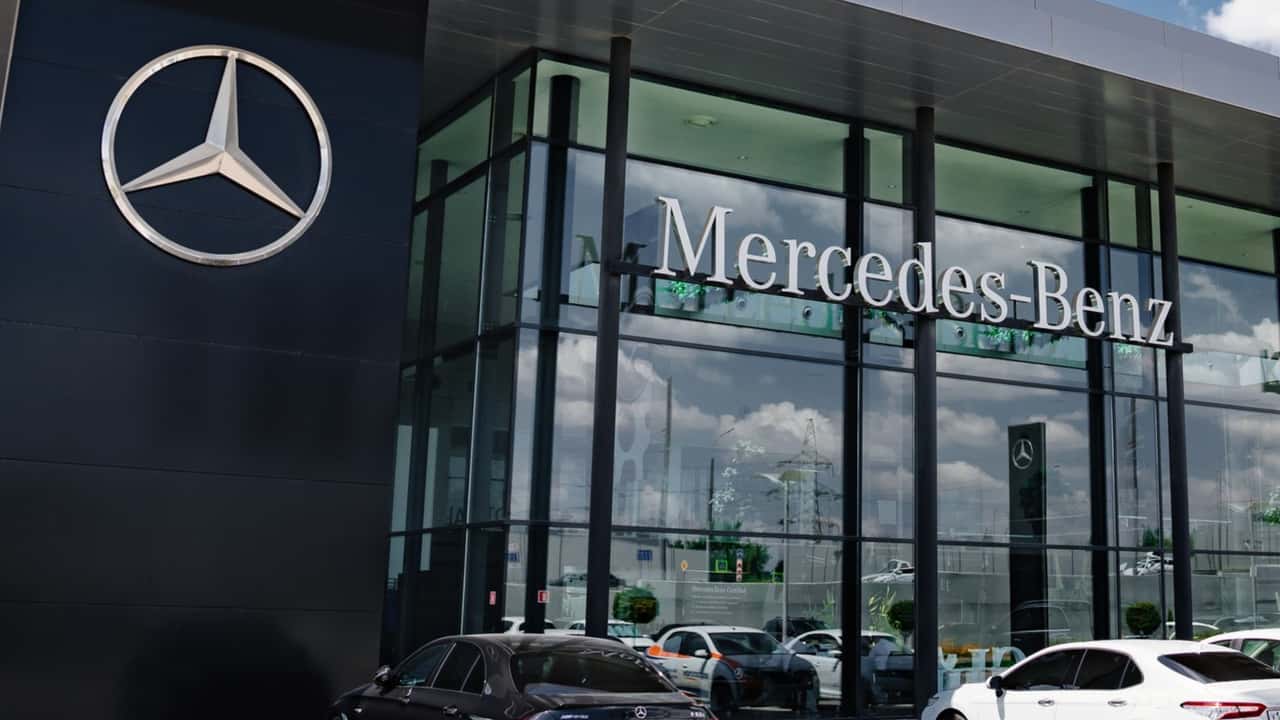
A man says a Mercedes-Benz dealer quoted him $4,500 to replace the cracked windshield on his S580, then told him to file a claim on the protection plan he had already paid for. He went down to the dealership in person, and three days later, he says, the work was approved at no cost to him.
Mr Wiley (@bossmangrandpa), a retired postmaster and Vietnam veteran who posts about his life and his opinions on TikTok, filmed the video at the dealership. As of this writing, it has been viewed more than 13,100 times.
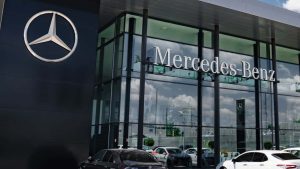
“I’m here at the Mercedes-Benz dealership,” he says. He had dropped the car off that morning with a cracked windshield and a window that wouldn’t go up. Then he got a call from the service manager, who purportedly said, “The repair, the windshield, is going to be $4,563.56.”
He says he reminded them that “I bought that package.”
“He said, well, you need to make a claim,” Wiley continues. “So I said, well, I’m not making anything.” Instead he went to the dealership and “turned it over to the manager,” who “said he’s going to take care of it for me. We’ll see. I’ll keep you posted.”
He repeats the figure before signing off. “For a windshield for an S580,” he says. “Think about it before you go down there and buy one.”
In a follow-up posted the same day, he explains that he paid $5,515 up front for a road hazard plan that covers the windshield with no deductible, and $5,135 for maintenance. “So don’t even know why you called me. Should have just fixed it,” he says. He bought both, he explains, because “I’ve lived here in Houston, and I know that you gonna bust some tires, you gonna bust some windshield.”
By Oct. 16, he told viewers the replacement had been approved with no deductible and wouldn’t cost him anything. In a later video, he said the approval came the day after he told the dealership it would owe him $95 a day in rental reimbursement while it made up its mind, and that the glass would be replaced the following week.
He also explained what makes the glass expensive. His windshield carries the head-up display that projects his speed, the speed limit and navigation directions in front of him. Glassmaker NSG announced in 2021 that Mercedes had picked it to supply glass for the S-Class’s augmented-reality head-up display, which it called “the world’s first Head Up Display powered by Augmented Reality,” with “solar reflecting technology that de-ices the windscreen using invisible heating.”
Cars with driver-assistance cameras behind the glass add a further step. AAA found in a 2023 study that replacing the windshield on a car with automatic emergency braking, adaptive cruise control and lane departure warning added “$360 to transfer and calibrate” the windshield-mounted camera.
That came up in the comments. aglenn55pa, who said they work for a windshield company, wrote that “for Mercedes-Benz, you’re looking at a total no more than five hundred dollars.” voss119 disagreed: “2013 and up have to be calibrated. Starting at $1,400 from Safelite.” jmeeksiii sided with the dealer: “He wants an OEM windshield, not that cheap Safelite ish!” midget_81 offered a data point: “I paid 3,300. I got a 2023 S580 in Mississippi.”
Mercedes-Benz sells its own windshield plan: First Class Windshield Protection. A 2024 brochure promises “no deductible” and original Mercedes-Benz glass, caps the “maximum aggregate claim benefit” at $8,000, and says “prior claim authorization” is required. It also says the plan “is not available for purchase in Arizona, Florida, Georgia, Maine, New York, Texas and Wyoming,” so his Houston plan probably came from a different provider. He hasn’t said who issued it.
He is now asking the same questions about his own contract. In a video posted on Oct. 22, he said he had heard his plans cover only up to a certain amount, and that he plans to film a visit to the dealership’s finance office to find out what the limits are.
Some viewers thought his car insurance should have handled it. “Shouldn’t it be covered by your auto insurance policy?” asked arthurdaylmft. “Unc, with insurance, windshield replacements are free,” wrote big.poppa953. user324808091 said that depends on where you live: “I live in Florida and my windshield is free, but in Georgia my momma had to pay her insurance deductible.” Florida writes that into state law, which says the deductible on comprehensive coverage “shall not be applicable to damage to the windshield.”
Wiley said he’d keep his followers posted. “Pay it up front, get over it, and then for the next few years you don’t have to worry about it,” he says of his plans. “That’s how I look at it.”
Motor1 reached out to Wiley via TikTok direct message for comment. We’ll be sure to update this if he responds.
We want your opinion!
What would you like to see on Motor1.com?
– The Motor1.com Team