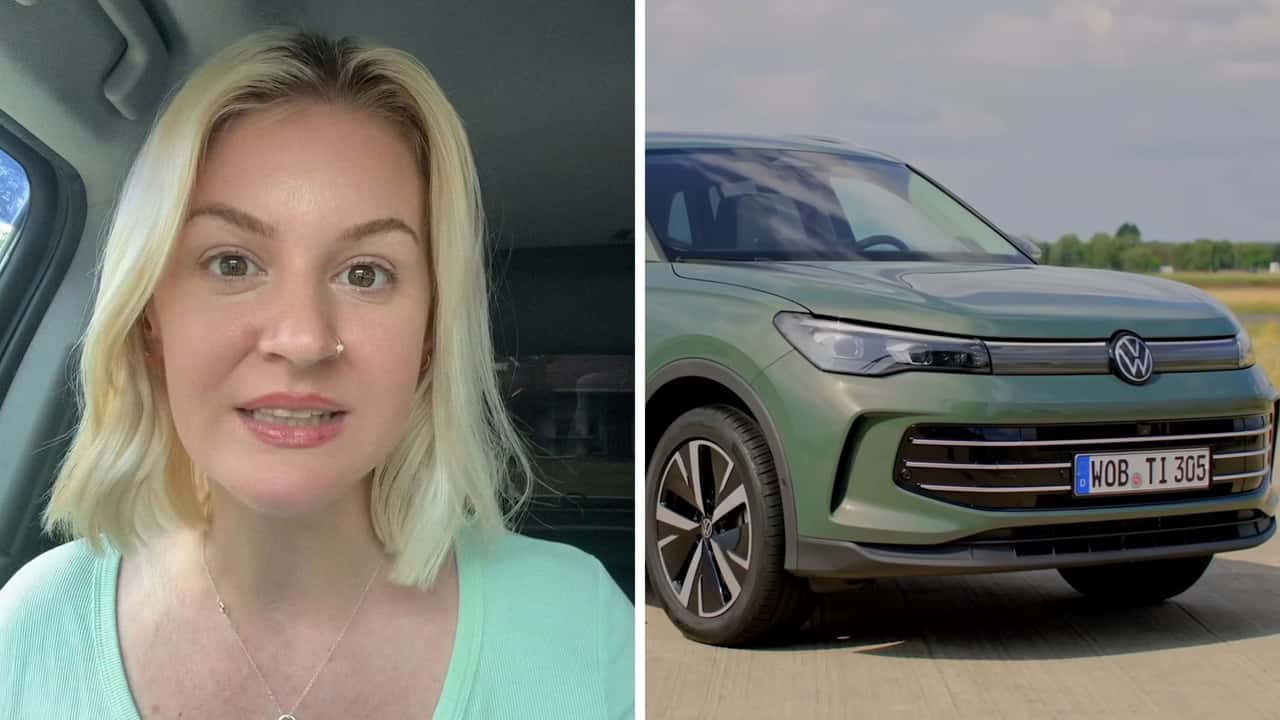
“I feel like I should have never bought a Volkswagen.”
Most drivers assume a warranty follows the car. One Volkswagen owner took to TikTok after she learned the hard way that sometimes it stays with the dealership instead.
That difference can mean paying twice for the same problem.
The clip from creator Hannah Banana (@hannnahh_bananaa) touches on the finer legal details of warranty language and the problems plaguing her family’s 2018 Tiguan. It makes you wonder if it’s worth driving 14 hours round-trip to try (unsuccessfully) to save some money on a repair that’s supposed to be covered.
“I’m pretty sure that I have been scammed by Volkswagen,” she says in the clip. “This is a brand that cannot stand behind their product. I feel like I’ve been given the runaround… I feel like I should have never bought a Volkswagen in the first place.”
According to Hannah, the saga began in 2024 when the EPC warning light illuminated on her Tiguan. EPC lights can indicate a range of engine-management or throttle-related issues in modern Volkswagens, and are commonly associated with turbocharged powertrains, according to Volkswagen service documentation.
The couple took the crossover to a dealership, where they were told the turbocharger had failed. The repair cost was just over $3,000, which they paid out of pocket.
Like many dealer-installed replacement parts, the turbo carried its own limited warranty separate from the vehicle’s original factory coverage.
At the time, the repair appeared to resolve the issue.
Fast forward to December 2025, and the EPC light returned. By then, Hannah and her husband had moved to another state, so the Tiguan was taken to a different Volkswagen dealership for diagnosis.
This dealership again pointed to the turbocharger. When Hannah mentioned the warranty on the replacement part, staff initially told her it had expired, citing a 12,000-mile or one-year limit. But after reviewing the paperwork more closely, the dealership acknowledged that the language on the invoice stated “12,000 miles or one year, whichever comes last.”
Despite this, she says the dealership declined to honor the warranty, claiming that it was issued by the original repair location and could only be serviced there.
That distinction between a manufacturer-wide warranty and a dealer-specific parts warranty is a frequent source of confusion. While Volkswagen dealers share branding and service standards, they operate as independent franchises, a structure that allows individual dealers to set policies around labor reimbursement and warranty administration.
After several calls and escalations, the original dealership agreed to inspect the vehicle under the replacement warranty. That decision sent Hannah’s husband on a one-way, seven-hour trip to Georgia.
After three weeks at the shop, the dealership contacted the couple with another update: the turbocharger was no longer the problem. Instead, a nearby component “related to the turbo” needed to be replaced. Because it wasn’t the turbo itself, the repair would not be covered. The cost: $1,800.
Hannah said the explanation felt too convenient to trust, but with little leverage and mounting frustration, they authorized the work.
When Hannah’s husband arrived to retrieve the Tiguan, he asked the dealership for reassurance that the EPC issue wouldn’t later be reclassified again as a turbo failure, effectively running out the warranty clock. He was told no such assurance could be provided.
Moments later, the vehicle wouldn’t start.
Dealership staff jump-started the car and told him the issue was likely due to the vehicle sitting for weeks. They declined to test or replace the battery before he began the long drive home, Hannah says, advising him to call if he ran into trouble.
Hours later, after stopping at a family member’s house, the Tiguan failed to start again. When he called the dealership, he was told he’d have to tow the vehicle back to replace the battery at a cost of roughly $400 out of pocket.
Cases like this highlight a disconnect between consumer expectations and how dealership warranties actually function. While federal lemon laws protect against repeated defects in new vehicles, they generally do not apply to out-of-warranty repairs or dealer-installed replacement parts. The Federal Trade Commission advises consumers to review whether a repair warranty is backed by the manufacturer or the dealer, and whether it includes nationwide coverage, before authorizing major work.
The TikTok comments quickly filled with frustration. Many commenters were less focused on Volkswagen specifically than on dealership service more broadly.
“Never take your car to the dealership!” Viviana wrote.
Several users pointed to the franchise model as the root of the problem, arguing that consumers often mistake brand logos for unified accountability.
A self-described mechanic agreed, writing, “It’s the dealer not the manufacture, joys of franchises.”
Others debated whether independent repair shops or German-car specialists might have avoided the situation altogether, while international commenters expressed surprise at how limited US repair warranties can be compared to European standards. In countries like Finland, for example, Volkswagen vehicles are sold with multi-year factory warranties that are not tied to individual dealerships, according to Volkswagen Europe’s published warranty terms.
“First problem, you’re taking it to a dealership. Try an independent garage,” Dusty advised.
Motor1 contacted Hannah via TikTok direct message and comment. We’ll update this article if she responds.
We want your opinion!
What would you like to see on Motor1.com?
– The Motor1.com Team