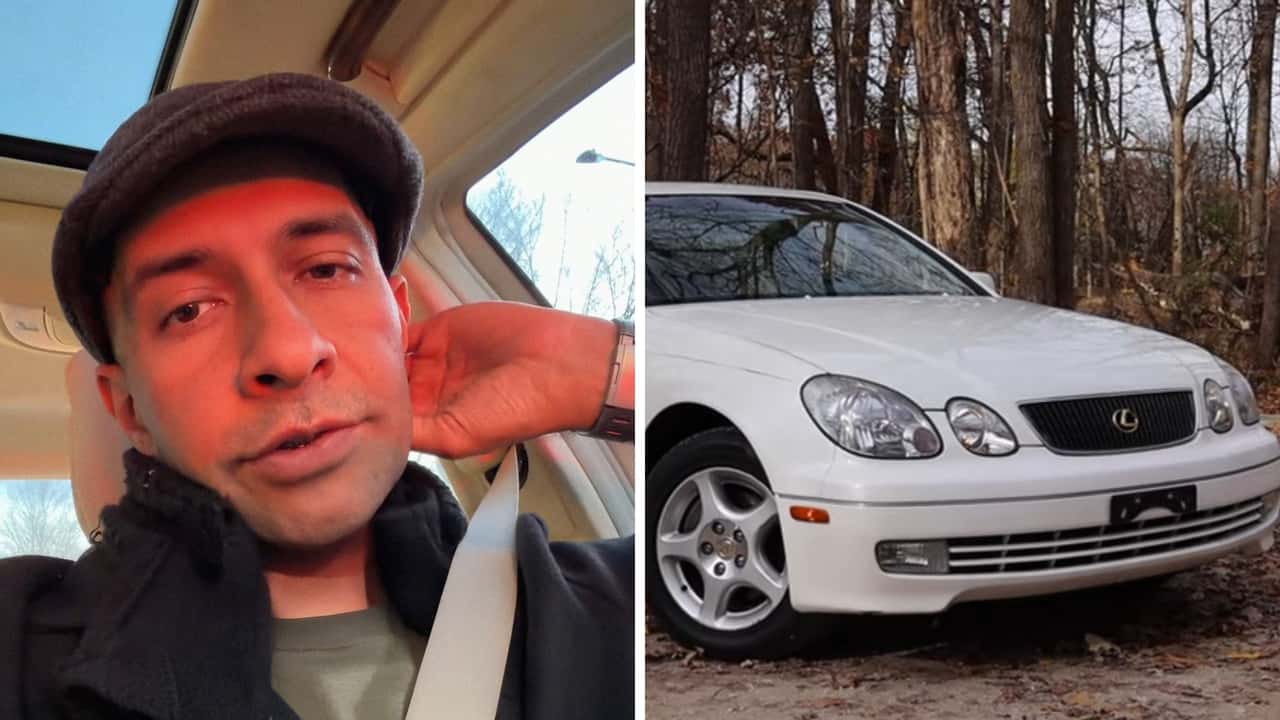
“Thank God…”
A staggering $9,000 repair quote from a Lexus dealership for a car that was running perfectly fine has ignited a debate about dealership service departments versus independent mechanics. Crashmeter (@crashmeter), an aspiring automotive influencer who documents his experiences with affordable luxury cars, shared his eye-opening experience in a TikTok video that has garnered more than 9,300 views since it was posted on Jan. 15.
“I hope you’re sitting down. I got some news for you. Your car’s going to need a lot of work,” the Lexus service advisor told him about his GS 400, according to Crashmeter’s account in the video.
The problem? The car was running perfectly with no warning lights, no issues, and had recently been inspected by his trusted mechanic before purchase.
Crashmeter explains in the video that he brought his Lexus GS 400 to the dealership for routine maintenance—an oil change and detailing. What should have been a simple service call turned into what he says was a big upsell.
“The car’s running perfectly. No lights on, no issues, no nothing. I had my trusted family mechanic look it over before I bought it. It’s totally fine,” he says in the TikTok. “What are you talking about?”
The service advisor proceeded to run down a list of items that allegedly needed replacement or repair, totaling $9,000. Rather than authorizing the work immediately, Crashmeter requested the written estimate and told them he’d think it over.
He picked up the car without having any work done and drove it straight to his independent mechanic for a second opinion—a move AAA recommends when a quote seems unusually high or includes unexpected repairs.
“He looks around, looks at the car, looks at the list. He’s like, ‘It doesn’t need anything. It’s not leaking any oils, not leaking any fluids. Everything’s up to spec. Like, no suspension work required, nothing,’” Crashmeter says in the video.
The contrast couldn’t be starker: $9,000 in “necessary” repairs according to the dealership, versus essentially nothing wrong according to an independent inspection.
Crashmeter uses his experience to explain why he believes independent mechanics often provide more honest service than dealerships, particularly for older vehicles.
“If you have an old car, get yourself a trusted, local, you know, third-party mechanic. You know, it can save you a lot of money,” he advises in the video.
His reasoning centers on accountability and reputation. At a dealership, customers typically don’t know which technician worked on their vehicle, and individual mechanics can “hide behind the face of the corporation,” as Crashmeter puts it. Their personal reputation isn’t publicly on the line for each service interaction.
“When I go to my trusted family mechanic, like, it’s just one guy, you know, who has two employees, maybe. But if he screws up or tries to cheat someone or does something like that, he’ll get a bad review online, and it’ll really mess up his reputation,” he explains.
In his experience, independent mechanics “have been very trustworthy and very skilled, and they just are generally cheaper, especially if you have an older car.” Research supports this assessment: Consumer Reports surveys have consistently found that independent mechanics outscore dealership service for overall satisfaction, price, quality, and trustworthiness.
Additionally, a study by the Automotive Aftermarket Industry Association found that vehicle repairs cost an average of 34% more at new car dealerships than at independent repair shops.
In the comments section, Crashmeter doubled down on his accusation: “Nah they were probably trying to gouge me. The car ran like new from the day I got it to the day I sold it. Never leaked any fluid, never needed suspension work, never burned oil.”
Interestingly, the Lexus GS 400 is known for exceptional reliability, with a Lexus brand reliability rating of 4.0 out of 5.0 and relatively few common problems beyond normal maintenance items, making the $9,000 estimate even more questionable.
Several commenters familiar with dealership operations explained how service departments function, shedding light on why such aggressive upselling might occur.
“Dealership service depts need to generate revenue,” wrote user Coastman, earning 8 likes. Crashmeter responded humorously: “Those free coffee machines ain’t free.”
The comment touches on a financial reality: fixed operations (service and parts) ranked as the top profit center for dealerships in 2024, accounting for 39.6% of total gross profit while generating only 12.6% of total sales revenue. Service department margins typically run between 45% and 55%, significantly higher than vehicle sales.
User Allsato provided a detailed breakdown of dealership service economics: “The mechanic gets a base wage and then works on commissions. The pricing you get quoted is many times 3 or 4x what he will get for the work. So dealerships will pressure the mechanic to embellish or seek out any ‘recommended’ but not necessarily needed. Many items will be pushed as ‘preventative maintenance’ as well…. CODE for not needed.”
The commenter’s description aligns with industry practices. Most dealership technicians are paid via flat rate compensation, where they earn based on predetermined repair times rather than actual hours worked. Meanwhile, service advisors typically work on commission, earning a percentage of each service they sell, which creates direct financial incentives to recommend additional work.
The commenter continued: “They look at mileage and just assume that this or that will soon fail, so might as well change it, fix it before it does… they don’t even look to see if it was recently done either. I’ve gotten a quote for $7800 of such items on a vehicle worth $2500.”
Another user, Rob, offered a more charitable interpretation: “The Lexus technician is going by a check list that is established by Lexus. In other words if it is damp around the main seal that constitutes an oil leak, mileage constitutes valve adjustment spark plug replacement, and it goes on and on. In reality the car is probably running just fine.”
User CDubb pinpointed where the problem often originates: “Dealerships have great techs, it’s the service writer. He’s a sales agent for the entire dealership.”
The comments section revealed that Crashmeter’s experience is far from unique, with many viewers sharing similar stories of attempted dealership overcharges.
“Dealerships r a rip off,” wrote user M.
User Leighlovestravel shared a comparable experience: “Same with our 18 430i BMW convertible. We needed a top repair. 3k at the dealership, $800 from a convertible top specialist we found. Crazy.”
Another commenter wrote: “Went to Ackerman Toyota to have my oil changed before driving 2,000 miles home. Same thing, a list of horrors that must be dealt with or god knows what will happen to your car. That was five years ago and forty thousand miles and she’s perfect.”
A remarkable example came from user Ricky Mendoza: “Volkswagen dealer did the same to me they wanted $4k & he wanted to take my engine out for spark plugs.” Crashmeter responded incredulously: “Engine out for spark plugs?? were they going to ship it to Germany?”
Not all commenters sided with Crashmeter. User Largenttokreig defended dealership service: “Do you think for a second a dealership is not worried about its reputation. There mechanics are factory trained. It most likely needs those things they were merely pointing out what it needed.”
Crashmeter pushed back: “Nah my mechanic’s awesome, and he’s honest. Some of these stealerships just lie to steal peoples’ money.”
User Nicnatdre offered context about service department procedures: “What people don’t understand, the service department has to offer what the manufacturer recommends per miles and what the technician sees. If the dealer does anything shady the warranty covers any repairs done. Also it really depends on the SA what he deems necessary or what just needs attention.”
The consensus among most commenters was summed up by Careerman70: “I’ve told people for years, Dealerships are for Warranty or Recall work ONLY. They will always gouge you if given the chance.”
Several viewers emphasized the importance of building a relationship with an independent mechanic, particularly for vehicles no longer under warranty. User babaganush wrote: “Yeah we left our Audi dealership and I now have a local mechanic that does all my stuff.”
Crashmeter’s video caption emphasizes the broader lesson: “$9,000?! Why it’s so important to have a trusted mechanic for your used car.”
His experience underscores why getting a second opinion on major repair recommendations is always advisable, especially when the quoted work doesn’t align with the vehicle’s actual performance and condition.
While dealerships typically charge 15 to 30% more than independent shops due to higher overhead and labor rates, the value proposition becomes questionable when recommended repairs may be unnecessary.
Motor1 reached out to Crashmeter via TikTok direct message and to Lexus via email. We’ll be sure to update this if either responds.
We want your opinion!
What would you like to see on Motor1.com?
– The Motor1.com Team