“No way.”
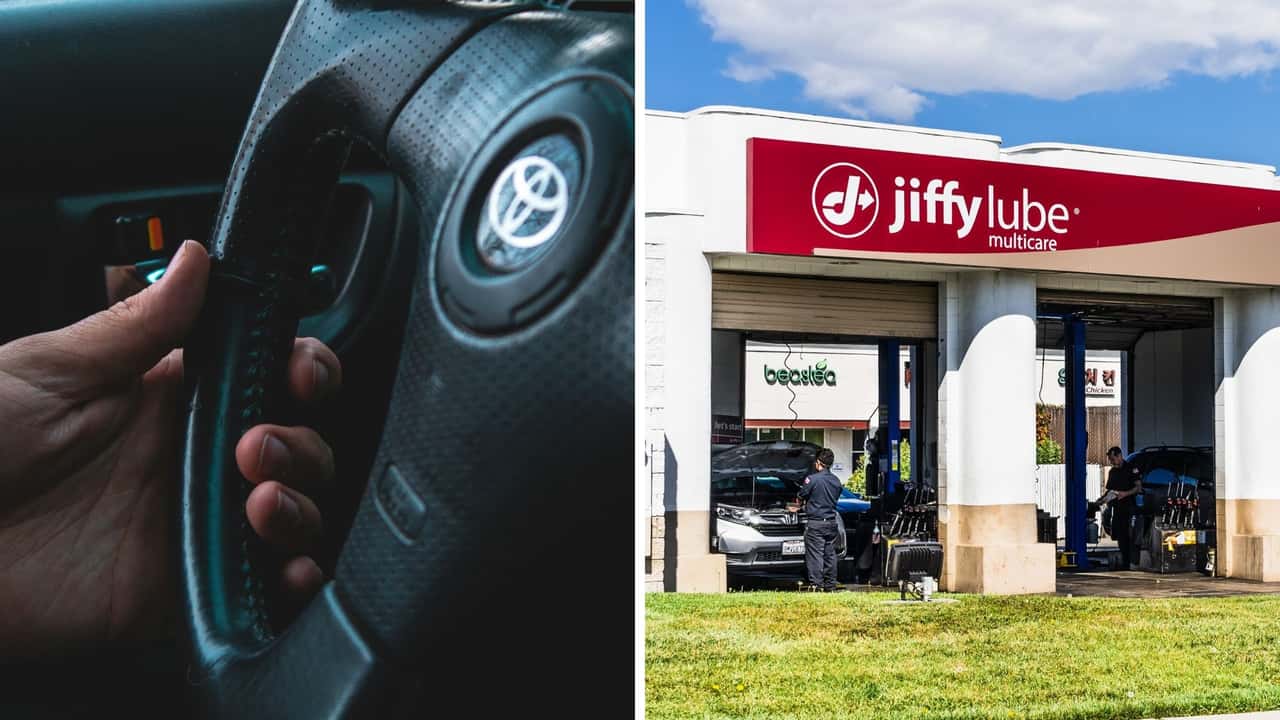
When a Jiffy Lube technician pulled a service sticker off a Toyota, he knew he had to show people what it said. The numbers on that little Walmart Auto Care Center sticker told a story that has mechanics everywhere shaking their heads.
In a video with more than 95,000 views, content creator Gauges Garage (@gaugesgarage1) showed off what might be one of the most overdue oil changes he’s ever seen.
“This is the sticker that came off this car,” he says in the TikTok, holding up a service reminder from Walmart Auto Care Center. “Let’s see how many miles are on the car.”
The sticker recommended the next service at either March 2, 2026, or 209,042 miles—whichever came first. But when he panned the camera over to the odometer, it read 300,736 miles.
That’s over 91,000 miles of driving without an oil change.
His caption summed it up: “If sludge buildup was a competition.”
The video doesn’t show what the inside of the engine looked like, but anyone who knows cars can guess it probably wasn’t pretty. Going that long without fresh oil means sludge buildup, reduced lubrication, and accelerated wear on basically every moving part under the hood.
Skipping oil changes isn’t just bad for your engine; it can turn into a financial disaster.
According to Jiffy Lube, when oil breaks down and loses its lubricating power, friction between moving parts increases. This leads to accelerated wear on engine components, overheating issues, and sludge buildup that can clog oil passages and restrict flow.
AAA points out that degraded oil also loses its ability to absorb heat, which can cause engine overheating and warp critical components. Dirt accumulation in old oil can form sludge, limiting the oil’s flow through the engine. In severe cases, it might even require a complete engine replacement.
And it’s not just about performance. Decreased fuel efficiency is another consequence, since your engine has to work harder when it’s not properly lubricated. Plus, if your vehicle is still under warranty, ignoring the manufacturer’s maintenance schedule could void it entirely, leaving you on the hook for expensive repairs.
The old “every 3,000 miles” rule is outdated. Modern engines and improved oil formulations have changed the game entirely.
AAA now recommends oil changes every 5,000 to 7,500 miles for most engines, with synthetic oil lasting even longer, sometimes 10,000 to 15,000 miles.
Capital One notes the interval depends heavily on your oil type and driving conditions. Conventional oil typically needs changing every 3,000 to 5,000 miles, while synthetic oil can stretch to 15,000 miles. But there’s a catch: if you’re doing “severe service” driving—frequent short trips, stop-and-go traffic, towing, or driving in extreme temperatures—you’ll need more frequent changes.
Most newer vehicles have oil-life monitoring systems that automatically calculate when you need a change based on your actual driving conditions. Still, it’s smart to check your owner’s manual for the manufacturer’s specific recommendations.
The nearly 100,000-mile gap between oil changes had some people questioning whether the sticker was accurate or if there was some other explanation. After all, the car presumably was drivable.
“Gotta be a typo or misprint cuz no way they could drive 100k miles in that time,” one pointed out.
Another noted, “Or they changed it themselves.”
“No way an engine with such high mileage would last 100k miles without an oil change,” a third wrote.
Motor1 reached out to @gaugesgarage1 for comment via TikTok direct message and comment. We’ll update this article if he responds.
We want your opinion!
What would you like to see on Motor1.com?
– The Motor1.com Team