“Make sure you’re prepared.”
A man known for sharing what he calls “great DIY and hacks content” about everyday problems recently offered up a potentially useful tip for drivers bracing for winter’s chill.
Ceith Griffith (@jgriffith34) posted the video to Facebook just days ahead of a winter storm expected to affect large swaths of the US throughout the weekend.
“With the winter storm just days away,” Griffith says. “Make sure you’re prepared.”
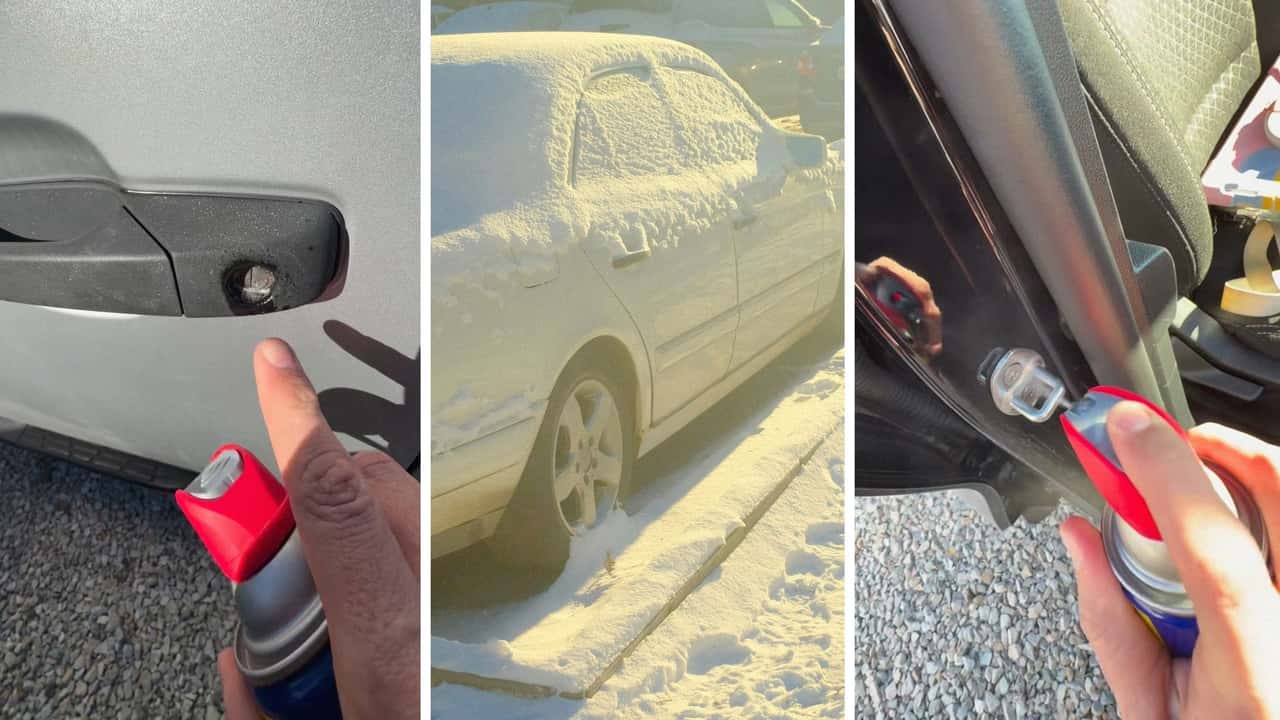
He claims to have a simple trick to avoid your doors and keyholes freezing shut. His advice is simple: grab some WD-40 and spray it “on your latches” and the “keyholes of your doors,” both of which he demonstrates in the clip.
“This is going to keep your keyholes from freezing over and keep your doors from sticking during the storm,” he explains.
“Winter storm hack!” Griffith captions the now-viral video, which has racked up more than 6.8 million views as of this writing.
Apparently yes—at least according to HouseOutlook. The outlet notes that WD-40, a household staple best known for quieting squeaky hinges, can also double as a cold-weather tool for car owners.
The logic is right there in the name. As HouseOutlook points out, the “WD” stands for “water displacement,” a clue to why it can help fight snow and ice. Beyond what Griffith demonstrates, the outlet says WD-40 can also be used to unstick frozen door handles, doors, and windshield wipers. The only extra tool you’ll need is a microfiber cloth—ideally one you don’t mind getting dirty.
For car doors, HouseOutlook agrees that spraying some WD-40 onto a cloth—rather than directly onto the car, as Griffith did—then opening the door and wiping down the weatherstripping is the better approach. You don’t need much, either: a little goes a long way. The WD-40, it says, creates a thin protective barrier that helps keep doors from sticking shut.
Timing matters, too. It’s best to do this before snow falls and temperatures dip below freezing, though the outlet notes it can still work after the fact.
For door handles and keyholes, rubbing a WD-40 treated cloth over frozen areas can help break the bond between ice and metal. Done ahead of time, it can also act as a preventative measure.
That said, not everyone is sold. In 2015, a local reader wrote the Chicago Tribune to push back on the advice.
“WD-40 shouldn’t be used in door locks or ignition locks. It dries out and turns to goo, which can cause the tumblers to stick,” the reader, identified as R.M., wrote. “It was initially meant as a de-rusting spray and general-purpose lubricant (say, door hinges). Locksmiths recommend using Teflon spray lubricant in locks now. The liquid and propellant evaporate, leaving behind a lubricating film, and it doesn’t smell like WD-40!”
Differing opinions aside, the hack may still be useful in a pinch. And since it relies on something many people already have at home, it could be worth trying—carefully—when winter weather leaves you stuck.
Given that even respected news outlets haven’t landed on a clear consensus about whether the so-called hack actually works—or could cause long-term damage—it’s not surprising that viewers were split, too.
In the comments under Griffith’s video, one man flatly rejected the advice, calling it “wrong.”
“It’s actually the door seals that freeze with moisture and snow, making you unable to open your door,” they wrote. “While spraying your keyhole with WD-40 might help somewhat, it will thicken in the keyhoe, as you call it, and could cause a key pin in the key tumbler to get jammed from the thickening of the liquid, then keeping it from being able to drop to actually unlock your door. It kinda gels up with colder temps.”
Another commenter, who said they were a locksmith with more than 30 years of experience, issued an even firmer warning.
“Never use WD-40. It will dry like a caramelized solid after a while,” the commenter said.
A third viewer echoed that concern, adding a blunt assessment of her own: “Don’t put WD40 on your locks; it causes them to gunk up,” she added.
Still, not everyone dismissed the idea outright. Some commenters used the thread to share their own methods for keeping doors, locks, and other car parts from freezing—or for protecting vehicles more broadly during winter storms.
“I used vaseline gel around the seals to prevent from sticking,” one person suggested. “It really works, especially [in] freezing rain or during ice storm.”
Another shared a more unconventional workaround: “Here’s a trick I do on the days predicted to get ice. I get mine at Dollar Tree, a bag of 8 shower caps and I put them over my side mirrors. When you get to the car just pull them off, they have elastic around them, and there’s no scraping the mirrors to get ice off! I live in a senior community and I’ve passed them out to my neighbors. Eight for $1.25 or $1.50, whatever they’re charging now,” they wrote. “If you don’t tear them taking them off, you can reuse them!”
Motor1 has reached out to Griffith via a direct message on Facebook. We’ll update this if he replies.
We want your opinion!
What would you like to see on Motor1.com?
– The Motor1.com Team