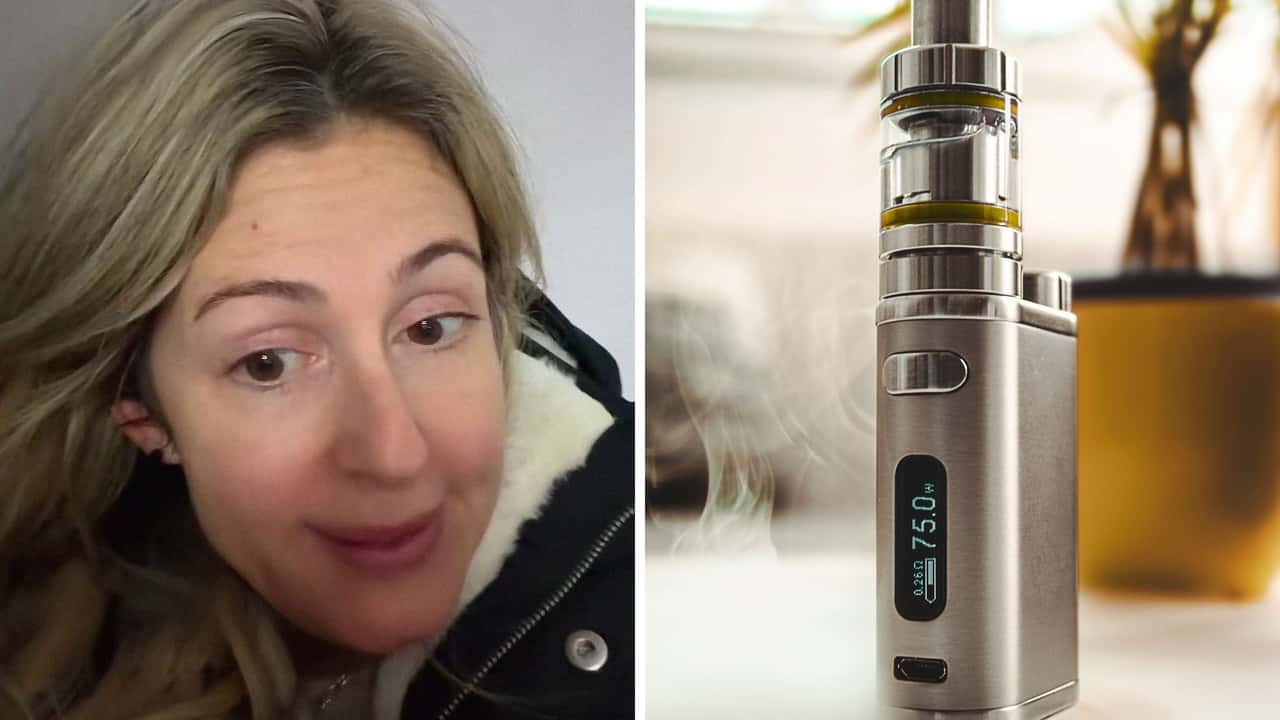
“All the blonde girls say oopsies!!!”
A motorist needing some nicotine to calm her nerves plugged in her Raz vape. Little could she know that she was about to experience a catastrophe that would leave her stranded on the side of the road and her vehicle a charred hulk.
That scenario played out in a viral TikTok showing the smoky aftermath of a morning nicotine fix gone terribly wrong. In the clip from TikTokker Sara (@kitetownsara23), she’s standing on the side of Interstate 75, trying to process how her Ford Expedition turned into an inferno.
“Well, I’m not coming into work today,” she wryly observes in the clip that’s been viewed more than 17 million times.
It’s important to note that we must take Sara at her word that the vehicle fire was caused by a charging malfunction in her vape.
In comments, vape users shared their own experiences with malfunctions or glitches with their devices. Several mentioned needing to hit their own vape while watching the video because of the tension and anxiety they were feeling as they saw the video smoking and smoldering on the side of the road.
Several joked about what Sara’s boss would likely say. “Can the fire department drop you off on the way back?” was one of the most appreciated comments.
Sara herself took the moment in stride. A text overlay on her TikTok says, “All the blonde girls say oopsies!!!”
Part of the video’s appeal lies in the idea that something as small as a vape device could cause a vehicle fire. Most disposable vapes contain compact lithium-ion batteries that operate on the same basic chemistry used in cell phones, laptops, and other common electronic devices. If those batteries are overcharged, exposed to excessive heat, or paired with faulty charging cables, they can overheat and, in rare cases, ignite.
Since vapes emerged as a popular consumer device, safety agencies have warned that their batteries can pose a fire risk if they malfunction, particularly during charging. Unlike a phone or factory-installed electronics, disposable vapes aren’t designed to be part of a vehicle’s electrical ecosystem. This is because they often lack the same thermal protections and quality controls as larger consumer devices.
It’s difficult to determine the cause of Sara’s Expedition fire from the relatively scarce amount of information available from the clip. Short of a fire investigation or an Insurance report, viewers are still in a kind of fog about whether the vape itself, the charging equipment being used, or some other malfunction sparked the fire.
Those who keep a close eye on recall news from auto manufacturers may recall that Ford previously issued a recall for certain 2021 Expeditions due to battery junction box issues that could pose a fire risk. Related to that recall, in 2022, the National Highway Traffic and Safety Administration issued a consumer alert stating that Ford had confirmed 16 fires in Expeditions, the most of which started in unattended vehicles.
And in 2025, Ford expanded a recall of certain 2020 Expeditions and Navigators, noting two reports of underhood fires in that recall group.
The prospect of wiring and electrical-related issues feels inevitable for modern motorists, given that vehicles increasingly function as rolling power hubs that supply electricity and data to a growing collection of personal devices, including phones, smartwatches, wireless earbuds, dash cams, and portable batteries, just to name a few. With drivers and passengers attached to the convenience they offer, the line between devices designed to integrate with a car’s electrical system and those that purely draw power from it has blurred.
Disposable vapes fall squarely into the latter category since they’re small, frequently charged, and designed for short-term use rather than repeated interaction with a vehicle’s power supply. In a car or SUV, factors such as heat buildup, vibration, low-quality charging cables, and unattended charging can increase the stress on a compact lithium-ion battery.
So what is the safe way to charge a vape in a vehicle?
It’s hard to find universal best practices because device designs vary widely, but generally speaking, safety experts advise treating small battery-powered devices with caution. They suggest charging only for brief periods of time and monitoring the device to see if it becomes hot to the touch or emits unusual smells. Also important: use intact, manufacturer-recommended charging cables and avoid charging in extreme heat. You don’t want to end up stranded on the side of the road like Sara, watching your car turn to ash.
Motor1 reached out to Sara via direct message and by commenting on the clip. We also reached out to Raz via email. We’ll update this if either responds.
We want your opinion!
What would you like to see on Motor1.com?
– The Motor1.com Team