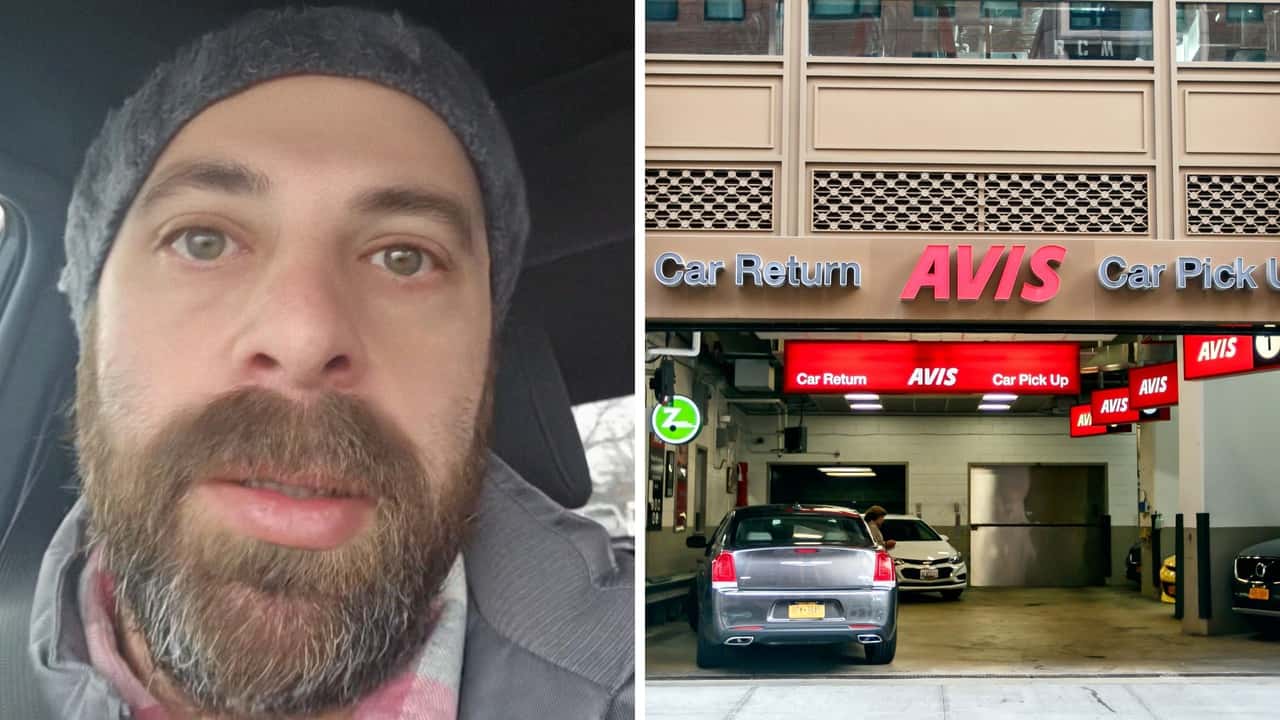
“That’s when you start throwing around big words…”
It seems most of us assume or accept the fact that renting a car is one of the more humbling and inelegant transactions a motorist can engage in. And so, you’ve got to give it to TikToker Mr Vincredible (@therealvinsanity) for trying unsuccessfully to make the experience more enjoyable while also saving a bit of cash on a recent rental from Avis.
We learn from his viral TikTok that his plan to prepay for a discount on a premium vehicle was upended when the company downgraded him to a much cheaper model and refused to refund the leftover $81 he’d already paid.
Defeated and bothered, the caption on the clip, which has been viewed more than 264,000 times, was “Never Prepay a rental car at Avis car rental i guess.”
In the text overlay on the video, we learned that the creator prepaid $129 for what he described as a luxury-class rental, expecting his prepayment to secure a lower rate, faster pickup, and the certainty of receiving the vehicle he had reserved in advance.
As we learn in a separate video, because the luxury-class Genesis G80 he’d reserved wasn’t available at pickup, he was offered a downgrade to a reduced daily rate on the available Volkswagen Atlas. He later learned that the company wouldn’t refund the difference between his $129 prepayment and the lower final bill of $48.
It didn’t take much prodding to get viewers of the clip to express their outrage and confusion about this practice. Several of them labeled the downgrade as a breach of the original agreement, while others warned that prepaid rentals often function more like vouchers than guarantees for a specific vehicle.
One commenter who may have a future in consumer protection law wrote, “That’s when you start throwing around big words like ‘failure to render services as agreed.’”
Others offered less customer-friendly bits of knowledge, including, “You signed paperwork stating you were willing to take that car at x contracted rate. The normal bill may have looked like $48 if not prepaid, but you accepted the car with your prepayment so no refund is due. Basically, you agreed to take smaller car because you didn’t want to wait for someone to return a car in your size/ they didn’t have one.”
The most obvious question this situation raises is, is this actually allowed? Technically, yes, but in a way that sheds light on some higher-level economic principles and risk avoidance strategies used by car rental companies. Prepaid rental rates are typically discounted because they shift risk from the rental company to the customer by locking in a price without guaranteeing that a specific vehicle will be available when you arrive for pickup.
As several commenters noted, prepaid rentals function more like non-refundable vouchers than traditional reservations. So, if the company can’t provide the exact vehicle class, the fine print usually allows it to substitute a comparable or lower-class vehicle without automatically triggering a refund. It’s a legal loophole that’s easy to miss during checkout, especially when prepayment is marketed as a way to secure a car at a lower price point and skip the counter.
While defensible from a macroeconomic standpoint, this obviously creates confusion and frustration among customers, who feel they’ve been cheated out of what they paid for.
Several commenters suggested disputing the charge with the credit card company, which can sometimes help recover part of the cost. Others who said they’d worked in the car rental business caution that frequent renters may hesitate to file a dispute since rental companies can restrict future bookings after chargebacks.
Potential renters who find themselves in this seemingly hopeless situation have some options that need to be used tactically. Consumer advocates and frequent travelers generally agree that if a rental company can’t provide the class you booked, you should avoid accepting a downgrade unless the terms are clearly documented in writing. Verbal assurances of a refund or a post-rental adjustment typically won’t survive once the contract is closed.
When presented with a downgrade, the customer should ask whether the original prepaid amount will be recalculated before any paperwork is signed. If the answer is no, walking away and rebooking elsewhere may be the only way to preserve leverage, even if it is inconvenient. Again, once the keys are handed over and the agreement is finalized, the rental company almost certainly considers the matter settled.
Regarding disputing the charge and the potential risk, these kinds of disputes can be effective, especially when there’s clear documentation showing a lower final rental value. In the comments section, several former rental employees advised caution about using this tactic, as repeated chargebacks can result in customers being flagged or banned from future rentals.
To take advantage of prepayment programs, industry watchers advise using them when demand is low, fleet inventory is plentiful, and your travel plans are unlikely to change. Outside those circumstances, especially at airports or when booking premium vehicle classes with limited availability, any prepayment option could carry substantial risk.
Motor1 reached out to Avis via email and to Mr Vincredible via direct message and commenting on the clip. We’ll update this if they respond.
We want your opinion!
What would you like to see on Motor1.com?
– The Motor1.com Team