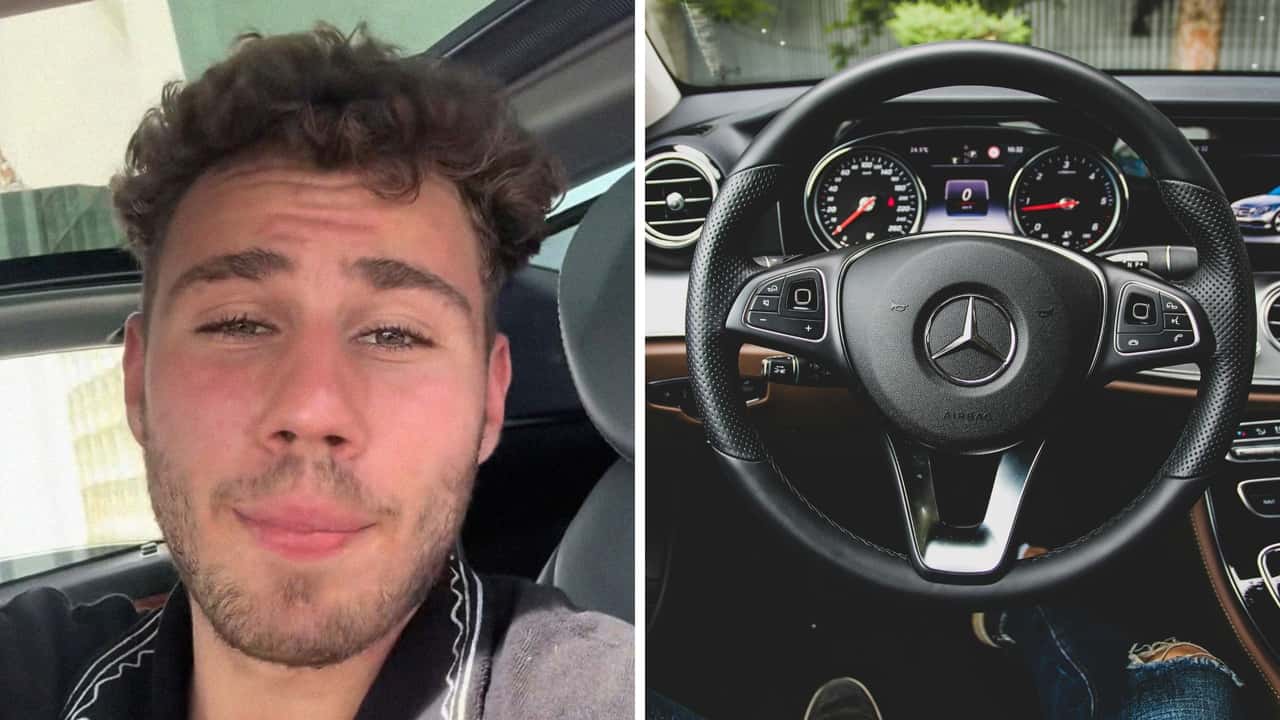
“The following week they ran the car green light again…”
A man recently had what he describes as a frustrating experience trying to buy a Mercedes at auction. His experience is making people wonder whether the green light designation auctions give supposedly mechanically sound vehicles is reliable.
TikTok creator @autosavantt said he purchased a Mercedes SL500 that had been given a green light designation. According to him, that label is meant to signal the vehicle is mechanically sound. It also comes with a guarantee that the auctioneer will cover any repair exceeding $800.
Wanting extra reassurance, @autosavantt says he paid for a post-sale inspection. He initially thought the step was unnecessary because the auction had already cleared the car, but the inspection passed.
Believing the vehicle was safe to take home, he arranged for a tow truck to transport it. Before loading it up, though, he says the car underwent one more lookover—and that is when problems surfaced.
He claims inspectors flagged multiple issues that would each cost more than $800 to repair, including valve cover problems and what he described as “absolutely cooked” rear shocks.
At that point, @autosavantt sats he contacted the auctioneer to try to unwind the deal.
“What a waste of four days,” @autosavantt says. “Just a huge waste of time.”
He also raised a broader question for dealerships and auction houses about how post-sale inspections are handled. “If any mechanic had put eyes on this thing, it wouldn’t have gotten to me,” @autosavantt claims.
In most wholesale auctions, a green light indicates the vehicle is being sold as a ride-and-drive. That means the seller is representing the car as free of major known mechanical defects, particularly involving the engine or transmission.
It offers more protection than a red light sale, which is typically as is. With a green light, buyers usually have the option to arbitrate the deal if a significant, undisclosed problem surfaces within a set time frame—as @autosavantt’s situation suggests. That window can be short, sometimes just hours after purchase, though some auctions allow up to several days.
Still, his experience underscores that the protection has limits.
Smaller items usually don’t factor into a vehicle’s red- or green-light designation. Normal wear, cosmetic damage, or minor parts issues are often considered part of the risk buyers take on.
And when a defect is disclosed before the sale, arbitration is typically off the table for that specific issue, even if the vehicle still carries a green light designation. Those announcements effectively define what the seller is no longer responsible for once the deal closes.
When claims do move forward, outcomes vary. Sometimes the auction covers the repair, or they’ll offer a credit or void the sale altogether, depending on how serious the issue.
Green lights are designed to give buyers some confidence going in. But as @autosavantt’s experience shows, independent inspections can end up shaping how much that protection actually helps.
Some viewers who came across @autosavantt’s video said situations like his are exactly why they don’t trust post-sale inspections.
One commenter didn’t mince words. “They are all a scam. Sad thing is, dealers pay top money for the green light,” they said. “I bought a car and same thing happened, the following week they ran the car green light again lol wtf.”
Another cited cost savings as the reason for opting out. “I never pay for inspection,” they shared. “Average inspection cost $225 for every 10 cars. I saved 2,250 bucks, and then when the 11 car comes out bad, that covers it most of the time. I’m always on top. It’s cheaper to sell [and] finance it.”
Skepticism about the process itself also surfaced. “Post-sale inspection is pure profit for the auction. There is no mechanic or inspection,” a third person argued. “Because most of the items can be fixed under $800.”
Others offered advice based on their own buying habits. “Don’t pay for a post-sale inspection,” one suggested. “After you buy the car, bring it to your shop [to be] inspected; if it has any issue over $800 you can arbitrate for that issue. Post-sale inspection is the biggest scam.”
Not every viewer agreed with the blanket criticism. At least one commenter pushed back, saying it “depends on the seller.”
Motor1 has reached out to @autosavantt via a direct message on TikTok. We’ll update this if he responds.
We want your opinion!
What would you like to see on Motor1.com?
– The Motor1.com Team