‘A lot of times, I can make that judgment call over the phone.’
Deep down, every owner of an older or high-mileage car understands that their daily driver is doubling as something of a financial ticking time bomb. It’s a reality that stares them in the face during any basic repair job that can very quickly turn into something a whole lot more complicated and expensive.
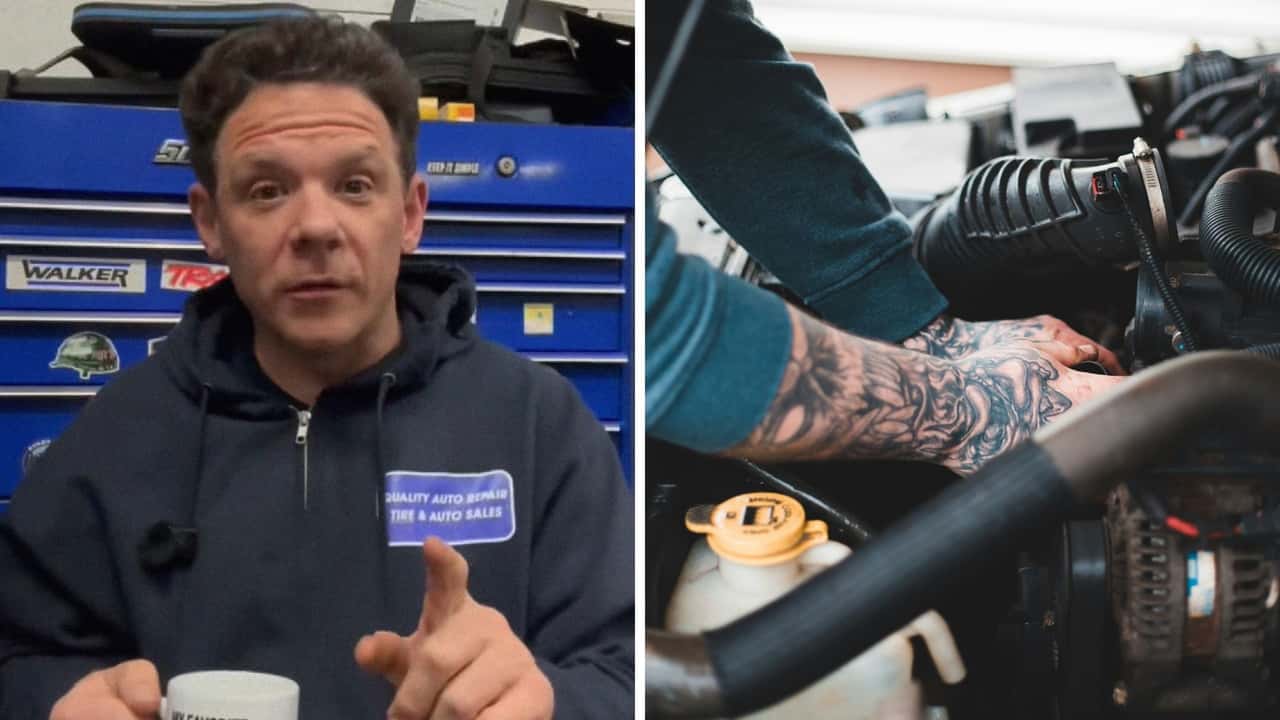
That’s the truth explained in a recent viral TikTok clip featuring veteran mechanic David Marks (@qualityautodave) explaining why he’s established some “no work” guidelines for vehicles with problems that can easily cascade into something incredibly time-consuming and demanding.
“Your vehicle may be too old for us to fix,” he explains in the clip that’s been viewed more than 1,800 times. “As professionals, we need to be very picky or just really warn you, ‘Hey, if something breaks while we’re taking this apart, it’s on you, not us.’”
Marks says those decisions are less about turning customers away than about protecting everyone involved in the repair. His shop in Missouri operates with three service bays, two technicians, and himself handling both mechanical work and customer communication. In a space that small, every vehicle occupying a lift carries a real opportunity cost.
“If we tear apart an old rusted beater that they ain’t got no money and we can’t get parts for, that affects everybody,” Marks told Motor1 by phone. “I can’t get other customers in. We can’t buy parts from vendors. I’m not making any money, and the employees are pissed off because we’ve got something sitting here that’s not going anywhere.”
That calculus becomes especially tricky with vehicles that have spent years exposed to Midwestern winters. Road salt and moisture slowly attack bolts, brackets, and exhaust components, turning once routine fasteners into brittle pieces of metal that can snap without warning.
“When you take apart a rusted bolt or attempt to, I don’t know what’s going to happen,” Marks said. “There’s no way to predict that on the front end.”
In many cases, he said, the decision to decline or repair is made before the vehicle ever arrives. By answering a few questions over the phone about the age of the car, previous repairs, and who last worked on it, Marks can often gauge whether the job is likely to spiral into something far more complicated than the owner expects.
“A lot of times, I can make that judgment call over the phone,” he said.
Sometimes, the warning signs involve vehicles that have already passed through several hands. Owners trying to save money may have attempted fixes themselves or relied on an informal neighborhood mechanic before turning to a professional shop once the problem proved more stubborn.
“There’s a difference between a mechanic and a technician,” he said. “If somebody else has been working on it and couldn’t fix it, now you’re trying to figure out not only the original issue but whatever else might have happened along the way.”
For Marks, the goal in those conversations is simple: Make sure the frustration stays aimed at the machine rather than the person trying to repair it.
Running a small shop also means constantly balancing customer expectations against the reality of how unpredictable older vehicles can be. Marks says the decision to pass on certain repairs doesn’t happen every day, but it’s not unusual either. He estimates that every month he’ll pass on two to five potential jobs.
That may sound like a small number, but in a shop that averages about 25 repair orders per week, each decision carries weight. Marks said his business typically sees repair tickets averaging around $700, with most jobs taking roughly a couple of labor hours to complete.
That means a vehicle that unexpectedly balloons into a multi-day teardown can quickly disrupt that rhythm.
“You can’t have something sitting here for two or three days torn apart while we’re chasing broken bolts and trying to figure out what else is going to fail next,” he said.
Still, Marks insists those calls aren’t about being selective for its own sake. In many cases, the goal is simply to be upfront with customers about the unknowns that come with aging vehicles.
His goal on those calls is to try to walk the driver through the risks before any tools come out. That sometimes means explaining that a simple repair could reveal deeper problems once components start coming apart, issues that might dramatically increase both labor time and the final bill.
For customers hoping for a guaranteed price or a quick fix, that uncertainty can be difficult to accept.
“I want blank-check auto repair,” Marks joked. “Because I don’t know what’s going to happen until we get into it.”
Ultimately, he said, experience is the biggest factor guiding those decisions. After more than two decades in the business, both he and his senior technician have learned to recognize when a job is likely to turn into something far more complicated, even when it appears at first glance to be simple.
“Everything we do is based on experience,” he said. “When to say yes, when to say no, and what to charge.”
We want your opinion!
What would you like to see on Motor1.com?
– The Motor1.com Team