‘I had no clue tires could “rot.”’
A slow leak is usually the kind of tire problem a shop can track down and patch.
But what happens when the damage seems to be everywhere? In that situation, finding the source may be the least of a person’s problems, and it’ll likely come with a steeper cost.
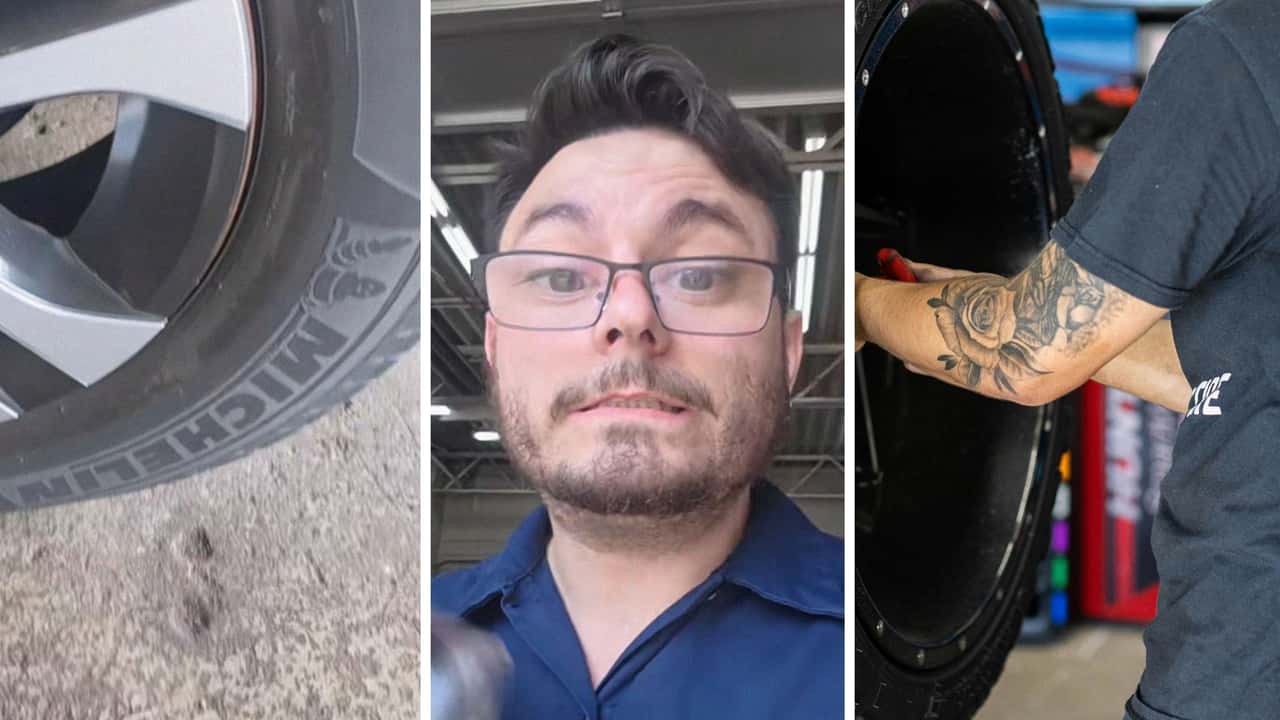
In a viral video with more than 893,000 views, mechanic @deth93_ shared an unfortunate tire he recently encountered at work.
“I can’t tell where the air’s coming from. It just keeps coming out. I keep adding air, and I just can’t tell where it’s coming from,” he reports the customer saying about the air leak.
Then the camera shows what the tire looks like. Instead of showing one obvious nail or isolated puncture, the footage appears to show numerous splits running through; it almost looks like stretch marks across the rubber.
“Honey, I think it’s coming from everywhere,” @deth93_ says.
A plug and a patch do different jobs. According to AAA, a plug is pushed into a puncture from the outside and expands to fill the opening. A patch is bonded to the inside of the tire.
The industry-standard repair is to combine the two. The plug fills the path left by the puncturing object and helps keep water out, while the interior patch seals the tire’s inner liner.
That does not mean every leaking tire can be saved. A repair may be possible when a small puncture is confined to the tread. Replacement is generally the safer call when the damage is in the sidewall or shoulder, the hole is larger than one-quarter inch, the object entered at an angle greater than 45 degrees, or the new damage overlaps an earlier repair.
The tire’s overall condition matters, too. Even a tiny puncture may not be worth repairing if the tire is old, visibly damaged, or already low on tread.
Cracking develops as rubber loses its flexibility and begins to break down. UV exposure, water, road salt, oils, chemicals, and ordinary aging can all contribute, Tire Outlet explains.
While small, superficial sidewall cracks may not pose an immediate danger, cracks that multiply or grow longer and deeper warrant attention since they could split and cause a blowout.
Cracks between the tread are more concerning since they can point to deterioration below the surface and a possible structural problem, even when the tire still appears to have plenty of tread depth. In a worst-case scenario, the tread can separate from the tire, so make sure these cracks are inspected promptly by a professional.
Here’s what you can do to protect your tires:
Care can delay cracking but won’t make tires last forever.
People in the comments seem to agree that the problem should have been obvious to the driver.
“Show the date on the tire,” a top comment read.
“Where isn’t it coming from?” a person said.
“Not me seeing the problem,” another wrote.
“You’re gonna have a bigger problem if you keep putting air and driving it,” a commenter added.
Motor1 reached out to @deth93_ via TikTok direct message and comment. We’ll update this if they respond.
Update Sept. 14: Via email, a Michelin spokesperson told Motor1, “After five years or more in use, your tires should be thoroughly inspected at least once per year by a professional. At 10 years after their date of manufacture, as a precaution, Michelin recommends replacing them with new tires, even if they appear to be in usable condition. Note that beyond age factors, there are many other conditions that can damage a tire including climate (such as excessive sun exposure & ozone) or driving with improper air pressures. If you have questions on how to locate the age of your tire or want help on proper care and maintenance of your tires, please contact Michelin Consumer Care at 1-866-866-6605.”
We want your opinion!
What would you like to see on Motor1.com?
– The Motor1.com Team