‘It’s predatory towing.’
Tow truck drivers have never been contenders to win popularity contests among motorists. But there’s a special category for those who descend on accident scenes like vultures, hoping to haul away a damaged vehicle before its owner even knows what hit them—literally.
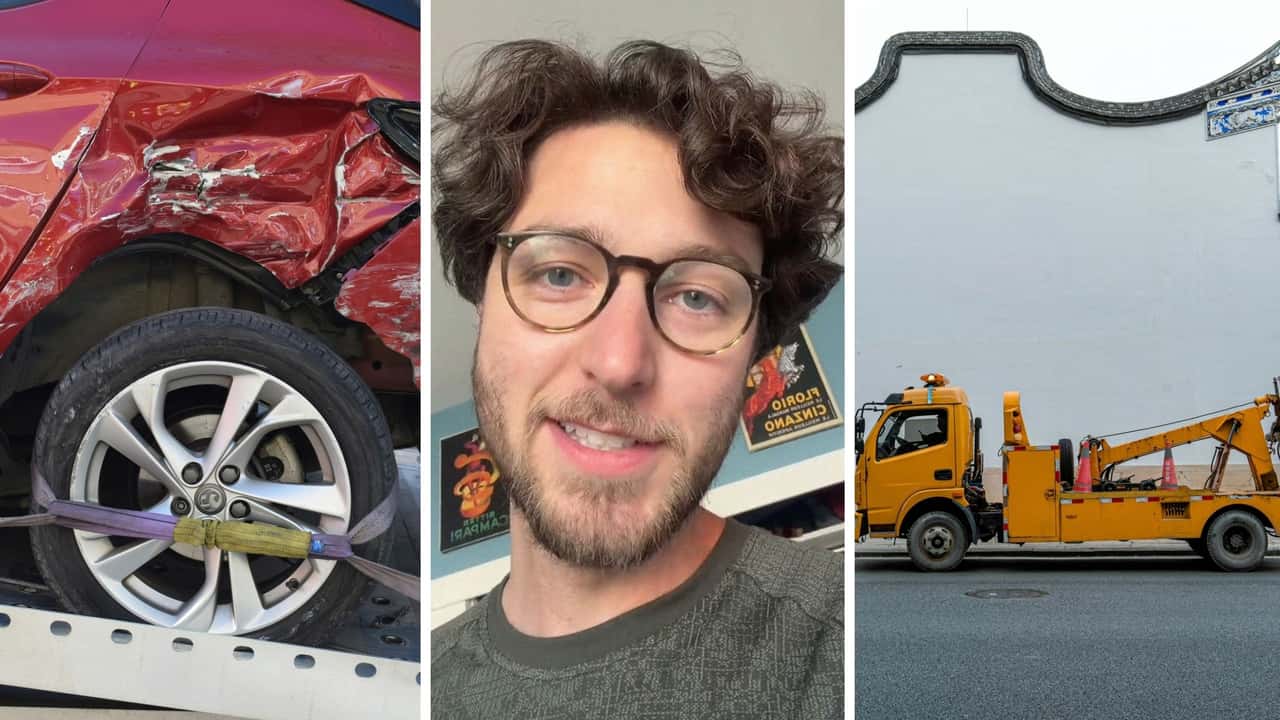
That less-than-flattering side of the towing business is on full display in a recent TikTok clip that follows the aftermath of a multi-car accident. Creator Quinn Hardy (@quinnickleshow) unspools the details of what he observed and how he stepped in to help prevent a neighbor from getting scam-towed.
“Apparently, there’s tow trucks that are listening in to police scanners, so they can hear when car accidents happen. So they can show up unsolicited and take your car, impound it. So they can charge you money to release it. It’s predatory towing,” he says in the clip that’s been viewed more than 650,000 times.
Hardy’s car was among several parked vehicles struck by a driver who crashed into them on a residential street. Nobody was injured, and none of the parked cars was occupied, he says. Police were called, insurance information was exchanged, and the driver involved in the collision arranged to have his vehicle removed, he continues.
But Hardy says at least four other tow trucks showed up without being summoned, with their drivers insisting they were there to help.
The situation appeared to be settled until the following day, when the owner of another damaged vehicle arrived to deal with her car. One of the unsolicited tow truck drivers returned and began trying to persuade her to let him take it away, but Hardy sensed something was amiss and started asking questions.
“So I go out there, and I’m like, ‘Hey, did you call this guy?’ And she goes, ‘No,'” Hardy recalls. He says he told the driver to get moving, but the man wasn’t interested in taking orders. The exchange quickly escalated, Hardy says, with the driver asking Hardy if he was accusing him of being a crook.
“And I just went, ‘Yeah,'” Hardy recalls with a smirk.
Hardy says the driver stepped toward him and threatened to hurt him, prompting a response that probably wasn’t on anyone’s bingo card for an argument over roadside assistance.
“If I’m about to get in a fight, I need to take off my slippers,” he explains.
The two continued trading insults, according to Hardy, but the confrontation never turned physical. The driver, Hardy says, eventually gave up and moved on.
Reports of predatory towing increased 89% nationwide between the beginning of 2022 and the end of 2024, according to the National Insurance Crime Bureau.
The organization says unscrupulous operators sometimes monitor police scanners or patrol busy roads looking for crashes. Arriving before a motorist has arranged legitimate assistance gives them an opportunity to secure a tow, potentially delivering the vehicle to a storage facility where excessive charges begin accumulating.
Automotive journalists have documented towing and storage bills exceeding $16,000, with charges that include questionable storage and miscellaneous fees. The NICB has worked with lawmakers and law enforcement to crack down on predatory operators and strengthen consumer protections.
Viewers responding to Hardy’s video were familiar with the phenomenon and didn’t hold back their disdain for the drivers and companies behind it.
“They’re called ‘wreck chasers’ and they’re annoying,” one commenter wrote.
Another viewer focused on the financial consequences of accepting help from an unfamiliar operator, sharing, “Your insurance may not cover a random company. Don’t ask me how I know cause I’ll cry.”
That concern is worth taking seriously, although insurance coverage depends on the policy and circumstances. The Texas Department of Insurance, which has warned motorists about towing scams, says drivers should verify that a truck was dispatched by them or by police, confirm where their vehicle is being taken, and carefully review any paperwork before signing.
Consumer watchdog groups also warn against accepting an unsolicited driver’s recommendation to use a particular repair shop. Some schemes involve towing companies and repair facilities working together to impose substantial storage and other fees.
Police can authorize towing without the vehicle owner’s involvement when damaged vehicles need to be removed from a roadway. In those cases, motorists should establish who sent the truck and what they’re agreeing to before handing over their keys.
Back on the sidewalk, Hardy’s standoff ended when the tow truck the woman had actually requested finally arrived.
“As soon as he showed up, the other guy was like, ‘OK, I’m leaving,'” Hardy recalls. “If you didn’t call a tow truck and a tow truck shows up, don’t let it take your car.”
Motor1 reached out to Hardy via email and direct message. We’ll update this story if he responds.
We want your opinion!
What would you like to see on Motor1.com?
– The Motor1.com Team