Jaguar argues it had no choice but to reset its business model.
Jaguar knows its radical reinvention won’t please everyone, but the British luxury brand insists it had little choice but to start over. After years of struggling to compete with BMW, Mercedes, and Audi, the company decided that simply refreshing its existing portfolio wouldn’t cut it anymore. Instead, Jag is moving upmarket with an exclusively electric lineup aimed at a wealthier clientele.
Speaking about the risky decision, managing director Rawdon Glover told British magazine Evo that Jaguar’s old business model wasn’t profitable or growing. Competing in the premium-volume segment dominated by the German trifecta had become increasingly difficult.
‘We had created some brilliant products, some were best in class, but the competitiveness in that sector was too much for Jaguar to cut through. When we had to make a decision as to what was next for Jaguar – what cars we would make, which sectors to compete in – we could have carried on as we were or rip up the rulebook and give Jaguar a fresh start. The former was never an option if Jaguar was to survive.’
2021 Jaguar F-Type R-Dynamic Convertible
In other words, Jaguar could build good cars and still struggle to make the numbers work. The brand had earned plenty of recognition over the decades, but that affection wasn’t translating into the sales volumes needed to sustain the business. Separately, Glover told Australian magazine Drive that doing the same thing all over again no longer made sense:
‘It wasn’t sustainable for us to continue as we were. A lot of brand management is small, little changes … it’s about tweaks here and there. This wasn’t one of those changes … It really needed to be a big … step.’
Rather than continue fighting for customers in a crowded segment, Jaguar wants to compete at the high end of the luxury market. The idea is to sell fewer vehicles at significantly higher prices, using distinctive designs and more exclusive positioning to stand out from the competition, as the Type 01 grand tourer shows.
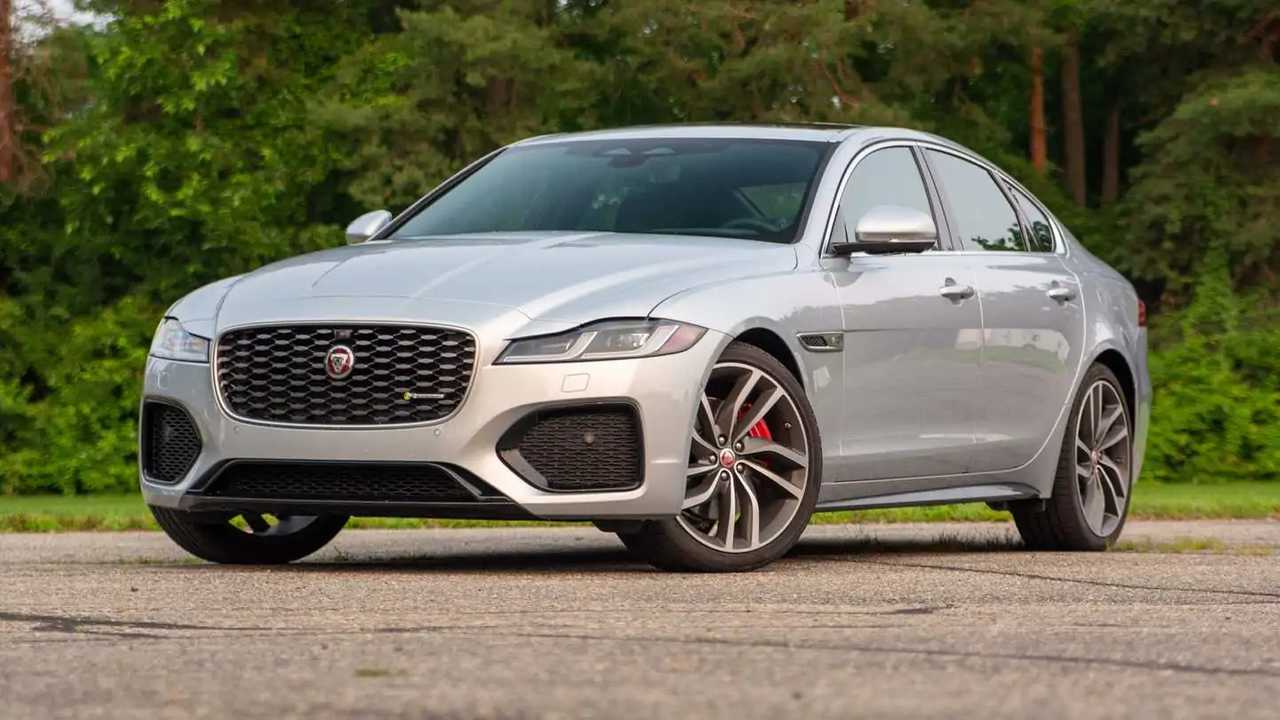
That strategy explains why Jaguar has effectively abandoned its entire previous lineup ahead of the new electric GT’s arrival. Sedans like the XE, XF, and XJ are now a thing of the past, and the same goes for the F-Type sports car and the E-Pace and F-Pace SUVs. Even the already electric I-Pace had to go to make way for the new-era Jaguar, whose cars will bear little resemblance to the old guard.
2017 Jaguar F-Pace 20d
The new direction represented by the Type 01 is a considerable gamble. Moving upmarket means Jaguar will target a much smaller pool of buyers, while its unconventional design language risks alienating traditional customers. However, the company believes its previous approach left it stuck in a segment where it couldn’t compete effectively on either scale or profitability.
Jaguar’s decision to reinvent itself has attracted plenty of attention, not all of it positive. The new branding and marketing campaign triggered a fierce online backlash, while the Type 00 concept divided opinion with its radically different styling. The subsequent production model has also sparked controversy over its flamboyant design.
Ultimately, Jaguar is betting that a clean break with the past will give it a better chance of building a sustainable business. That doesn’t mean the new strategy is guaranteed to work, especially as the company prepares to charge substantially more for cars aimed at a narrower audience.
Still, Jaguar’s argument is straightforward: doing what it had been doing wasn’t working, so it had to try something different. Whether customers embrace that vision is another matter entirely. The Type 01 will need to do more than turn heads if Jaguar wants to prove that killing off its ICE-powered lineup was the right move.
As things stand, Jaguar says more than 50,000 people are interested in the electric GT, but it’s too early to tell how many will actually buy one. For what it’s worth, the company says 80 percent of potential buyers are new to the brand, broadly in line with a projection Glover made last year, when he estimated that around 85 percent of customers would be buying a Jaguar for the first time.
Jaguar’s Reboot:
Sources:
We want your opinion!
What would you like to see on Motor1.com?
– The Motor1.com Team