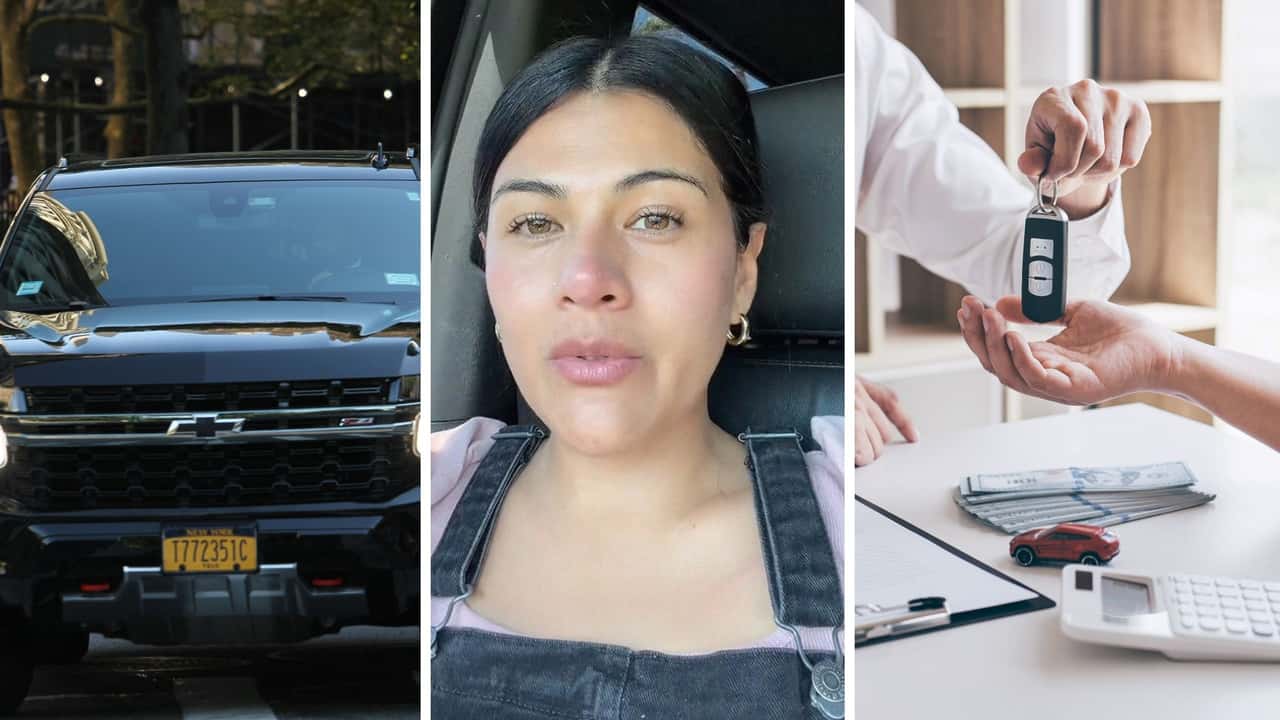
“Maybe we just split it in half, and we just call it a day.”
Buying a new car is already a pretty involved process. There’s the negotiating, financing, paperwork, and making sure all the numbers add up before signing anything.
You’d think that once you’ve signed the contract and driven off the lot, the deal would be done.
But one woman found out that apparently wasn’t the case when her dealership came back asking for thousands of dollars more a week after she bought a Chevrolet Tahoe. Here’s how she handled it and who ended up paying in the end.
In a TikTok video with more than 641,000 views, Gladys (@leiscray) shares the conversation she recorded at the Chevrolet dealership where she bought the Tahoe.
“When the Chevrolet dealer called me in 10 days later after buying my new Tahoe, stating I owed them $4200,” the text overlay reads.
In the caption Gladys explains that the recording was taken during her third visit to the dealership after purchasing the SUV. During the first two visits, employees apologized for incorrectly calculating the numbers and offered her a free tank of gas.
By the third visit, they’d apparently figured out where the $4,200 discrepancy came from, but didn’t want to take responsibility for it.
“I recorded our 30 minute conversation for my records. And no I didn’t pay half,” she says.
According to an employee, the dealership had been clear about the Tahoe’s selling price from the beginning, but someone apparently made a mathematical error when calculating the deal.
He argued that the dealership was now being taken advantage of because of that mistake, but Gladys wasn’t buying it.
“How are you guys getting taken advantage of when you guys are saying that it’s my fault? I’m saying it’s your fault,” she responded.
The employee acknowledged that the dealership had made an error but maintained that the money was still owed.
He also brought up the possibility of unwinding the transaction, including returning the financing check to Navy Federal Credit Union, though he suggested doing so wouldn’t benefit either party, and instead proposed they each pay half the cost.
“So, you know, shame on us for not adding it right, and shame on you for not probably looking at what you should have done… Maybe we just split it in half, and we just call it a day,” he said.
That would leave Gladys paying roughly $2,000 more for a vehicle she’d already purchased.
The employee also pointed out that Gladys could avoid having to shop for another vehicle, mentioning how quickly Tahoes were selling.
But she wasn’t particularly concerned about that.
“Yeah. But I don’t need it,” she replied.
In the caption, Gladys notes that this happened five years ago.
In a follow-up video, Gladys pushes back on the proposal again, pointing out that four people had been involved in reviewing the deal.
“What’s fair to me is that there was four of us that overlooked a number. Right? So we divide it by four,” she argues.
But he doesn’t go for that.
Gladys then explains that she’d previously worked in retail management and believed the dealership should take responsibility for its employees’ mistakes.
“Our employees work here. It is not the customer’s fault,” she says.
Eventually, the employee acknowledges that the dealership made a mistake and agrees to bring Gladys’ proposal to his general manager.
“Alright. I’ll call them and ask them. That’s all I can do is ask and see,” he tells her.
He also admits that the situation has soured what should have been an exciting purchase.
“When you buy a $70,000 car, it should be, you know, a happy thing. It shouldn’t be, you know, something that turned into something like this,” he says.
Gladys agrees, explaining that she and her husband had been happy with their purchase before the dealership contacted them 10 days after the sale.
It seems in the end she didn’t end up paying anything more.
Just because a dealership realizes it made a mistake doesn’t automatically mean the customer has to pay for it.
On Justia, a person described a similar situation in which they purchased a trailer, signed the contract, received the title, and then learned three months later that the dealership wanted more money because it hadn’t included the trade-in loan payoff in its calculations.
An attorney responded and explained that a signed contract and transferred title generally indicate that a transaction is complete.
He said that when a dealership makes a pricing mistake, the responsibility typically falls on the business, provided the buyer acted in good faith. The attorney recommended keeping copies of the signed agreement, title paperwork, and communications with the dealership in case the business continues demanding payment.
There was no debate about who’s to blame in the comments: everyone blamed the dealership. And no one thought Gladys should pay one thin dime of that $4,200.
“You signed a contract—there is ZERO reason to answer their calls anymore. Their error = THEIR problem !!” one person wrote.
A second thought the salesman had an incentive for attempting to strong arm Gladys into paying the $4,200 or even half that amount. “He is losing his commission so he wants you to pay,” they wrote.
Many took issue with the man suggesting that the dealership would’ve given her money back if Gladys had been the one to overpay.
“You know damn well if it was the other way around they wouldn’t be refunding you your money,” another wrote.
Motor1 reached out to Gladys via email and Instagram direct message for comment. We’ll be sure to update this if she responds.
We want your opinion!
What would you like to see on Motor1.com?
– The Motor1.com Team