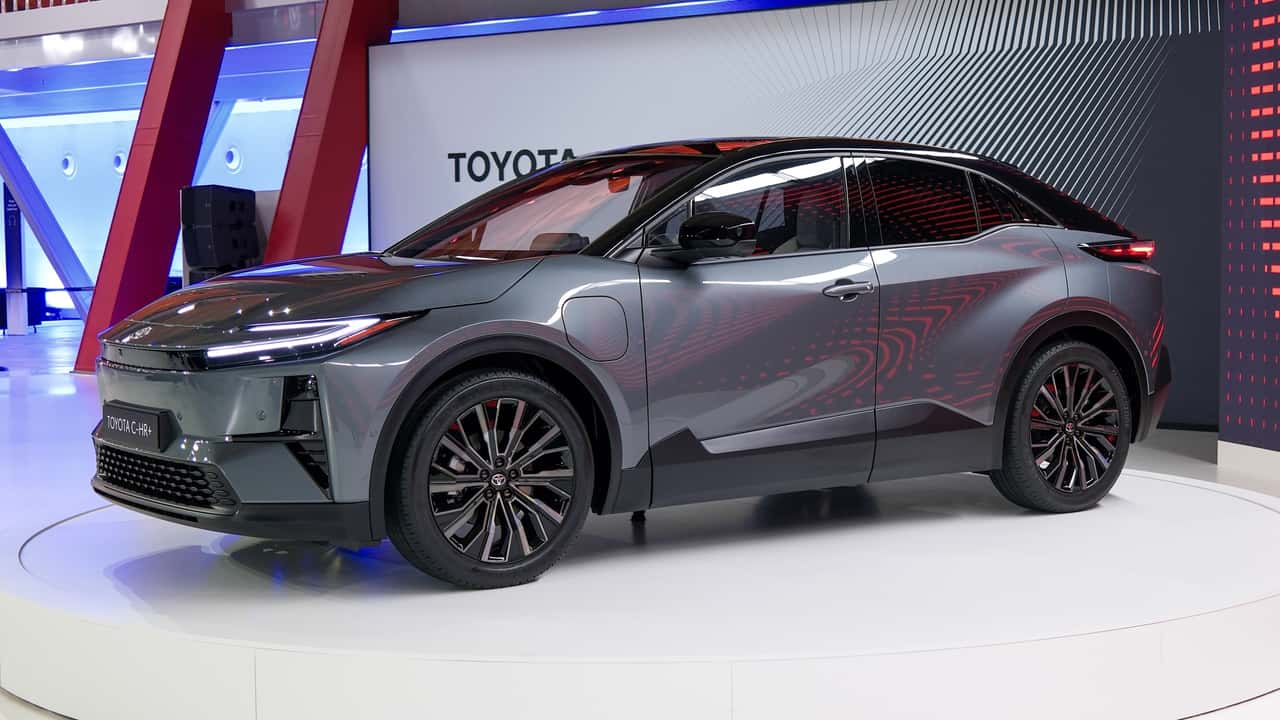
North American Toyota C-HR EV owners face a software-related regen braking recall affecting about 10,000 2026 vehicles with potential power loss.
Toyota is recalling about 10,000 2026 C-HR EVs globally after finding that some can suddenly cut power to the wheels mid-drive. The company points to a software bug in the regenerative braking system, not a fault in the battery cells or motors.
Roughly 1,310 of those C-HR EVs are in Canada, according to Toyota Canada. Owners will get notification letters by early November, and dealers can already run the fix for anyone who books a visit sooner.
Toyota‘s recall notice describes a scenario where the traction battery sits at a high state of charge and the driver leans on regenerative braking, the system that recaptures energy when you lift off the accelerator or brake. Under those conditions, the software can let the battery take on more charge than it should.
That overcharge condition trips a protective shutdown in the electric drive system. The vehicle does not stall outright. It can lose motive power at speed, which Toyota and safety regulators treat as a real crash risk on a freeway on-ramp or during a passing maneuver.
2026 Toyota C-HR
The fix is a software update to the Battery Electric Vehicle Electronic Control Unit that dealers install free of charge. Toyota has not clarified whether it will also push this particular remedy over the air, so owners should plan on scheduling a dealer visit for now.
This is not the first Toyota campaign built around a control module patch rather than hardware replacement. The automaker has run a wave of software-driven fixes across its 2026 recall campaigns, and a similar logic played out in a recent battery fault recall.
The C-HR EV sits on the same e-TNGA battery-electric platform as Toyota’s BZ models, the Lexus RZ, and the Subaru Solterra. Those vehicles are already covered by a separate 2026 loss-of-power recall that targets high-voltage battery control software and uses a dealer-installed software update as the fix.
Owners have also reported 12-volt battery drain problems on 2026 C-HR EVs and related e-TNGA models when the cars sit parked for several days. Some describe over-the-air software updates, which shows Toyota is already using remote updates on this platform alongside dealer visits.
2026 Toyota C-HR+
Regenerative braking is not new or exotic anymore. Most EVs and hybrids use it to claw back energy that would otherwise vanish as heat, and it is usually invisible to the driver. Here, the control software simply miscalculated how much charge the battery could safely absorb.
Software-centered power-loss recalls are now routine across modern EVs. Jaguar Land Rover issued a power loss recall tied to a software defect earlier this year, and Volvo’s EX30 has faced a separate battery fire risk recall stemming from its own control system issue.
NHTSA has already posted 2026 battery-electric loss-of-power recalls for Toyota’s e-TNGA family, and the C-HR EV campaign is expected to follow the same pattern with a software update remedy. Owners can check their vehicle identification number in the agency’s database once the C-HR entry appears, or call Toyota customer support directly at 1-800-331-4331.
Anyone driving a 2026 C-HR EV who notices unexpected power loss while braking or coasting at a high charge level should not wait for the mailed notice to book a dealer appointment.
Motor1’s Take: The campaign shows software increasingly defines EV safety limits. Regulators and buyers will watch how manufacturers validate charge-management code.
If you own any recent EV, expect software fixes to pop up and factor repair access into buying decisions. Models that can receive certified updates remotely will be easier to keep safe.
More From Toyota:
Source:
Toyota
We want your opinion!
What would you like to see on Motor1.com?
– The Motor1.com Team