New AAA Foundation research shows where and when deer crashes peak, and why braking in lane often beats a last-second swerve.
Nearly 300 people die every year in the United States after a car meets a deer, an elk, or some other animal in the road. That is the new national number from the AAA Foundation for Traffic Safety as fall crash risk climbs.
The foundation’s study covers 2020 through 2024 and puts the annual toll at 353,800 police-reported crashes, 49,725 injuries, and 277 deaths. Motorcyclists make up nearly half of those fatalities, which should worry anyone who rides after dark.
The research draws on crash databases from the US Department of Transportation. 49,725 injuries a year works out to roughly 136 people hurt every single day in a crash that started with an animal in the road.
According to AAA Northeast, more than 40 percent of these crashes happened between September and December across the study period. Deer breeding peaks in the fall, which is when herds move more and behave less predictably near roads.
Geography counts too. The Midwest carries the highest concentration of animal-related crashes, with the Northeast close behind. That matches local deer populations and the many rural two-lane roads running through wooded areas in both regions.
Most of these crashes share a few traits. They tend to happen on rural roads, often after dark, where the posted limit is 45 mph or higher. Higher speed limits already correlate with worse crash outcomes generally.
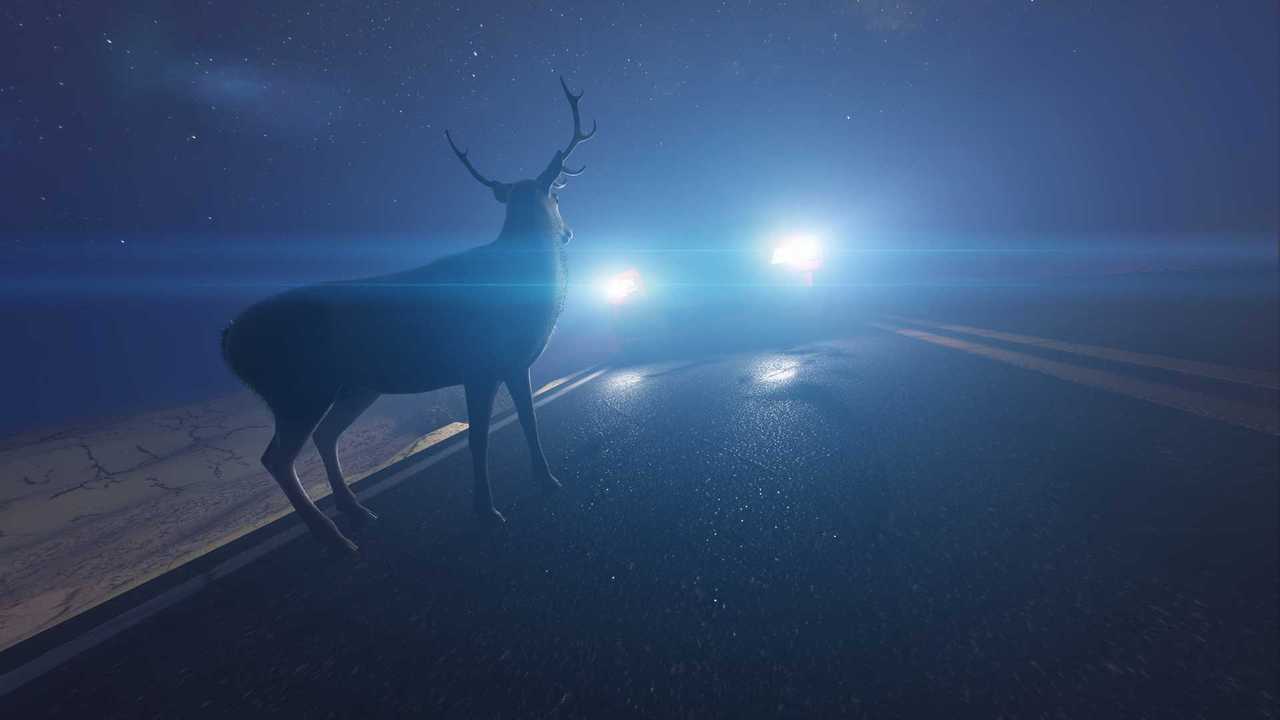
Deer walking on the road at night in front of car
The instinct to yank the wheel when an animal appears is almost universal, but the AAA Foundation‘s data argues against it in most cases. Many deaths tied to animal crashes do not come from hitting the animal itself. They come from what happens next: a tree, a guardrail, an oncoming car, or a rollover after a driver swerves.
New Jersey crash data examined by AAA Northeast backs that up. Drivers who struck a deer directly suffered injuries 4.5 percent of the time, while those who swerved and hit another vehicle or a fixed object got hurt 27 percent of the time, roughly six times the rate.
Wisconsin’s transportation department, which tracked 42 percent of that state’s deer crashes arriving between October and December, tells drivers to brake firmly, stay in their lane, and avoid sudden swerving when a collision cannot be avoided. Staying buckled, using headlights, and cutting distractions round out the advice, especially for motorcyclists who carry the highest stakes in this data.
The study adds one caveat worth remembering. The guidance against swerving is built around deer-sized animals, not moose, elk, or bison. A collision with an animal that large can be dangerous enough on its own that the usual advice does not automatically apply.
More On Road Safety:
Source:
AAA Foundation via AAA Northeast
We want your opinion!
What would you like to see on Motor1.com?
– The Motor1.com Team