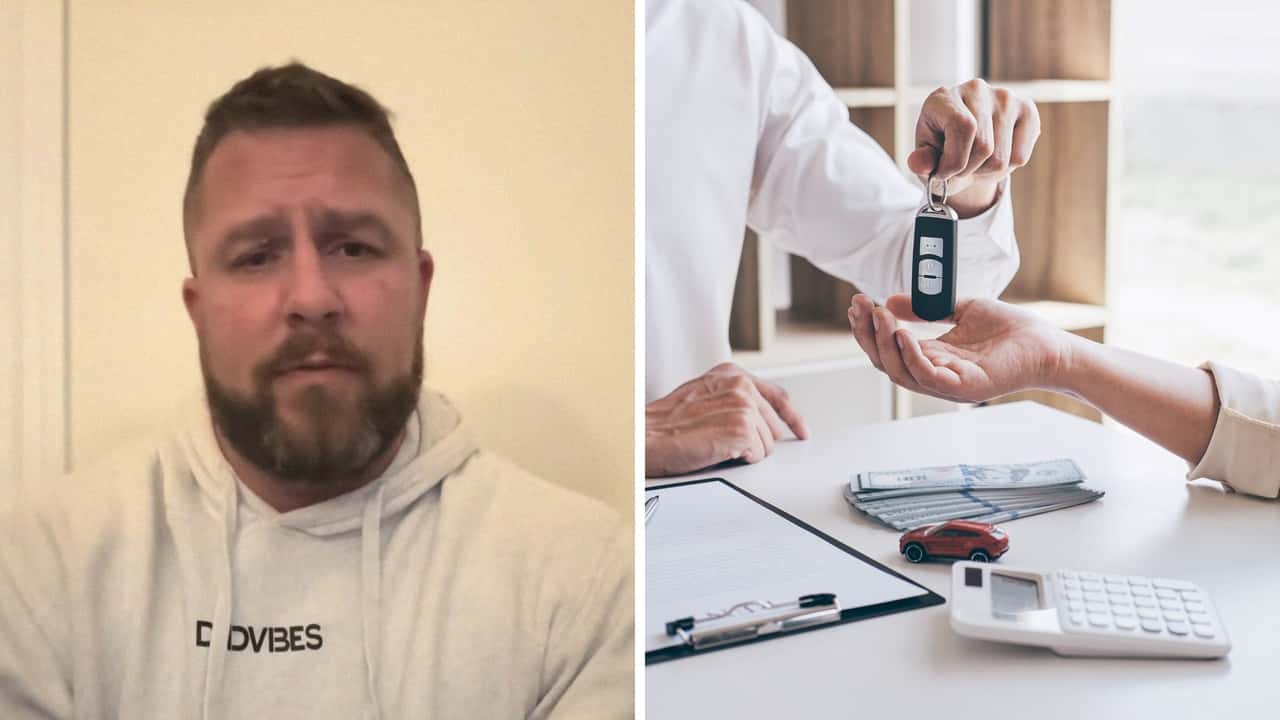
“Car dealerships are the scummiest places on Earth.”
The car-buying process is notoriously stressful, and it’s made worse by the fact that consumers often don’t feel they can trust their salesperson to give them a fair deal.
One former dealership general sales manager says consumers are right to be nervous and shared that the manipulation goes deeper than most people realize—and he couldn’t stomach it anymore.
In a viral video with more than 14,600 views, content creator Chris Payton (@chrispayton527) revealed the final straw that pushed him to leave the dealership industry last February.
Payton, who worked as a general sales manager, explains that while he often tells people he left to help friends buy a Honda Pilot—and realized he could work for himself—there’s more to his departure. And it still gets him “riled up” to talk about it.
The incident involved a couple buying a Honda CR-V. A salesperson at Payton’s dealership sold the vehicle to a man whose wife “hated the car-buying process.” She wasn’t present for the initial sale, but when her husband went into the business office to finalize paperwork, she showed up.
That’s when things got tense.
“So, honey, I thought we were getting the sport touring C–RV, and I thought that that’s what we were agreed on,” the wife said, according to Payton.
Her husband confirmed that’s exactly what they were buying. But she’d done her homework.
“Well, that car’s only $43,000. Why are we paying 46 for it?”
The answer? Dealership add-ons. Floor mats, cargo tray, splash guards, paint protection—”all the stuff, all the adds,” as Payton puts it. That extra $3,000 was tacked on through accessories added to every vehicle on the lot.
The salesperson came in and justified the fees. The couple signed. Deal done.
Or so the dealership thought.
The next day, the dealership got slammed. Google reviews, Facebook posts, Yelp complaints—the couple lit them up across every platform.
That’s where Payton’s job kicked in.
“My job as a general sales manager was to reconcile the situation, make it all better, make it go away, and do what you have to do to make a customer happy, right?” he says.
And he did exactly that. For about $1,000 back to the couple, Payton got every negative review taken down. He smoothed things over, turned the angry customers into “really happy” ones who even posted positive follow-ups. But here’s the kicker: they were still paying $2,000 over MSRP. And they thought they’d won.
“That ended it for me,” he said. That was his last day working at a dealership. “I can’t continue doing that to consumers,” he explains in the video.
In his caption, Payton breaks down the dealership playbook even more bluntly: “Make the deal ugly, manage the fallout, rinse and repeat.”
He now works helping buyers navigate the car-buying process, getting the deal right “before the paperwork, not repaired after the damage.”
“If you’ve ever wondered why dealerships feel manipulative… this is why,” Payton writes.
Payton’s story highlights a controversial dealership practice that’s become increasingly common: tacking on thousands in add-ons and fees that push prices well above MSRP (manufacturer’s suggested retail price).
While dealers have always offered extras, the tactics Payton describes (mandatory accessories added to every vehicle) represent a shift in how dealerships operate. Supply chain issues during and after the pandemic turned the car market into a seller’s paradise. According to research firm Haig Partners, cited by Time, the average gross profit for dealers jumped to $6,244 per new vehicle in early 2022—a 180% increase from 2019. Many dealerships posted their highest profits ever.
That windfall came from markups and fees. VIN etching, for example, is an anti-theft tactic from decades ago that you can now DIY with a $20 kit. Yet dealerships were charging hundreds for it, sometimes without even performing the service, according to Dan Blinn, managing attorney of the Consumer Law Group. Consumer Reports notes that rustproofing and fabric protection are similarly unnecessary—”just an expensive spray-on” —and that modern cars don’t need them.
But here’s the thing: Dealerships present these charges as non-negotiable or already installed. Exhausted buyers accept them rather than walk away. And when they complain afterward? That’s when managers like Payton step in, not to fix the system, but to manage the damage.
Edmunds explains that new car sales actually generate slim profit margins. The new-vehicle department accounts for about 58% of total sales but less than 26% of gross profit, according to the National Automobile Dealers Association.
So add-ons, extended warranties, and finance products have become part of the sale.
The Federal Trade Commission proposed rules in 2022 that would require dealers to disclose full prices upfront. But the National Automobile Dealers Association opposed it, arguing it would “overburden small businesses.” Meanwhile, attorneys like Blinn reported a 25% increase in lawsuits against dealers since the pandemic began, with “all types of people” feeling taken advantage of.
“Car dealerships are the scummiest places on Earth,” a top comment read.
“U mean u have a conscience,” a person shared.
“I don’t know what kind of a dealership you worked for, but I worked for a corporate store that was kind of like that, and now I work for a family dealership it is much better,” another wrote.
“The customer didn’t pay over MSRP, they paid for accessories? How’d you let that crack you? lol Plus if they didn’t find value in the accessories they didn’t have to buy the car. You can’t pressure someone to buy a 50,000 car now get back in there champ,” a commenter added.
Motor1 reached out to Payton via Instagram and TikTok direct message. This story will be updated if he responds.
More Honda News
We want your opinion!
What would you like to see on Motor1.com?
– The Motor1.com Team