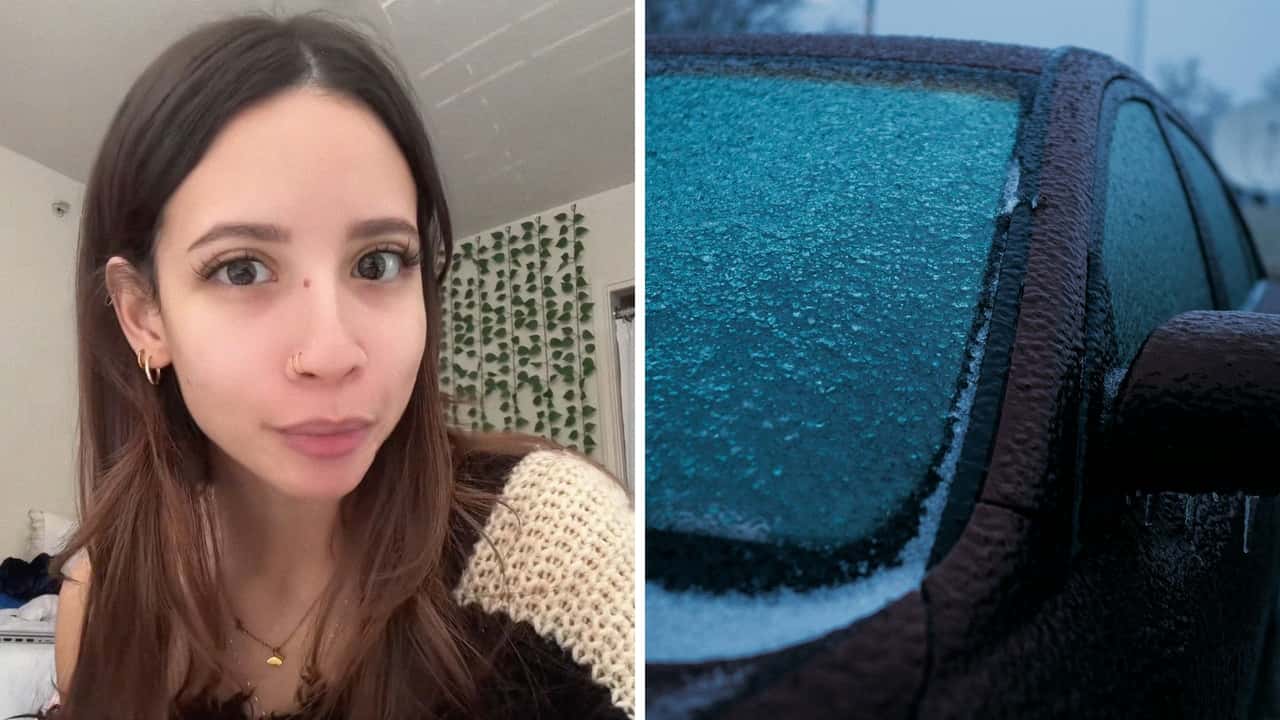
“I saw this too late.”
A transplanted Northeasterner now living in Texas has advice for people in warmer climates about how not to deal with the layers of ice coating their cars in severe winter weather. Put plainly: pouring boiling water on an icy windshield is one of the worst ideas ever.
TikTokker Chamita (@certifiedchamita) filmed a viral video inside her snowy, ice-covered car, a situation many Texas residents and others across the eastern and southern US have faced in recent days. The former New Hampshire resident urged viewers to instead heat their cars up from the inside to melt the snow and ice.
“You need to get in your car right now, turn it on, turn the heating on, and let it melt, ‘cause it’s gonna keep snowing,” she says in the clip that’s been viewed more than 101,000 times. “The temperature’s gonna keep dropping, and everything is just gonna freeze on your car.”
Her simple advice to refrain from pouring hot water on it sparked a lively debate in the post’s comments. Many winter-weather rookies admitted they regretted trying to outsmart Mother Nature and the laws of thermodynamics.
“I saw this too late,” was the somber first response, with a sad face emoji.
Or there was a little more detail from a commenter who was trying to be patient: “Also, if you have a crack or chip in the windshield, turning the defroster on can cause it to crack or shatter. Ask me how I know. Better to scrape it off.”
For winter weather rookies facing layers of ice coating their car, a pot or kettle of piping hot water can seem like a secret weapon. In actuality, it’s almost a coin-flip risk, with the losing end being a broken windshield and a pricey repair bill.
The reason for the break is thermal shock. This happens when a freezing-cold windshield meets a blast of near-boiling water, as the exterior layer of glass heats up and rapidly expands.
Because glass is a poor conductor of heat, the inside layer next to the cabin remains frozen solid. That creates a substantial and rapid temperature gradient across the glass, with one side hot and the other frigid.
That sudden shift produces stress from the competing expansion and contraction. The end result is a fracture. The chance of a shatter increases substantially if there’s already a small chip or a crack in the windshield, since that flaw becomes the weak point where the stress concentrates. In the end, it’s a rough and costly way to learn a pretty basic lesson in physics.
Dealing with accumulated ice was a concern across Texas and many parts of the southern US over the weekend, as a strong Arctic front brought colder temperatures and snow, sleet, and freezing rain.
In North Texas, ice reached more than an inch thick, with some areas around the Dallas–Fort Worth Metroplex reporting up to five inches of ice. Beyond the Texas–Oklahoma region, portions of Louisiana, Mississippi, and South Carolina saw ice up to an inch thick.
Observers should give Southern residents a pass who find themselves a little bewildered by heavy snow and ice accumulations. After all, this is a once every two or three years kind of situation for them, so the simple lack of exposure to cold conditions is what causes major Southern cities and regions to shut down for days when rough weather hits.
Add in the lack of snowplows and salt trucks, and you understand the steep learning curve these folks face in situations like this.
Here are some other basics motorists need to keep in mind when roadways haven’t been substantially cleared:
Smart tips for cold-weather preparation include keeping an emergency kit in your vehicle: a blanket, water, a bag of cat litter or sand for tire traction, and a fully charged power bank for your phone.
To get into the car, use an ice scraper to clear the entire windshield and rear window, and to clear snow off the roof, hood, and headlights. As we learned in the video, a smart move is to start the car and let the engine run with the defroster on, though it’s best not to leave the car unattended.
If there’s a frozen door lock to deal with, you can use hand sanitizer on your physical key to melt the ice. And, obviously, it’s best to drive slowly and safely in these situations, which means gentle acceleration and braking, with slow turns.
Motor1 reached out to Chamita via direct message and commented on the clip. We’ll update this if they respond.
We want your opinion!
What would you like to see on Motor1.com?
– The Motor1.com Team