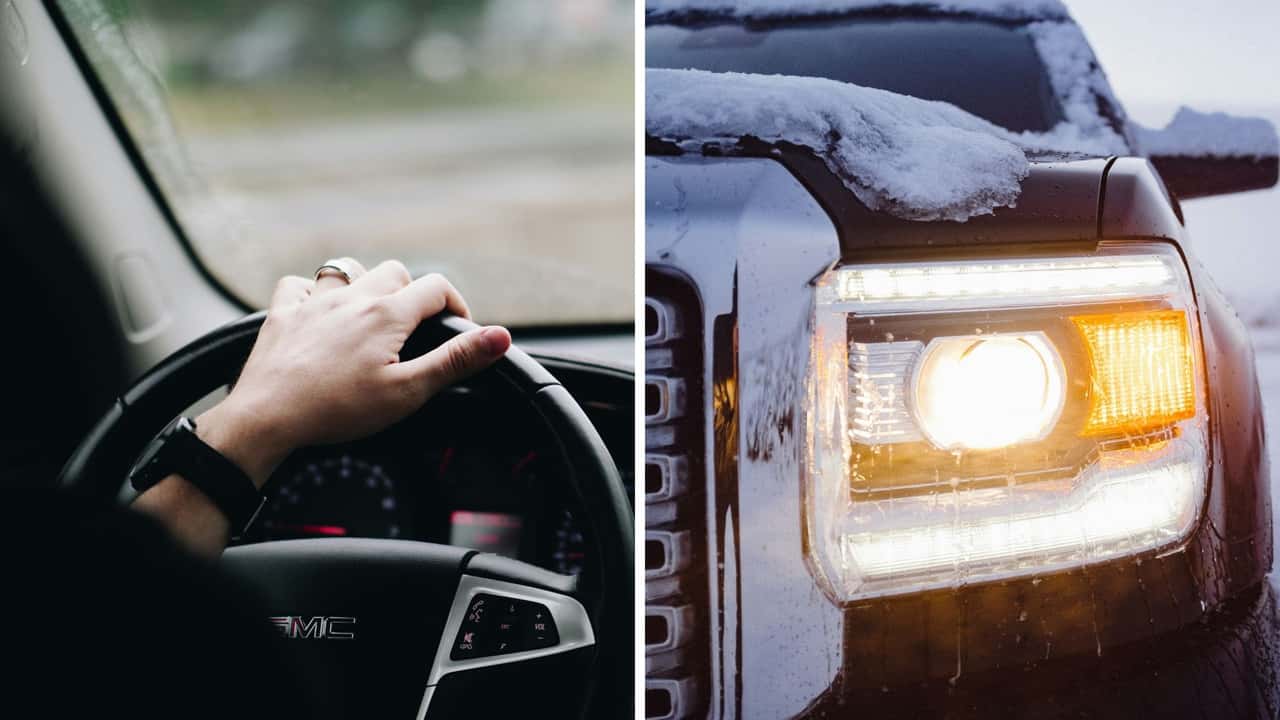
“Help take some wear off the motor.”
It might be the pinnacle of adulting. No, not monitoring your credit score, eating your cruciferous veggies, or wearing sensible shoes: planning how to care for your vehicle as a monster winter storm is about to roll in.
It’s learning, for example, that block heaters can help prolong the life of your vehicle in freezing winter temperatures. Recently one new Duramax Turbo-Diesel owner, Midwestmotodad715 (@motodad715), turned to the internet for help understanding at what temperature, it’s time to start keeping his engine warm.
He’s posting from the western edge of Michigan, so he’s got legitimate cause for concern. In a screenshot of his area’s weather map, the words “extreme cold watch” are discernable. And then, there’s the wind chill factor: up to 15° to 20° below zero. According to that same report: frostbite happens in less than 30 minutes in those temperatures.
Motodad has asked in the TikTok, “What temp are you plugging your block heaters in at?” He gives a little more context in the caption: “LM2 Duramax cold start. First winter with a diesel. What temp are you plugging in block heaters & pre-treating fuel?”
Comments on the post include plenty of commiseration and advice.
One user suggests wasting no time: “I’d plug it in tonight. Help take some wear off the motor when you start it tomorrow. My work truck is a gasser with a block heater and it’s plugged in,” said Trevor VanPolen.
Macie added, “If it’s below freezing the diesel is getting plugged in. If it’s below 5° my gas F-150 is getting plugged in.”
Though several people agree with her, a couple other folks suggest a higher temperature at which to start heating. Angela Kallevig says she errs on the side of caution: “Anytime it’s below 20°F I’m plugging it in. It may not NEED it, but I don’t mind babying him.” She includes a picture of her Ford F-350.
Kayla Johnson said she does plug her 2014 Ford Super Duty 6.7 diesel power stroke in when the thermometer reads about 20° Fahrenheit. She explains that it’s less for the vehicle, and more for the peace, “I typically plug mine in overnight when it hits 20, not really necessary. Mostly do it for my neighbors, so it’s not so loud in the morning. but if it’s gonna be sitting for a few days, I always plug it in because I live in Minnesota.”
Just like people who struggle to get out of bed on cold days, engines (gas and diesel alike) can struggle to start in icy weather. This is because when the temperature drops, the oils and fluids in a vehicle become more viscous and “sludgy.” This reduces “lubrication and causes engine parts to scrape against each other,” potentially damaging the engine. Additionally, the metal in the engine can become brittle, making it more prone to breakage.
According to Coffman GMC, for diesel engines specifically, because they require more heat to ignite, and vehicles that do not use synthetic oil, “installing a heater is one of the best winter hacks to preserve engine life.”
There are multiple heating options to choose from. So what’s the best option?
For those who live in a climate prone to cold snaps, but not extreme ones, experts recommend an engine block blanket. If you’re imagining a heating pad for your car, you’re not far off. It’s just scaled up to be engine sized.
For environments where the thermometer regularly dips below zero, those same experts suggest considering an oil heater. It’s typically a component that either threads into a vehicle’s oil pan, or is inserted into the dipstick tube.
There are other types of heaters as well, like in-hose coolant heaters, bolt-on block and pan heaters, and freeze plug heaters all which NAPA encourages professional installation for.
However you choose to proceed, consider where you live, how you live, and the specifics of your vehicle.
Motor1 reached out via TikTok direct message and TikTok comment to Midwestmotodad715, we’ll update this article if he replies to us.
We want your opinion!
What would you like to see on Motor1.com?
– The Motor1.com Team