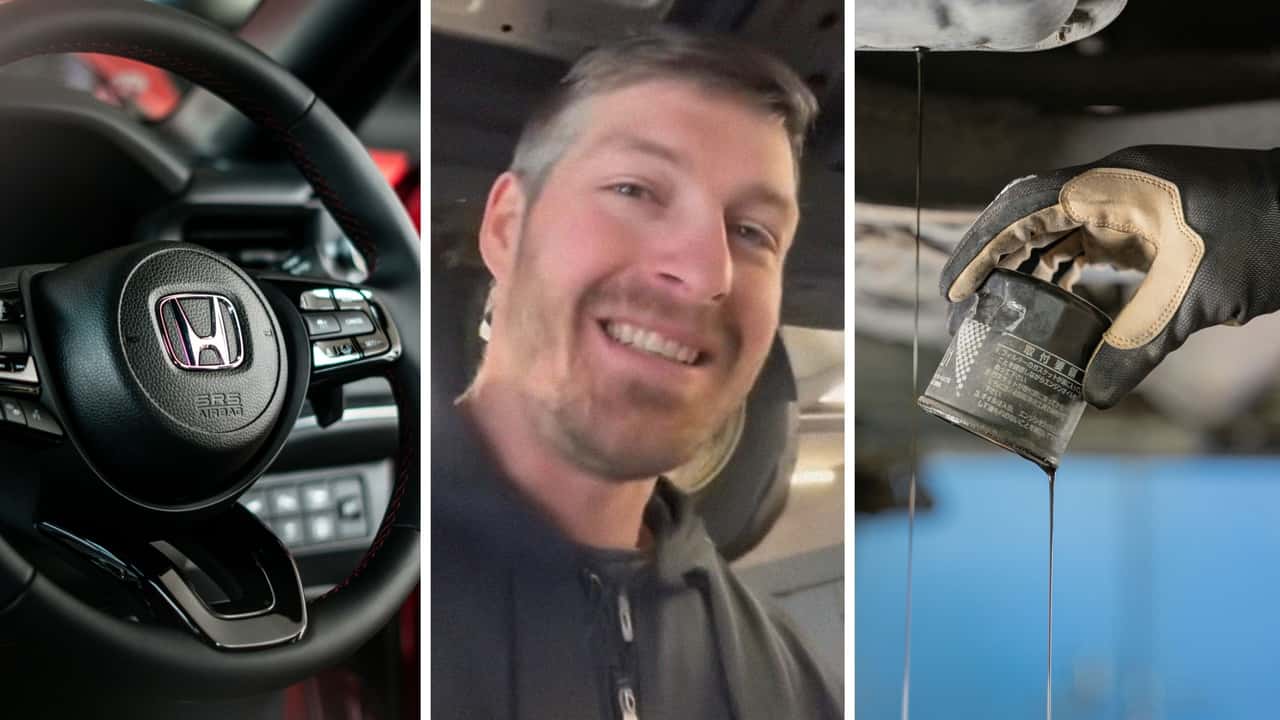
“There’s a reason why dealerships are called ‘stealerships.'”
Is getting your car fixed at a dealership a surefire way to get scammed? Many people think so—and stories like this are one of the reasons why.
In a video with over 235,000 views, TikTok user Sean Brown (@talkingshop716) says that “unfortunately, there’s a reason why dealerships are called ‘stealerships.’”
According to Brown, a customer went to a local dealership for an oil change. He did this due to both convenience and the fact that he had an oil change coupon.
Brown says that when they looked at his Honda CR-V, they told him that it was a mess.
“They come out to this customer and say, ‘Sir, the underside of your engine is completely covered in oil. Your oil pan is leaking. You’ve got oil everywhere. We need to replace your oil pan,’” he reports.
Concerned, the customer called up Brown to determine whether there was an issue with the car. Brown then took a look at the car—and determined that, as best he could tell, there was nothing wrong with it. The parts of the car that would normally be covered in oil in the event of a leaking oil pan were totally oil-free.
“I know what some of you are gonna say. ‘OK, well maybe they cleaned it off just to be nice,’” Brown starts. “Unfortunately, I don’t think there’s a flat-rate mechanic left in this trade outside of some good people that I know that would actually clean that off for a customer after they deny the repair.”
In conclusion, Brown stated that if dealerships are going to continue being dishonest, there are going to be issues in the long-term.
“You can only lie to people for so long. You’re gonna lose all your business,” he says. “I mean, there is enough money to be made in this industry honestly than to be roping people in with little oil change coupons and then trying to sell them services that they don’t need.”
Many say that apparent scams like these are common in the auto industry.
The scam usually works like this: a business will offer free or heavily discounted routine work, such as an oil change or an alignment. Then, when the customer has brought in their car, the shop will tell them that there is other work to be done. What could have been a cheap oil change then becomes a repair worth tens or hundreds of dollars.
These aren’t just anecdotes, either. In 2009, investigators in California conducted approximately 30 undercover visits at 22 Midas locations after there were allegations that the shops were advertising cheap brake specials, then using the visit to sell additional repairs.
These investigators alleged that there were more than 35 incidents in which employees made false or misleading statements to pressure customers into unnecessary work. These unnecessary charges averaged almost $300 per undercover visit. In some cases, the additional work was never even performed.
Similar investigations have taken place in New Jersey and other states.
If you suspect that a dealership or auto shop is yanking your chain, the best thing to do is take a step back and call a trusted mechanic.
During your conversation with the mechanic, you can tell them what the previous mechanic said, then instruct them to further investigate the alleged issue. If the alleged issue is real, they can offer you a quote to fix it. You can then compare this quote with the previous mechanic and, if necessary, move forward.
Some alleged problems may not even require a trip to the mechanic. For example, a common scam involves a service provider claiming that your air filter needs to be replaced. They may even emphasize this point by showing you a dirty air filter, claiming that it’s yours.
Thankfully, most cars make it pretty easy to look at—and, if needed, replace—your air filter. In fact, it can often be done in around 15 minutes, even if you know little or nothing about cars.
If a shop recommends work you know is not needed, you should avoid taking your car to them in the future. Instead, set your sights on finding a trusted mechanic—even if that’s easier said than done.
In an email, Brown said that he regularly gets customers coming in for second opinions, often visiting him after bringing their cars to dealerships and chain lube shops. In this case, the dealership was a local Honda dealership.
“This was an 80 year old man that they were trying to take advantage of,” he said of the dealership.
As for how customers can avoid being put in these situations, Brown had some advice.
“Any time a service advisor tries to make you feel trapped or panicked to get a repair done, question it, unless you know that there is something seriously wrong with your car,” he stated. “I advise everyone to make the advisor or technician take them to their car and show them what is wrong and explain to them why it needs to be replaced or serviced.”
He then stressed the importance of “asking for a visual.”
“Have them explain why the part that they’re trying to sell you needs [to be] replaced,” he shared. “Too many people put blind trust in auto repair establishments. We have an open door policy at my shop. I regularly bring customers out to their vehicles to help them understand what is going on and why a repair needs to happen. A lot of dealerships have adopted a video MPI to send to their customers because of the lack of transparency between technicians and service advisors.”
We want your opinion!
What would you like to see on Motor1.com?
– The Motor1.com Team