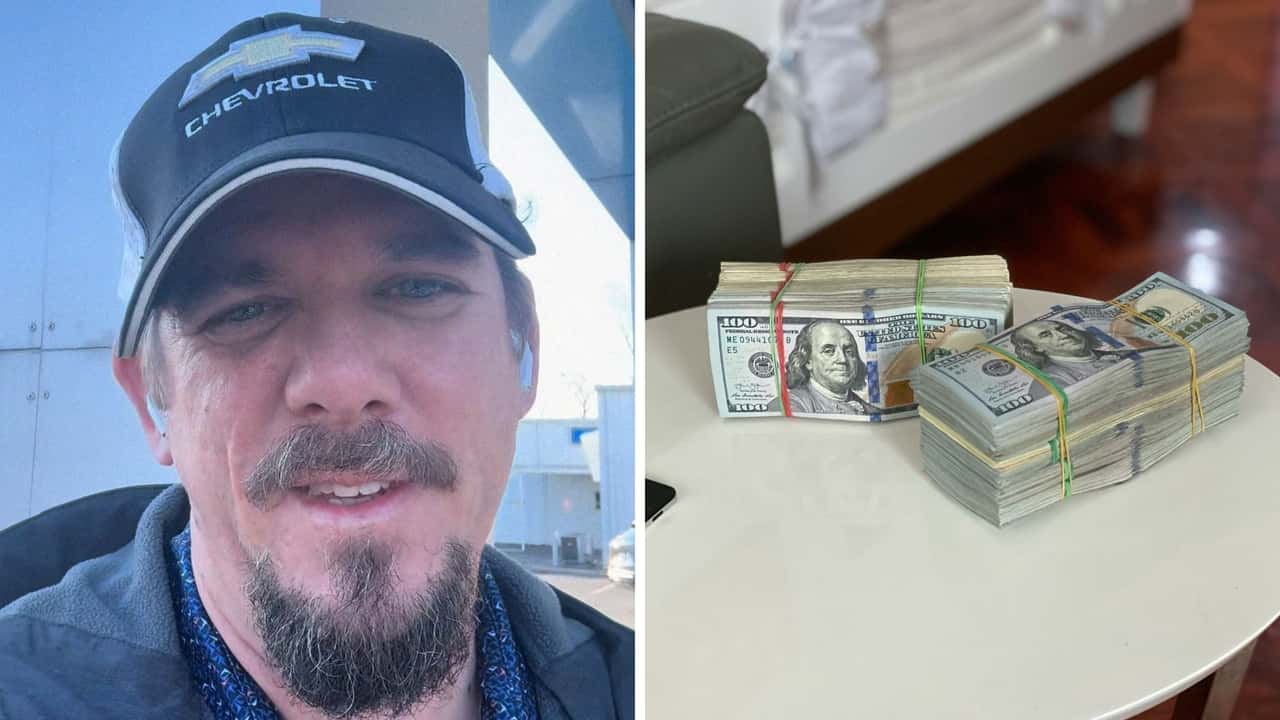
“I’m about to make a lot of car salesmen angry.”
A Chevrolet salesman’s honest take on commission structures in car sales is challenging industry stereotypes and exposing what he calls predatory tactics used by some dealers.
Brent (@brentthecargent), who works at Long-Lewis Chevrolet in Tuscumbia, Alabama, shared a video breaking down how commission works in car sales—and why some salespeople prioritize profit over customer satisfaction.
“I’m about to make a lot of car salesmen angry. I don’t care what car you buy. I really don’t,” Brent says at the start of the video, filmed on his dealership lot.
His approach stands in stark contrast to the commission-based model that dominates much of the automotive sales industry, where salespeople earn a percentage of the gross profit—the difference between what the dealership paid and what the customer pays.
Brent explains that he’s encountered confusion among buyers who watch automotive content online, particularly around the term “gross” in relation to commission.
“What gross is, is the difference between the price of the vehicle that the dealership paid and the price that you as a consumer buy it for. And that’s a percentage of what they get paid off of,” he explains in the TikTok.
The counterintuitive reality of commission-based sales becomes apparent in his next point: the sticker price of a vehicle doesn’t determine how much money a salesperson makes.
“It doesn’t matter how much the car costs. It doesn’t matter if it’s an $80,000 car or a $20,000 car. I’ve made more money on $20,000 cars than I have $80,000 cars,” he says.
To illustrate this point, Brent shares a striking example: “As a matter of fact, the most expensive car I’ve ever sold, I made a hundred bucks on it because there was no gross left in the deal.”
The revelation underscores how dealership profit margins—not vehicle prices—drive commission. An expensive car with minimal markup can earn a salesperson far less than a modestly priced vehicle with significant profit margin. According to McKinsey analysis, margins in the luxury segment ranged in the double digits from 2016 to 2021, while the mass market remained in the low single digits during the same period, meaning the actual dollar amount of profit can vary dramatically based on negotiation and market conditions rather than vehicle price alone.
Brent’s video takes aim at salespeople who prioritize maximizing profit per transaction over building long-term customer relationships. He specifically calls out colleagues who brag about their gross commission earnings.
“Listen, if you see a car salesman bragging about how much gross they made, I want you to know one thing. They can sell less cars and make more money in certain situations than somebody like me that is out to sell a larger amount of cars and be a better salesperson to you,” he says.
He describes his own approach as focused on volume and repeat business rather than squeezing maximum profit from each deal. “My job is to earn your repeat and referral business. That way I sell a monumental amount of cars while their job is to what they call knock your head off.”
The phrase “knock your head off” refers to an aggressive sales tactic focused on extracting the highest possible profit from a single transaction. “Make as much money off of one deal as perfectly possible. They do it and they’re good at it. I was good at it, but it’s not a good way to earn repeat and return and referral business,” he admits.
This tension between maximizing per-deal profit and building customer loyalty has led some dealerships to rethink compensation structures entirely, with a growing number moving toward bonuses for repeat customers and referrals rather than solely rewarding gross profit.
Brent positions himself as working under a different compensation structure—one he says benefits customers more than traditional commission models.
“My job is to find the right car for you based off your budget, based off your needs, and what works best for you. Not what’s best for the dealership. What’s best for you,” he says.
His pitch to car buyers is straightforward: “So ask yourself, do you want a gross commission salesperson or do you want a non-commissioned salesperson? His job is to listen to you, take everything that you say into account, find the perfect vehicle for you.”
The distinction between commission-based and salaried or volume-based compensation structures in automotive sales has long been debated in the industry. Traditional commission-based plans often lead to high turnover rates and may encourage aggressive sales tactics. Proponents argue they motivate salespeople to close deals and work harder. Critics contend commission structures create incentives to prioritize profit over customer satisfaction.
While Brent describes himself as non-commissioned and volume-based, the reality of dealership compensation structures can be complex and varies widely across the industry.
Traditional commission-based salespeople typically earn a percentage of the gross profit on each vehicle sold, usually between 20% and 30% of the front-end profit, with the percentage often increasing as they sell more units per month. This creates dual incentives: maximize profit per vehicle and sell as many vehicles as possible.
Some dealerships have moved toward salary-plus-bonus structures or volume-based compensation that rewards total units sold rather than profit per unit. These models aim to reduce pressure on customers while still motivating salespeople to maintain high sales numbers, with some innovative dealers even paying bonuses based on customer relationship metrics like referrals and repeat business rather than gross profit alone.
The gross profit available on a vehicle depends on numerous factors including the vehicle’s age, market demand, how long it’s been in inventory, and the dealership’s acquisition cost. While luxury vehicles may carry slightly higher percentage margins, the variation in actual profit depends far more on individual deal negotiation than vehicle class.
At least one fellow salesperson validated his perspective.
User Nik Mazy, who identified as being in “sleep sales,” wrote: “100% I’m in sleep sales and I do the same thing get people what they need/want in the budget they have and the money will follow don’t worry about how much you make on 1 deal zoom out and see the extra 10-30 units sold a month from referrals.”
Brent responded, “That’s awesome!”
The exchange highlights a broader philosophy among some sales professionals that customer satisfaction and volume ultimately generate more income than aggressive profit maximization on individual transactions.
Brent’s video further contributes to growing transparency in an industry traditionally characterized by information asymmetry. The rise of social media has enabled salespeople, mechanics, and industry insiders to share behind-the-scenes knowledge that demystifies car buying.
His call-out of “predatory” gross commission tactics addresses a common consumer complaint: feeling pressured or manipulated during the buying process.
Motor1 reached out to Brent via TikTok direct message. We’ll be sure to update this if he responds.
We want your opinion!
What would you like to see on Motor1.com?
– The Motor1.com Team