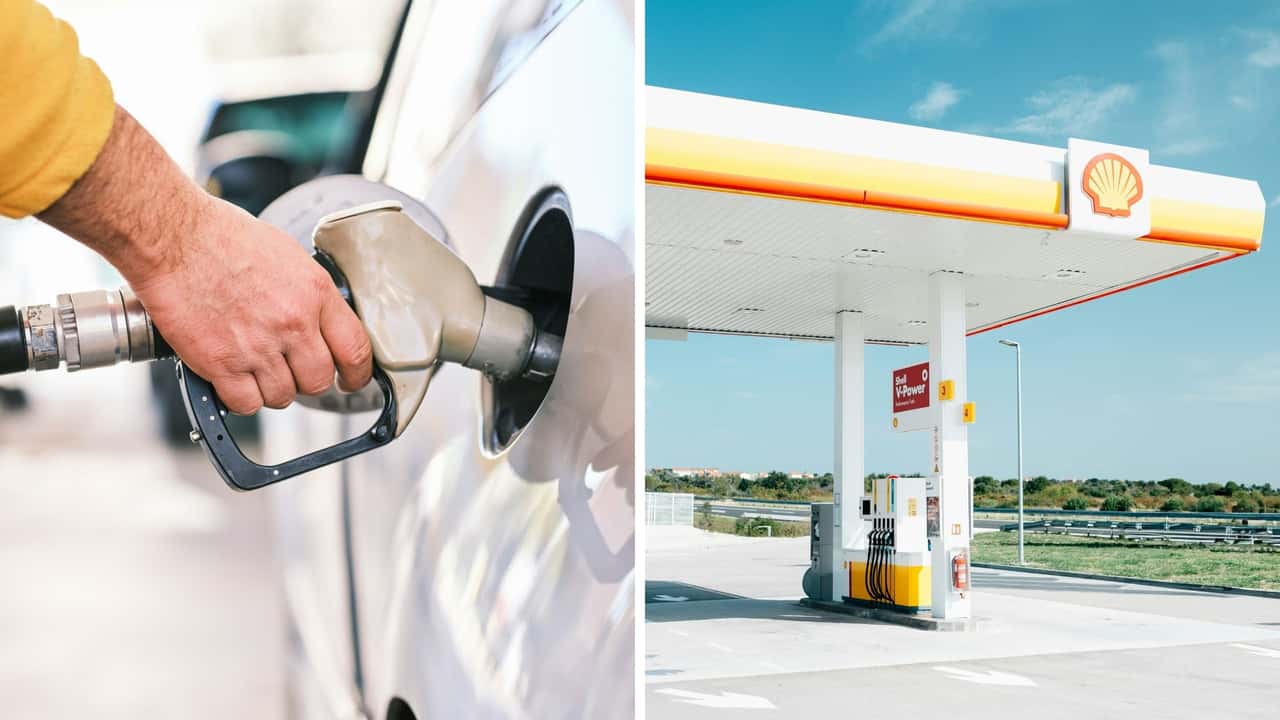
“Do you guys think that he forgot?”
In parts of North America, turning your car off at the pump in winter feels less like common sense and more like punishment. So when a clip showed a driver refueling with the engine still running, thousands rushed in to explain why they do the same thing, and why they think it’s completely safe.
The viral clip from TikTokker Raykayfit (@raykayfit) takes a pretty judgmental tone while observing a fellow motorist at a Shell station in what appears to be cold and snowy weather, i.e., the kind of conditions where it’s preferable to leave a vehicle running to keep the cabin warm.
“Do you guys think that he forgot that his car is on, or he just doesn’t care?” he asks in the clip that’s been viewed more than 35,000 times.
On social media, the debate over whether it’s ever safe to fuel with the engine running tends to fall along regional and cultural lines. In winter climates, some drivers say leaving the engine running just makes sense to keep it warm, especially if they expect to be at the pump for a few minutes or are fueling a diesel truck that takes longer to heat up and circulate coolant. Others focus on perceived efficiencies or habits, along with jokes about fighter jets and NASCAR that illustrate how polarized opinions can become even before discussing actual risk.
But automotive safety guidance and fire codes almost universally recommend shutting off the engine during refueling, and there’s a reason for it.
Gasoline itself is a volatile, flammable substance that readily produces vapors at room temperature. These vapors are the real concern at the pump since it’s the vapor that ignites, not the liquid fuel. According to fuel safety guides, gasoline vapors can be ignited by sparks, open flames, or accumulated static electricity, especially in cold and dry conditions where static discharge events are more common.
Even though a running engine isn’t necessarily a direct ignition source, turning your car off removes one potential variable from a complex safety equation. This is especially relevant because modern vehicles have hot surfaces, such as catalytic converters, that can reach temperatures above the ignition point of gasoline vapors under certain conditions.
Industry and fire safety organizations also warn that routine behaviors, such as re-entering your vehicle while fueling, can build static electricity on your body, which could discharge when you touch the nozzle and potentially ignite vapors.
Most gas stations post a sign telling motorists to shut off their engines before fueling. These aren’t arbitrary; they reflect fire codes and best practices designed to reduce the number of potential ignition sources near large volumes of fuel vapor. In many U.S. jurisdictions, fire safety codes explicitly require engines to be shut off during refueling to eliminate risk as much as possible.
That’s partly why, even though incidents are rare and often go unreported, the consequences can be severe enough to justify precautionary rules. Reports on gas station fires have noted that static electricity and mechanical faults together can contribute to ignition events, which is a primary reason safety guidelines emphasize shutting engines off and avoiding re-entry during fuel flow.
One of the more persistent arguments in comments sections is that “it never happens” or that it’s an outdated rule. Some drivers point to motorsport refueling or aircraft operations where engines are running during fuel transfers. But in those professional contexts, vastly different equipment and procedures are used, with tailored safety measures and personnel managing ignition sources, none of which apply at public service stations.
In very cold climates, drivers sometimes resist turning off their engines simply to stay warm while at the pump. That experience is reflected in the responses to the TikTok clip, where commenters from northern regions defend leaving engines running as “normal winter behavior.”
Safety experts acknowledge that the risk of a fire while pumping gas with the engine running is unlikely for most healthy, modern vehicles. But the risk is what underpins universally posted guidance to shut down before fueling. In addition to safety, there are practical considerations such as preventing unnecessary wear on fuel system components and avoiding diagnostic issues in some vehicles that can arise if fuel is added while systems are under load.
The split between viral comment threads and official safety guidance highlights a broader point: doing something without incident doesn’t necessarily mean it’s safe. While a running engine at a gas pump doesn’t guarantee disaster, reducing variables that could contribute to ignition by turning the engine off and avoiding re-entry during fueling is widely considered prudent. Safety advocates emphasize that minimizing potential ignition sources, standing by while fueling, and discharging static when necessary all contribute to a safer experience at the pump.
Motor1 reached out to the creator via direct message and comment on the clip. We’ll update this if they respond.
We want your opinion!
What would you like to see on Motor1.com?
– The Motor1.com Team