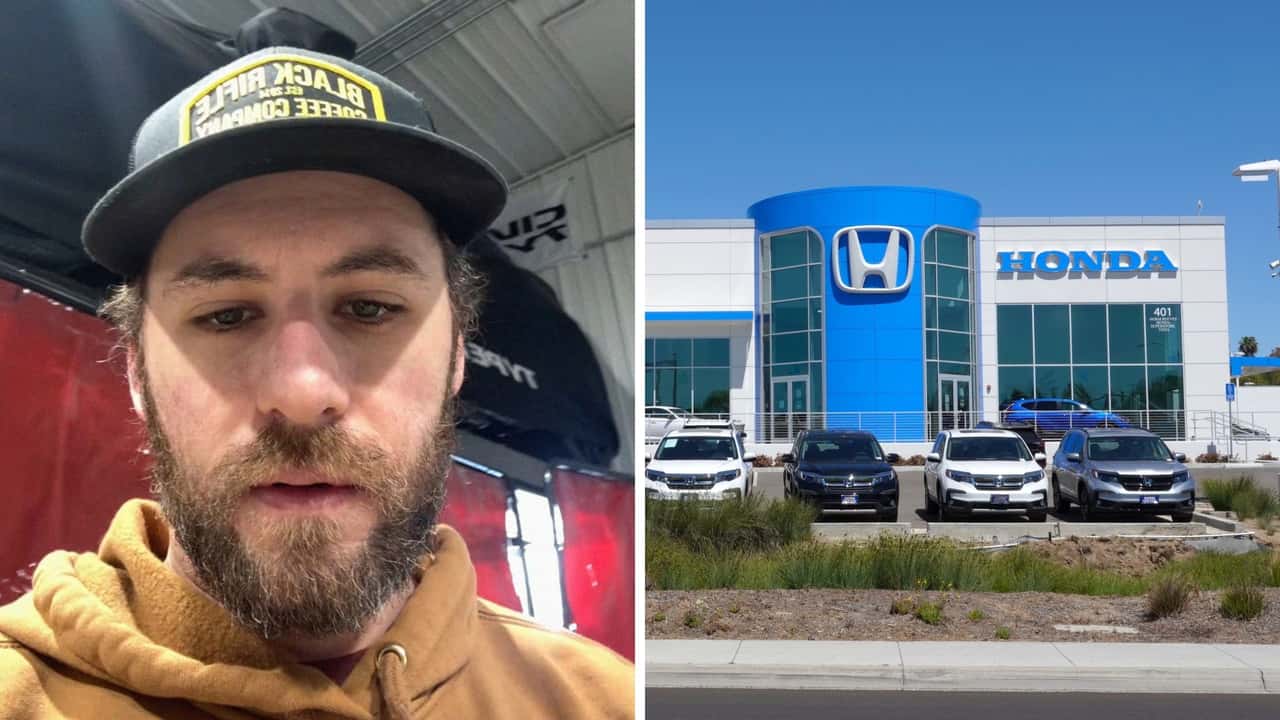
“It says that my car is still at the dealership.”
A Honda buyer’s weekend discovery has sparked a conversation about dealership mix-ups and what happens when the paperwork doesn’t match the vehicle. The seemingly simple mistake has left him wondering about the legal implications of driving a car that technically still belongs to the dealership.
TikTok user grasshopper201 (@grasshopper201) shared his predicament in a video posted on Dec. 22. He explains how a routine attempt to set up his vehicle’s mobile app led to an unexpected discovery.
“I purchased a car late Friday night. I did all the paperwork, signed everything, drove the car, loved the car,” grasshopper201 explains. “Basically wrote them a check and then went out the door with the car and got home.”
The mix-up came to light when grasshopper201 tried to register his new vehicle with Honda’s mobile application. “Saturday night, start messing with the car, start doing the app and everything, type in the VIN number on my phone and it says that my car is still at the dealership,” he reveals.
After further investigation, he discovered that the dealership had given him the wrong vehicle entirely. “Come to find out, they gave me the wrong car. So it’s technically the right car. It’s what I wanted and everything, color, spec, whatever. But they had about five of them on the dealer lot. So they must have just grabbed the wrong one and I filled out paperwork for the other.”
Grasshopper201 explains he purchased what appears to be a Honda Civic Sport Touring Hybrid, and while he received the correct model and specifications, it wasn’t the specific vehicle he had signed paperwork for.
The situation creates several concerning issues for the buyer. “I’m going to have to call them on Monday and get it sorted out because I can’t have title work and stuff coming. That’s the wrong number for the wrong car,” grasshopper201 explains. “This car doesn’t belong to all the paperwork that I have. This car technically still belongs to the dealership.”
The legal implications are significant. From a documentation standpoint, the customer has a loan and insurance tied to one VIN, while they possess a completely different vehicle. According to automotive legal experts, VIN mismatches can create problems with insurance claims, vehicle registration, and legal ownership. Industry data suggests that roughly 20% of used-car buyers face title-related issues, with VIN discrepancies among the most common hurdles.
The video prompted responses from automotive industry professionals who provided insight into how such mistakes occur and are resolved. Ducklord666, who claims 30 years in the business, offered detailed context: “This happens sometimes, it shouldn’t but it does. That’s why we use something called an in & sheet. The sales person writes the VIN down with miles … and gives it to the manager so they can verify the correct car is being papered and delivered.”
While specific terminology varies by dealership, automotive inspection procedures commonly use verification checklists and documentation systems to ensure the correct vehicle matches all paperwork. These processes are designed to prevent exactly the type of mix-up grasshopper201 experienced.
The industry veteran recommended a diplomatic approach: “Just go in when they open and get the right one delivered. Ask them for a store credit for the inconvenience, use it for accessories or oil change and they will more than likely oblige. Just don’t go in hot, mistakes happen and at least it was caught early.”
Ducklord666 also shared that timing matters: “I have seen it once where it didn’t get noticed for almost 2 months when the other car was being sold. Crazy for sure.”
Several commenters offered practical advice for resolving the situation. “Just go swap cars—no biggie,” suggested ChiefJ82, while 6of1HalfDozenoftheOther recommended: “Just go back and sign new paperwork for the one you’re in or swap cars for the one that matches the paperwork.”
Adrian, who claims to have industry experience, noted, “Not that common, but still happening, just bring the car back and talk to a manager.”
The consensus among knowledgeable commenters was that while uncommon, such mix-ups do occur and are typically resolved without major complications when caught early.
Throughout the ordeal, grasshopper201 maintained a level-headed approach. When responding to advice about remaining calm, he wrote, “I understand mistakes happen, I’m not mad about it, I just want it fixed.”
This diplomatic stance likely serves him well, as industry professionals emphasize that approaching the dealership cooperatively typically yields better results than confrontational tactics.
The comment section revealed that VIN-related mix-ups extend beyond just vehicle swaps. Eric Swanson297 shared: “Dealership gave me wrong title for van I bought one time,” later confirming the dealership “took care of it and I got correct title.”
Another commenter, robertsteich3, described a more concerning scenario: “Many years ago, my insurance agent swapped two numbers around. I didn’t notice it for at least a month or two… What if I got into a crash, or pulled over.”
As of the video’s posting, grasshopper201 indicated his intention to address the situation promptly. “Going first thing in the morning,” he responded to a commenter’s advice about returning to the dealership.
The customer confirmed that both vehicles should be identical in specifications: “The cars should be identical, all sport touring hybrid civics,” which should simplify the resolution process since he received the correct model and trim level.
This incident highlights the importance of several verification steps during the car-buying process. Consumer protection experts and automotive safety organizations recommend double-checking that the VIN on the vehicle matches all paperwork, verifying the VIN with mobile apps or manufacturer websites before leaving the lot, and ensuring that all documentation reflects the correct VIN.
Federal regulations require dealers to maintain accurate VIN records to prevent fraud and ensure proper vehicle identification.
While such mix-ups are relatively rare, the consequences can be significant if not caught quickly. As grasshopper201’s experience demonstrates, modern technologies like manufacturer apps can serve as early warning systems for such discrepancies.
The situation also underscores the importance of dealerships implementing proper verification procedures, such as comprehensive inspection checklists mentioned by industry professionals, to prevent such mix-ups from occurring in the first place. Industry standards emphasize the importance of accurate documentation and honest dealing in all vehicle transactions.
Motor1 reached out to grasshopper201 via TikTok direct message for comment. We’ll be sure to update this if he responds.
We want your opinion!
What would you like to see on Motor1.com?
– The Motor1.com Team