“No one knows how crazy impressive this is.”
The repair shop’s verdict for a determined motorist was blunt: her car was totaled. Too expensive to fix, not worth the labor, end of discussion. Instead of calling an insurance adjuster or shopping for a replacement, the owner took the car home, bought a code reader, and started pulling parts in her yard.
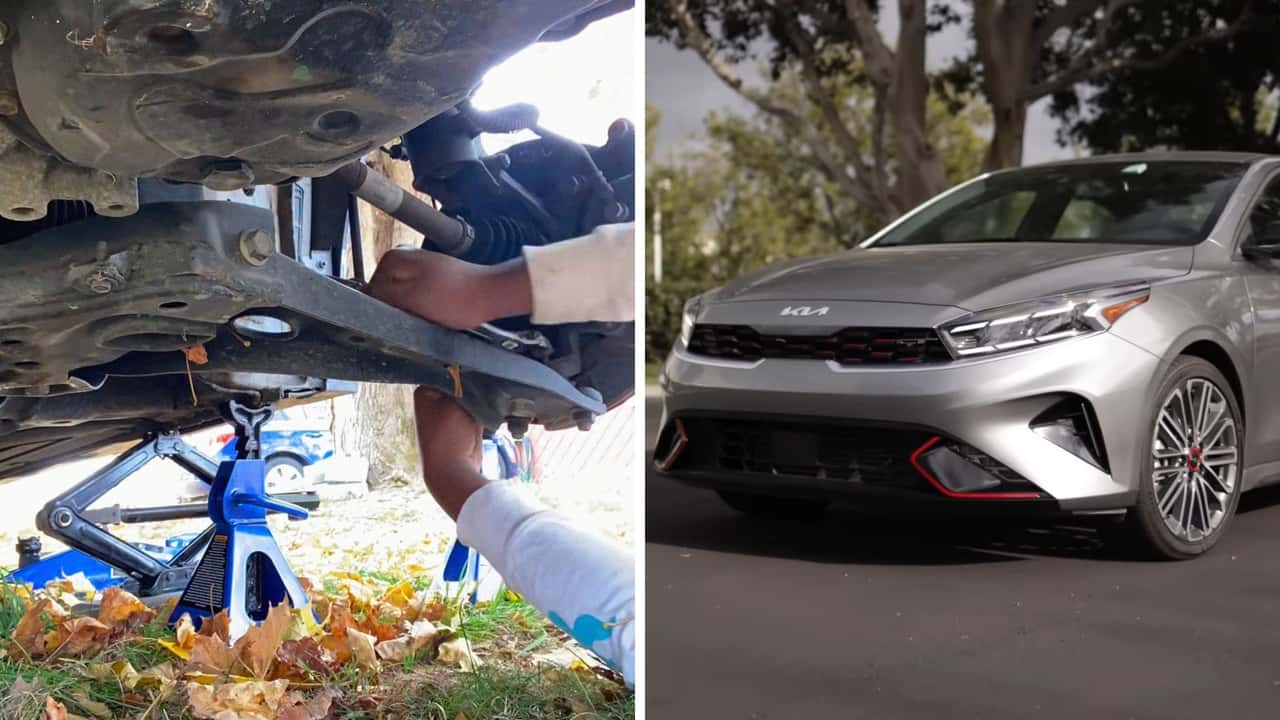
In a viral TikTok clip from Pennsylvania-based creator Taya King (@.milelee), she presents a series of slides and short videos that capture her progress as she performs heavy-duty repairs to get her sedan back on the road.
“I don’t really take no for an answer,” she wrote in the caption of the clip that’s been viewed more than 786,000 times.
The distinction at the heart of King’s story is one many drivers don’t encounter until after a crash: a car can be declared “totaled” without being mechanically beyond repair. In most states, a vehicle is considered a total loss when the estimated repair cost approaches or exceeds a percentage of its pre-accident value, typically between 70% and 75%, depending on state law and insurer guidelines.
That calculation is mainly economic, not mechanical. Labor rates, parts availability, liability concerns, and resale value all factor into whether a repair makes sense for an insurer or shop. As a result, vehicles with repairable damage are often written off when the numbers no longer add up.
In King’s case, the shop cited suspension and drivetrain damage that would have required significant labor, including work on a subframe, control arm, and CV axle; repairs that can quickly climb into the thousands when performed professionally.
Rather than accepting the estimate, King had the car returned to her home and began diagnosing the issues herself. Her videos show a dashboard lit with fault codes, followed by clips of parts removed and replaced over several months.
According to King, the work stretched from late September into December, often performed outdoors on uneven ground with minimal equipment. In one post, she noted working past 1 a.m. to free seized components, including a CV axle boot that broke apart during removal.
Despite having no formal automotive training, she relied on online tutorials, a basic OBD-II code reader, and aftermarket replacement parts, an approach that resonates with many viewers navigating rising repair costs.
As the clip gained traction, hundreds of commenters weighed in with their own interpretations of what had happened. Some accused the repair shop of acting out of self-interest, while others shared stories of vehicles being written off only to reappear later on the road.
“Someone at the repair shop wanted your car,” one commenter wrote, echoing a common suspicion that totaled vehicles can be repaired and resold for profit.
Others pushed back, noting that shops and insurers operate under strict financial and legal constraints. Several commenters noted that mechanics typically do not decide whether a car is totaled; insurance adjusters make that determination under state law and insurer formulas.
The debate highlights a broader distrust many drivers feel toward repair estimates they don’t fully understand, particularly when those estimates lack transparency.
From a shop’s perspective, extensive structural or suspension repairs carry risk. Even when damage is repairable, shops may decline work if it ties up bays for weeks, exposes them to liability, or requires specialized equipment they don’t have on hand.
Industry groups note that modern vehicles, especially unibody sedans and crossovers, are increasingly complex to repair safely after a significant impact. Proper alignment, torque specifications, and post-repair inspections are critical, and mistakes can have serious safety consequences.
That reality helps explain why a shop might recommend totaling a vehicle rather than attempting a borderline repair.
After completing the repairs, King said the car passed inspection, a milestone she shared in comments. Some viewers urged her to seek an independent inspection rather than returning to the original shop, a recommendation echoed by consumer advocates who warn of conflicts of interest in post-repair evaluations.
Many commenters praised King’s persistence.
“No one knows how crazy impressive this is, girl GO U,” one wrote.
“Did you drive it back to the shop & show them? I sure would’ve!” another said.
A third agreed, “You have all of the bragging rights. This is genuinely so impressive and takes talent.”
Others offered more cautious notes of support. Experienced mechanics warn that hidden damage can surface later, particularly after suspension or drivetrain work.
Automotive safety experts consistently emphasize that not all crash damage is immediately visible and that improper repairs can compromise handling, braking, or crash performance. King herself said she cried when she first opened the engine bay and realized she’d underestimated the learning curve.
The viral response to King’s repair journey reflects more than admiration for a successful DIY project. It taps into frustration with rising repair costs, skepticism toward opaque estimates, and a growing willingness among drivers to challenge “take-it-or-leave-it” decisions.
As parts prices and labor rates continue to climb, stories like King’s raise a practical question for motorists: when does “totaled” truly mean the end, and when is it simply the point at which professionals decide the math no longer works?
Motor1 reached out to King via direct message and comment on the clip. We’ll update this if she responds.
We want your opinion!
What would you like to see on Motor1.com?
– The Motor1.com Team