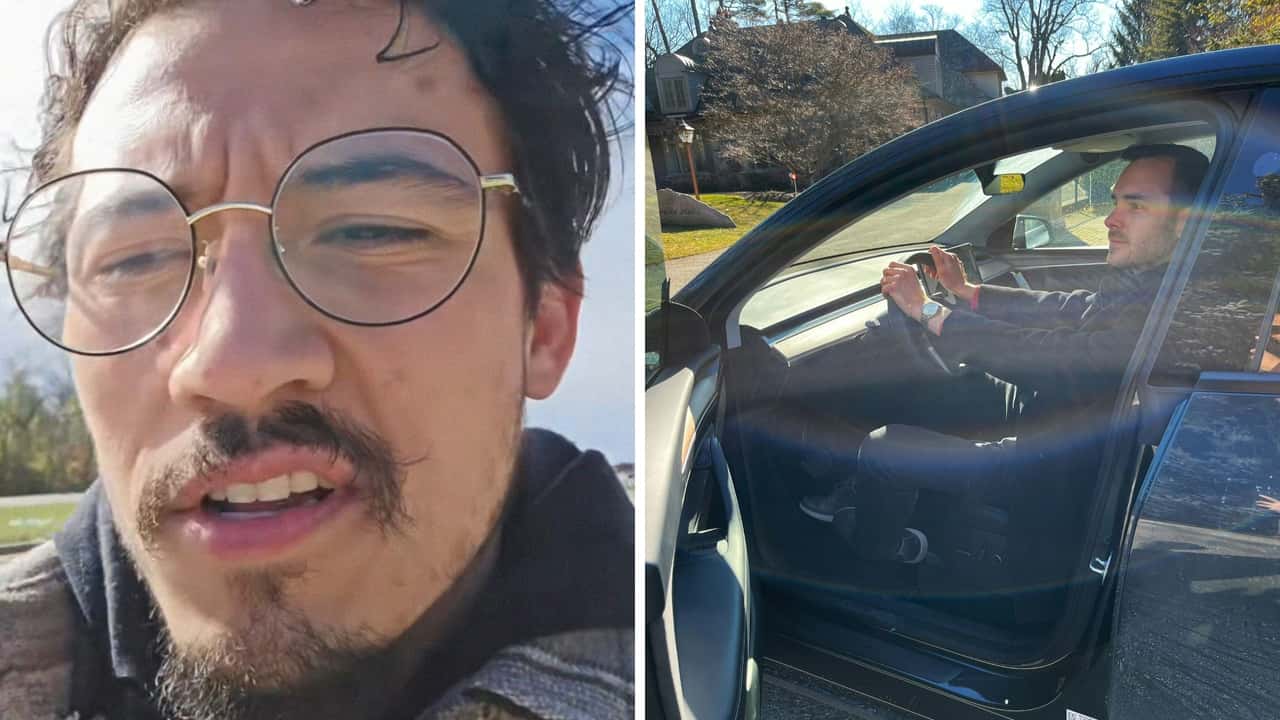
“I should have been home days ago.”
An enthused car buyer flew 2,500 miles to pick up a Corvette he’d been hunting and dreaming of for weeks. Ten minutes after taking the keys, the seat broke, and the “dream car” problems started piling up.
Stranded TikTokker Carlos (@leap_of_faithe) has spent more than a week stuck in Florida, trying in vain to return the 2002 Corvette that showed battery problems, failed brakes, and an undetermined engine problem within a couple of days of taking possession. In a series of clips, the California native shares that his last possible solution is to have the car transported back west on a trailer, so he can hop a flight home after too many days in a hotel, eating fast food and dollar-store provisions.
“I’m spending New Year’s alone in a hotel, 2,500 miles away from my family, with a car that doesn’t function,” Carlos said in one of the more than a dozen videos. “I should have been home days ago.”
Carlos, who lives in the Los Angeles area, began documenting the purchase on TikTok as a celebratory moment after weeks of searching for a specific used Corvette that fit his budget and preferences. Like many enthusiasts shopping for older performance cars, he expanded his search nationwide, ultimately flying to Florida after what he describes as extensive phone calls, videos, photos, and text exchanges with a small independent dealership. He signed paperwork and transferred funds before traveling, a decision he now calls his biggest mistake.
Carlos’ situation may feel extreme, but consumer advocates say the conditions that led to it are not uncommon. Nationwide searches have become routine for buyers chasing rare colors, trims, or older enthusiast vehicles, but distance adds risk. Buyers often rely on photos and seller descriptions, while travel logistics can compress inspection time and create pressure to complete a deal quickly upon arrival.
That pressure can be magnified when paperwork is finalized before the car is seen in person. Once a vehicle is legally sold, options for reversing the deal can narrow significantly, particularly when the sale is conducted “as-is,” a standard designation in many used-car transactions.
In his videos, Carlos says the Corvette was delivered directly to him at Orlando International Airport rather than being inspected at the dealership. Airport pickup zones are designed for rapid loading and departure, leaving little time for a thorough walkaround or test drive.
Within minutes of driving away, he says the seat adjustment mechanism broke, making it difficult to position himself safely behind the wheel of the manual-transmission car. As he continued driving to get food and supplies, additional issues emerged, including a fuel door that wouldn’t stay closed and blocked his driver’s side mirror.
Shortly after those early problems, Carlos says the car failed to restart after being shut off, requiring a jump-start. Warning lights appeared soon after. Later, he described what he believes was a brake failure while driving, an incident that shifted his concern from inconvenience to safety.
Mechanical experts note that older performance cars can mask issues that don’t appear in short videos or idle demonstrations. A car that starts, moves, and idles smoothly may still be a poor candidate for a multi-day, cross-country drive without a professional inspection.
Most used vehicles sold by independent dealers are sold “as is,” meaning there is no implied warranty once the sale is complete. Under rules enforced by the Federal Trade Commission, dealers must display and provide a buyer’s guide disclosing whether a car is sold as-is or with a warranty, but an as-is sale generally leaves buyers responsible for post-purchase repairs unless a misrepresentation can be proven.
Florida, where Carlos purchased the car, does not have a used-car lemon law, further limiting post-sale remedies in such situations.
With the Corvette no longer safe to drive, Carlos’ focus shifted to transport, a challenge many buyers underestimate. Shipping a disabled vehicle is more complicated than shipping a running one, and transport brokers often rely on last-minute carrier availability.
The Federal Motor Carrier Safety Administration advises consumers to verify that transport brokers and carriers are properly registered and insured. It warns that cancellations and delays are common in the vehicle shipping industry.
In Carlos’ case, he says multiple pickup dates slipped, forcing repeated hotel extensions, rental car changes, and flight rebookings. Those costs added up quickly while he waited for confirmation that the car would actually leave Florida.
Stories like Carlos’ help explain why seasoned enthusiasts often slow down the process rather than rush to secure a car. Independent inspections are commonly arranged before any money changes hands, even if that means paying a local shop to evaluate a vehicle the buyer hasn’t seen yet. Final paperwork is often delayed until after a test drive, and any assurances about the condition are expected to appear in writing.
Transport planning is also treated as part of the purchase decision. Buyers who assume a smooth drive home or an easy shipment can find themselves stranded when plans fall apart.
As of his most recent update, Carlos says he is waiting for a confirmed trailer pickup to ship the Corvette back to California. Only once the car is loaded, he says, will he feel comfortable booking a flight home.
Until then, he continues posting daily updates, framing the experience as a cautionary tale rather than a quest for sympathy.
“If I can save one person from going through this,” he said, “then at least something good comes out of it.”
Motor1 reached out to Carlos via email and direct message. We’ll update this if he responds.
Warning: The below video includes explicit language.
We want your opinion!
What would you like to see on Motor1.com?
– The Motor1.com Team