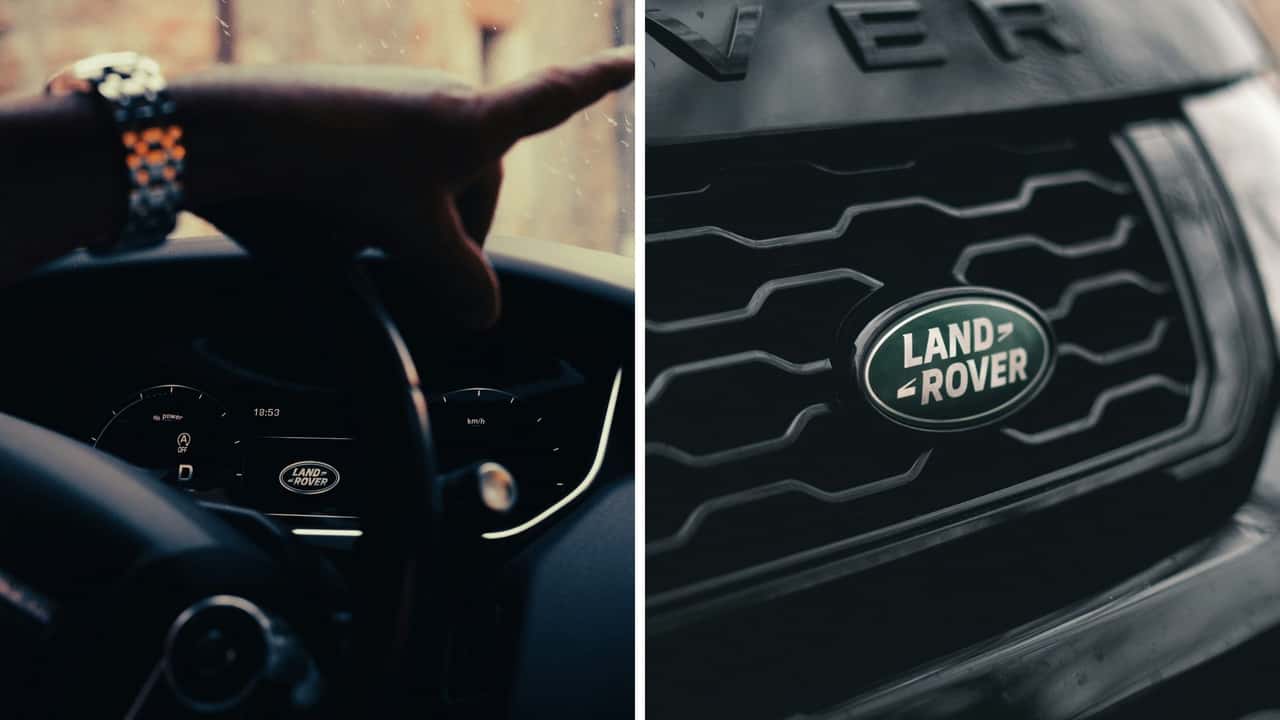
‘A new take on the term “heated steering wheel”…….’
In almost all cases, the presence of smoke emanating from components inside a car’s cabin is a high-stress situation, not something to be casually observed amidst other vehicle concerns. We see an exception to this, however, in a viral Instagram story that shows a Land Rover filling up with smoke while work is being done under its hood.
There’s not much mystery in the clip from auto enthusiast creator Jimbo Slice The Supertech (@jstsupertech), which shows a small but steady stream of smoke flowing out of a tiny hole in the steering wheel of a Range Rover that appears to be in the shop getting service done.
“A new take on the term ‘heated steering wheel,'” reads the caption on the clip that’s been viewed more than 3.2 million times.
What’s actually happening in the clip is less cinematic and elegant than it looks, and probably more mundane. Several commenters on the clip guessed the most likely culprit was the vehicle’s heated steering wheel. Today’s steering wheels contain a web of wiring, heating elements, and control modules beneath the leather and cosmetics. If any component in that setup fails, including a shorted element or an overheated wire, it can produce smoke as a prelude to generating flames.
A few commenters said they’d seen similar scenes play out in heated seats and steering wheels in other brands, where insulation or adhesive starts to smolder and give off a thin, wispy plume. That imagery doesn’t make the image any less unsettling. Smoke coming from the one place drivers are always touching feels more personal and problematic than smoke from an engine bay.
There’s no sign in the clip of open flame or panic, which suggests this is the kind of failure that looks dramatic long before it becomes dangerous. Still, it’s not hard to see why the moment reads as absurd. In a car built to sell calm and control, the steering wheel quietly turning itself into a smoke machine or looking like an incense burner feels like a violation of that promise.
If the smoke in the shop felt oddly calming, the comments section was exactly the opposite. In the first wave, contributors went for jokes. “Range Rover Essential Oils Edition,” one viewer wrote. Another suggested it was an “automatic incense dispenser,” while another comment read, “Land over quality.”
One of the more humorous and brand-partisan knocks went, “Where there’s smoke there’s …a JLR vehicle.”
From there, the tune shifted. Punchlines hardened into arguments about money, taste, and car clout. “The price of the vehicle should equate to its quality,” one critic said.
The comments took another turn once an argument started about exactly what kind of vehicle was in the clip. Clued in by the branding on the steering wheel, several comments were adamant that the vehicle was substantially different from the parent brand, Land Rover.
“This is a 90k defender,” one comment insisted. In response, another viewer chimed in, “Although it is a platform unique to Land Rover I’m pretty sure they’ll use a lot of the same tech as a Range Rover.”
The debate mattered because the brand badges carry different myths and storylines, with those on both sides of the argument doing quite a bit of splitting of very fine hairs.
Land Rover today is both the brand and a corporate umbrella. Under Jaguar Land Rover, the “Land Rover” brand covers several distinct nameplates, including Range Rover, Discovery, and Defender. The Defender, which was revived in 2020, is a standalone line meant to model the original utilitarian off-roader, but built on JLR’s D7x aluminum-intensive platform rather than the old body-on-frame design.
Range Rover, on the other hand, is JLR’s luxury flagship line that emphasizes comfort, technology, and premium materials in its branding. That differentiation is important for sales purposes, even when the two vehicle marks share the same underlying engineering. In practice, that means a Defender and a Range Rover can use similar electronics, drivetrains, and interior technology to appeal to very different buyer groups.
The viewers also had plenty of feelings about the current ownership of Land Rover.
“Yea let’s not forget these are owned by Tata Motors. It’s funny how people don’t know it’s an Indian car,” one watchful commenter noted, quickly followed by another who joked, “LR is owned by Tata Motors. It’s Indian incense.”
The reality of that issue is a little more complicated. Tata Motors has owned Jaguar Land Rover since 2008, but JLR operates largely as its own engineering and design organization. Its development is centered in the U.K., with manufacturing spread across several countries.
As for the steering wheel shown in this clip, the smoke wasn’t caused by decisions made in a boardroom in Mumbai or Coventry. Still, the ownership argument keeps resurfacing because it is simpler and easier to grasp than diagnosing the complexities of a wiring mishap.
Motor1 reached out to the creator via direct message and commented on the clip. We’ll update this if they respond.
We want your opinion!
What would you like to see on Motor1.com?
– The Motor1.com Team