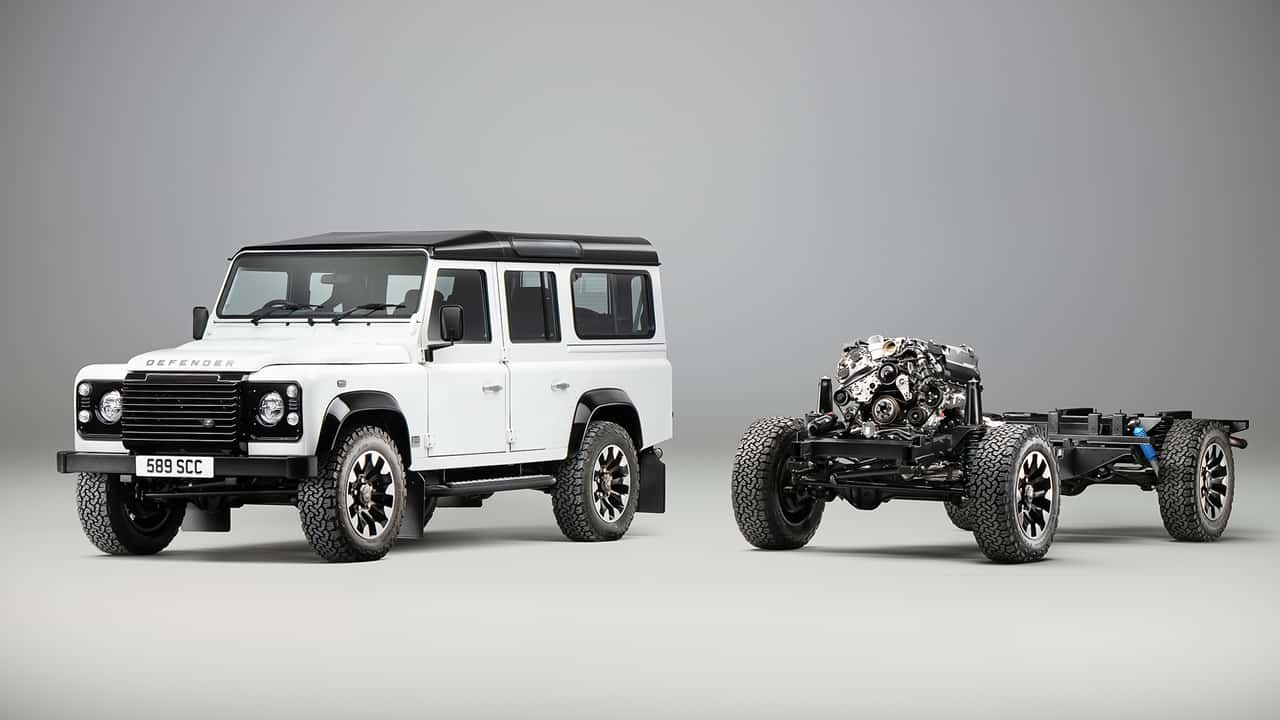
Land Rover Defender 90 and 110 owners can unlock a 405-horsepower V8, suspension and brake upgrades, and specialist installation in selected markets.
Land Rover‘s Classic division wants to put a proper V8 back under the hood of the last analog Defenders it built. The Works V8 Conversion drops a naturally aspirated 5.0-liter V8 into Puma-diesel Defenders from the L316 generation.
The engine makes 405 hp and 380 lb-ft of torque, paired with an eight-speed ZF automatic. It is the centerpiece of a wider upgrade program covering suspension, wheels, brakes, and chassis hardware for 90 and 110 models built between 2007 and 2016.
Not every Puma-era Defender qualifies for the engine swap itself. While the broader chassis and suspension packages stretch across the full 2007–2016 production run, the V8 conversion narrows that window considerably, and buyers need to check their build date before getting attached to the idea.
Underneath, the package pairs Bilstein dampers with Eibach coil springs for a revised ride, along with an Alcon brake setup running four-piston calipers. Front rotors measure 335 millimeters (13.2 inches), with 300-millimeter (11.8-inch) discs at the rear, a serious jump from the stock Puma-diesel brakes.
Cosmetic and dynamic trims come bundled separately from the engine work. Buyers can spec 16-inch steel wheels as the standard fitment or step up to 18-inch alloys, plus Works V8 badging and a redesigned gear tunnel inside the cabin.
Dominic Elms, director of JLR Classic, described the program around flexibility rather than a single build spec. He said the range is meant to serve “whether as a cherished family companion, a dependable workhorse, or a valuable collector’s piece,” covering daily drivers and garage-kept examples alike. It is a different formula from the factory’s current lineup, where the V8 already fitted to new Defenders runs forced induction rather than the naturally aspirated setup used here.
Land Rover Defender Classic: Works V8 conversion
The Works V8 Conversion itself applies only to Defender L316 90 and 110 models from the 2012 through 2016 model years, the final stretch of Puma-diesel production before the line ended. Owners of earlier trucks can still access suspension and brake upgrades, just not this engine.
Installation runs two ways. Owners can order components through the Land Rover Classic Parts website for self-fitment, or work with an authorized retailer that handles the installation for them, giving both DIY types and dealer-dependent owners a path in.
For the full V8 conversion specifically, Land Rover points buyers toward its Classic Works facilities in the United Kingdom and Germany, where specialist technicians handle the swap. That path reflects the extra oversight Land Rover wants for engine work compared with just parts upgrades.
Availability is not universal. Land Rover says final eligibility, specification, pricing, and timing depend on a vehicle’s condition, existing spec, and market, with confirmation only coming after assessment by a Classic specialist or local retailer. The company built its reputation on painstaking restorations before, and this program uses that same hands-on approach rather than a simple catalog order.
Motor1’s Take: A dealer-backed engine swap done at Classic Works keeps provenance on the record and helps with insurers and buyers. A DIY install still delivers V8 character but will face more scrutiny at resale. Collectors who prize originality will likely pass on an engine swap. Owners who want a usable, dealer-supported V8 get a cleaner, documented path.
More From Land Rover:
Source:
Land Rover
We want your opinion!
What would you like to see on Motor1.com?
– The Motor1.com Team