“Once you drive off this lot, it is your car.”
Used-car paperwork can make responsibility look simple: the buyer signs an as-is form, the dealer makes clear there is no warranty, and the customer drives away knowing that whatever happens next is their problem.
But a recent TikTok clip illustrates that it’s sometimes an as-is sale isn’t quite so straightforward.
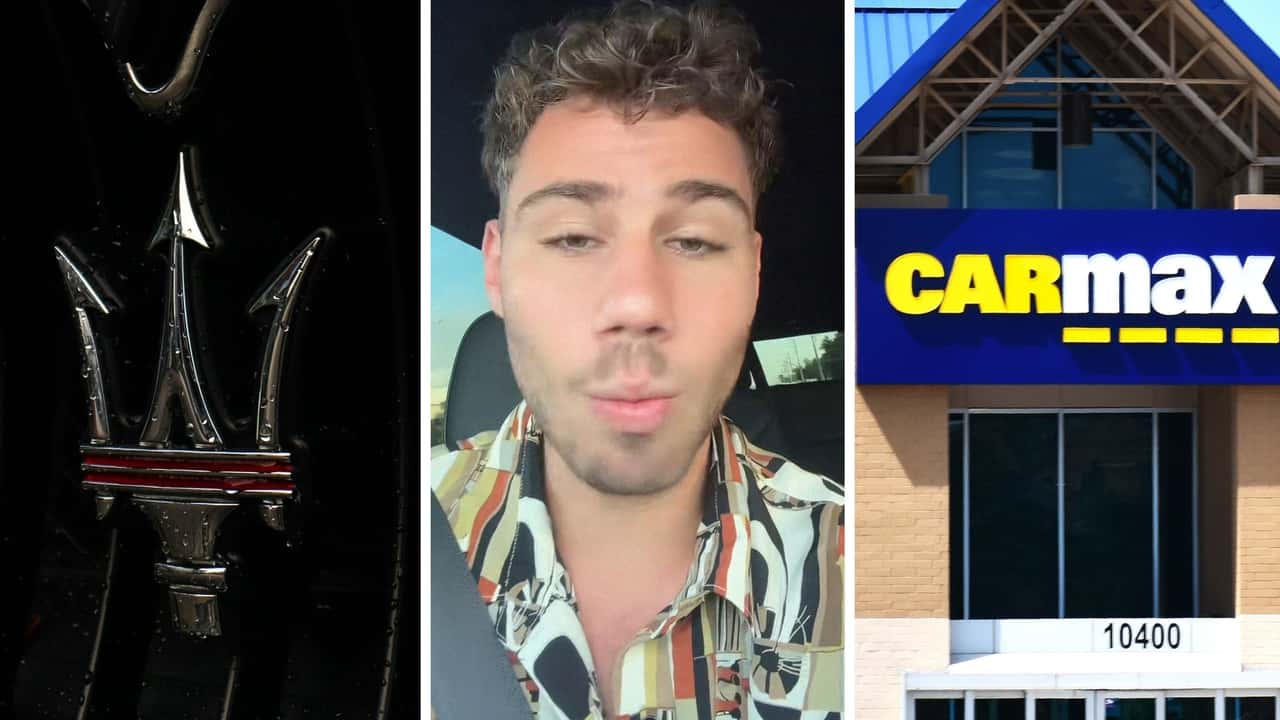
The clip from Riley Pinney (@autosavantt), general manager of LOR Motorcars in Pinellas Park, Florida, gives us the inside details of his sale of a Maserati with 14,000 miles that had seemed like a no-worries deal. One month later, however, the transaction took a turn for the worst.
“I get a call. He says the car is broken down, he’s on the highway. It’s like a rainy Friday afternoon. I’m like, oh great, this is a nightmare,” he said in the clip.
“You have them sign all these forms, it’s your car, as-is, no warranty. You’re buying a foreign car, you know the risk with all these things. And, and it’s like the only business you’ll have them sign that form and then they still call you and expect to, to take care of everything afterwards.”
A month earlier, there had been little reason for Pinney to expect that call.
His dealership had acquired the Maserati from CarMax on what he described as a “green light” deal, meaning no major engine or transmission problems had been found with the vehicle.
“The thing only had 14,000 miles. What could go wrong, right?” Pinney said, explaining that his shop looked the car over after buying it, and found no obvious leaks or mechanical problems. Then a customer arrived looking to trade in another Maserati with more miles and, by Pinney’s account, more problems.
“I take it for a test drive and man, this thing is beat,” he said. “It won’t steer properly, the transmission keeps stopping. I stalled like 14 times in a half-mile ride.”
Pinney valued that car at roughly $500 and told the owner he would probably scrap it. The customer kept his old Maserati and negotiated a few thousand dollars off the price of the 14,000-mile replacement, with Pinney providing the warning he routinely gives buyers of used foreign cars.
“One of these forms is an as-is form,” he says he told the customer. “That means once you drive off this lot, it is your car.”
All was well for about a month, until that rainy Friday breakdown.
Pinney initially gave the customer the number for a towing company. When that didn’t work out, he said he arranged for a friend with a tow truck to help. Because his own shop was already overloaded with repair work, Pinney suggested either a foreign car mechanic he uses or whatever Maserati mechanic the customer preferred.
The buyer chose his own shop, where the mechanic said that the engine was knocking and that it had apparently lost oil pressure at some point.
The cause of that issue remained unclear, though Pinney floated possibilities ranging from an oil-pressure sensor to an electronic problem—while emphasizing that he had not personally investigated the failure.
That uncertainty did little to settle the larger issue.
“You have to weigh out your heart with your head,” Pinney told Motor1 in an interview. “These people knew they were buying a used car and they signed all this paperwork saying it’s their car when they leave here. But then you also have to be morally correct too and make sure you take care of them the best you can.”
The Federal Trade Commission requires most used car dealers to provide a buyers guide telling customers whether a vehicle carries a warranty or is being sold “as is—no dealer warranty.” In an as-is sale, the agency says, the dealer generally isn’t agreeing to pay for problems or repairs that arise later, though state laws can impose additional requirements.
Pinney nevertheless acknowledged that being contractually protected doesn’t necessarily make the decision easy. In the clip, he considered offering the buyer $1,000 or $2,000 to help cover repair costs, but worried doing so could look like an admission that his dealership had done something wrong.
For Pinney, the experience produced one firm decision.
“The Maserati wasn’t my buy,” he said, “but it’s definitely the last one I buy.”
We want your opinion!
What would you like to see on Motor1.com?
– The Motor1.com Team