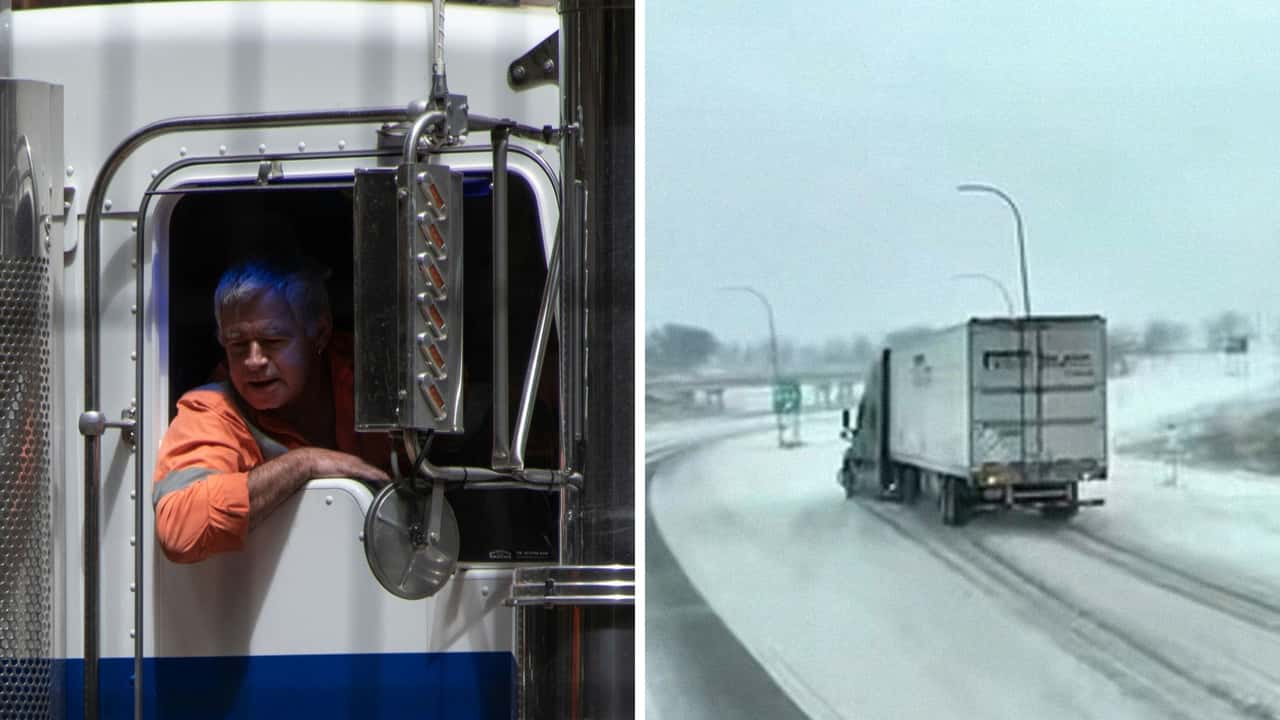
“Mother Nature’s Free driving LESSON.”
It only takes a moment for traction to disappear. In a viral TikTok filmed from inside another vehicle, an 18-wheeler traveling on an icy Minnesota highway loses its grip, and gravity, momentum, and 80,000 pounds of mass take over long before the driver can react.
The viral clip from Armada Trucking Group (@armadatrucking), which has been viewed more than 2.1 million times, brought a flood of comments from current and former truckers, offering a mix of advice and ridicule toward those who haven’t learned how to navigate safely in winter weather.
Commenters quickly split into familiar camps. Some framed the clip as a cautionary tale, with one user calling it a “prime example of what not to do,” while others piled on with jokes and second-guessing. But experienced drivers pushed back, noting how unforgiving winter conditions can be. “That can happen to the best driver,” one commenter wrote, adding that the most important outcome was that “the driver and other drivers are safe.” Another summed up the reality more bluntly: When snow and ice take over, even seasoned truckers can lose control faster than most people expect.
While the clip quickly became fodder for online commentary, the mechanics behind what viewers are seeing are well understood. On snow and ice, a tractor-trailer’s massive weight works against it the moment traction is lost. Unlike passenger vehicles, semis rely heavily on grip at the drive axles to keep the trailer in line. When those tires begin to slide, the trailer’s momentum can quickly push past the cab, initiating a jackknife that is extremely difficult to recover from once it starts.
According to research, loss-of-control events like jackknifes are most commonly associated with reduced traction, excessive speed for conditions, or abrupt braking and steering inputs on slick surfaces. Even small changes in throttle or brake pressure can have outsized consequences when road friction drops close to zero. Trucking regulators advise commercial drivers to dramatically reduce speed in snow and ice and to avoid sudden control inputs whenever possible.
What many viewers don’t realize is that a tractor-trailer behaves very differently from a passenger vehicle once it begins to slide. In a car, drivers often regain control through counter-steering or easing off the brakes. In a semi, those same instincts can worsen the situation if the trailer continues moving independently of the tractor.
The Minnesota Department of Transportation notes that combination vehicles are especially vulnerable on winter roads because of uneven weight distribution and long stopping distances. An empty or lightly loaded trailer can further reduce traction, making it more likely to swing outward under braking or steering.
This dynamic explains why jackknifes can occur even at relatively modest speeds, particularly on untreated surfaces or in transition areas such as exit ramps and bridges.
The video’s viral nature has led many commenters to zero in on what they believe the driver did wrong. Some speculated about excessive speed, while others pointed to steering input or braking at the wrong moment. While it’s impossible to determine every factor from a short clip, safety experts agree that once a semi begins to slide laterally, corrective options are limited.
The American Trucking Associations cautions that braking during a skid can cause drive wheels to lose traction entirely, allowing the trailer to overtake the tractor. Engine braking, often helpful in dry conditions, can also contribute to loss of control on ice if not used carefully.
What appears to be a single poor decision on video is often the culmination of several compounding factors, including road treatment, wind, grade, and the behavior of surrounding traffic.
One of the more notable aspects of the comments section is how many experienced drivers acknowledged that similar incidents can happen to anyone. Several commenters with decades of experience emphasized that winter driving ultimately comes down to judgment, not bravado. Many echoed the same advice: Slow down, avoid cruise control, and park the truck if conditions deteriorate.
The National Highway Traffic Safety Administration supports that view, noting that speed is a factor in nearly one-third of all weather-related crashes. The agency recommends reducing speed well below posted limits when snow or ice is present, regardless of vehicle size or driver experience.
Short social media videos rarely provide enough context to fully explain what went wrong. Viewers can’t see whether the road was treated, how much weight the trailer was carrying, or whether the driver encountered black ice. Additionally, exit ramps, bridges, and shoulders, which often receive less attention from plows and salt trucks, can be significantly slicker than main travel lanes.
Beyond the truck itself, the video serves as a reminder for passenger-vehicle drivers sharing the road with heavy trucks in winter conditions. Semis require more space to maneuver and recover from traction loss, and sudden lane changes or braking near large trucks can compound already risky situations.
Motor1 reached out to the creator via direct message and commented on the clip. We’ll update this if they respond.
We want your opinion!
What would you like to see on Motor1.com?
– The Motor1.com Team