“At least get a resurface.”
Not everyone who drives knows the intricate workings of a car, and that’s normal. While drivers should understand basic maintenance, like routine checkups and oil changes, they do not need to know every detail of how their vehicle works.
That’s why mechanics exist. They handle the technical side and tell drivers what needs fixing, replacing, or checking next. Still, there are moments when a driver does not know what they do not know.
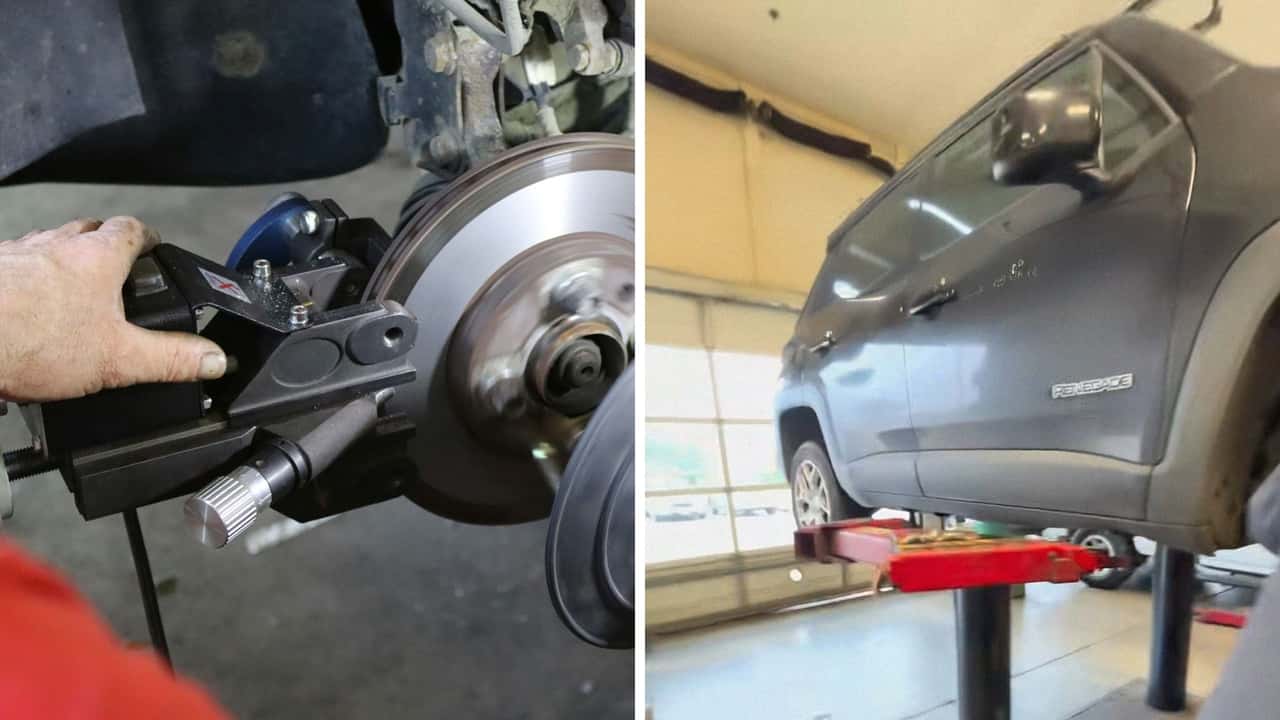
One mechanic recently showed exactly how that happens in a Facebook Reel, after a customer brought in her car asking him to change “just the pads.” Once he took a closer look, it was clear the issue went far beyond that.
In the clip, which got over 400,000 views, mechanic Nathan Coleman (nathan.coleman.9275439) shows the condition of a customer’s brake rotor.
“Customer says ‘just the pads today,’” Coleman writes in the video’s text overlay.
As he moves the camera closer to the rotor, the damage is clear. The rotor surface looks corroded, rough, uneven, and deeply worn. It shows clear signs of long-term heat exposure and corrosion, the kind that does not happen overnight.
“At least get a resurface,” Coleman jokes in the caption.
Rotors take a beating every time a car slows down. They absorb heat, friction, and pressure, and over time, they wear down. Under normal conditions, rotors last through several sets of brake pads. The problem starts when worn pads stay on the car too long.
In many cases, drivers do not notice the warning signs early enough. Squealing noises, vibrations while braking, or a soft brake pedal often get ignored or written off. By the time the car reaches the shop, the rotor may look like it did in Coleman’s video.
The rotor he’s working on does not show recent damage, either. It looks like something that developed over months, or even years, of continued driving without proper brake service.
When rotors reach this condition, simply swapping out the pads will not fix the issue. New pads need a smooth, even surface to work correctly. Placing them on a damaged rotor results in poor braking performance, uneven wear, and even brake failure, which is extremely dangerous on the road.
In general, experts recommend changing brake rotors every 30,000 to 70,000 miles. However, at the end of the day, a mechanic has to look beyond the customer’s initial request and explain what the car actually needs.
People were stunned by the state of the rotors.
“How is that possible???” asked one viewer in the comments section.
“Just started making noise yesterday,” joked another.
“I had that happen on an single engine airplane,” shared a third. “Only other time I’ve seen this.”
One person who claimed to be a mechanic revealed their shop’s strategy. “That’s why at my shop brakes are pads and rotors, no exceptions, you need one pad, you’re getting full pads and rotors both sides (just front or rear usually),” they wrote. “I don’t agree but oblige because paycheck.”
Motor1 has reached out to Coleman via Facebook messages for more information.
We want your opinion!
What would you like to see on Motor1.com?
– The Motor1.com Team