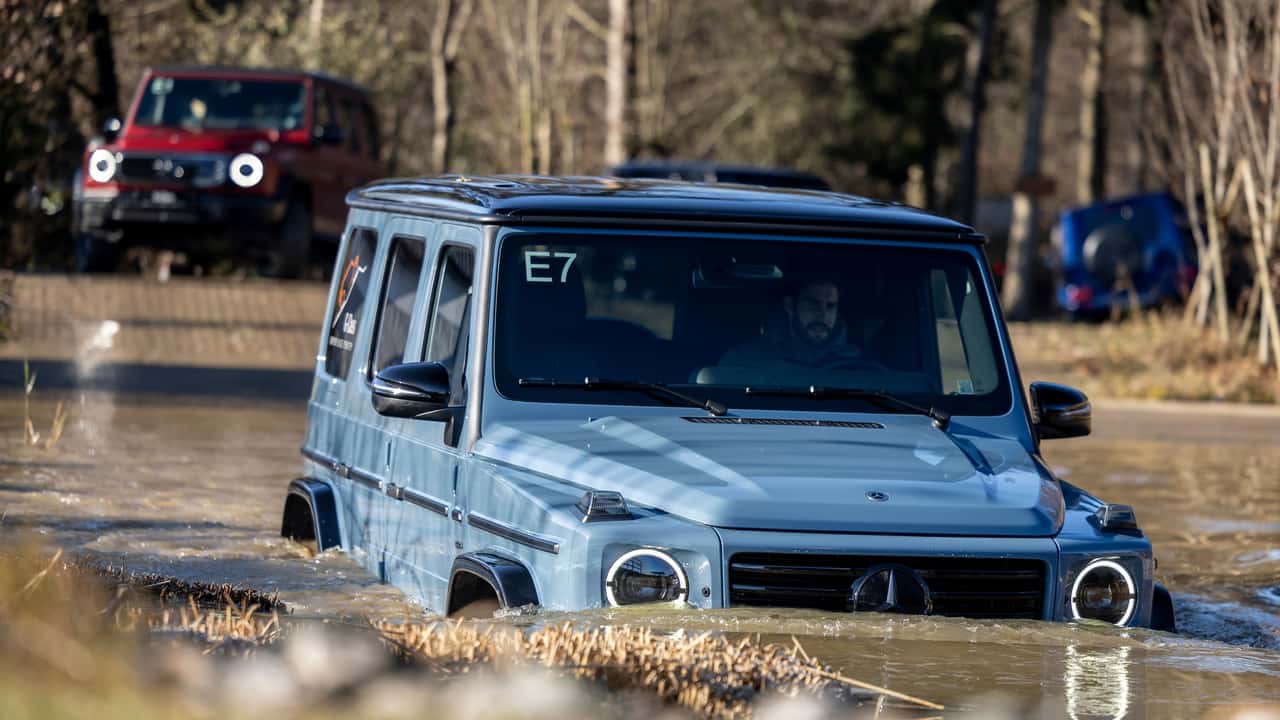
A new Mercedes-Benz patent outlines a two-axle SUV that can float using inflatable wheel-arch inserts, wheel-based propulsion, and software-controlled stability.
Mercedes-Benz has patented a control system for something most SUVs never try: staying afloat. The filing describes a two-axle, two-track off-roader that can roll into a lake or river, level itself on the surface, and climb back onto shore without outside help.
The patent credits inventor Joerg Kneip and lists Mercedes-Benz Group AG as the applicant with the German patent office. Outlets including CarBuzz report that the document remains a pure patent play, with no production program attached so far.
Lift comes from removable inserts made of foam or inflatable material that sit inside each wheel arch. A control unit can inflate or deflate them individually at each corner to balance the vehicle and react to changing loads or currents, instead of relying on a single flotation chamber around the body.
Storage for the deflated inserts sits where a spare tire would normally be, and the vehicle’s onboard air compressor would inflate them before a water crossing. The idea builds on top of the off-road focus already seen in vehicles like the G-Class, which is built for serious wading depth but not true amphibious running.
Mercedes G-Class in the Graz Centre
Once the SUV is buoyant, the wheels keep working. The patent describes tires that continue to turn and steer while off the ground, with adaptive suspension tweaking their angle so they behave like rudders.
The same motors that move the vehicle on land also push it through the water. The control unit can send different levels of forward or reverse torque to each wheel to correct for currents, uneven drag, or a crooked approach to the bank.
That per-wheel torque management also handles the transition between water and shore. The system directs power to specific corners to keep the SUV pointed where the driver wants and to limit sideways drift as it changes from floating to rolling.
The document never hints at a production amphibious SUV, but it frames water crossings as a software and control problem instead of a job for a dedicated boat-style hull.
Motor1’s Take: The patent shows how software and per-wheel hardware could add real amphibious capability while keeping the basic SUV layout. If engineers can handle corrosion protection, sealing, and crash and electrical safety, the idea could appeal to expedition outfits and emergency services. Regulators and insurers will decide whether it ever reaches customers.
More Amphibious Vehicles:
Source:
DPMA via CarBuzz
We want your opinion!
What would you like to see on Motor1.com?
– The Motor1.com Team