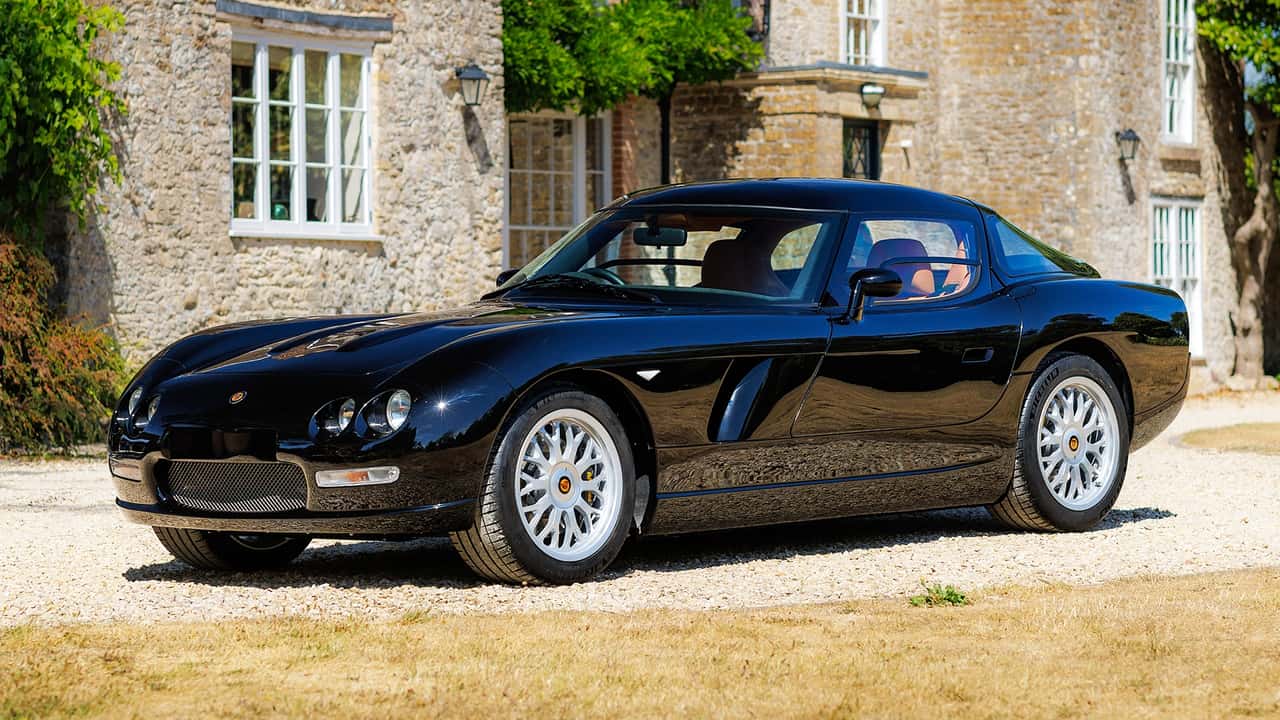
Bristol Cars returns in 2026 by completing five Fighters with original chassis. The supercar has an 8-liter V10, 592 hp, and a top speed of 210 mph
Bristol Cars is back in the spotlight, choosing an unusually specific way to open its next chapter: completing the Fighter, the supercar tied to the final production era of the British marque.
A newly finished example, built from an original unused chassis, was presented at Salon Privé at Blenheim Palace, where Bristol is also celebrating 80 years of history.
Introduced in the early 2000s, the Bristol Fighter was the last car built by Bristol before production stopped in 2011. An unconventional two-seater, it stood out for its low, tapered bodywork and, above all, its vertically opening doors. Under the hood sits a naturally aspirated 8.0-liter V10.
Bristol Fighter (2026)
Bristol Fighter (2026), interior
Bristol Fighter (2026), the V10 engine
In this new chapter, the mechanical package retains figures that are still impressive today: the engine produces 525 hp in standard form, while a 600-hp version is also available. The claimed top speed is up to 210 mph. The project aims for a particular balance, combining supercar performance with grand-touring qualities intended for long-distance driving.
The revival is not starting from an entirely new design. Bristol has confirmed the existence of five unused original chassis, along with the related components and drawings. One was used to build the car shown at Salon Privé, while the remaining four will be completed in the coming months.
Bristol Fighter (2026), rear view
Each Fighter will be hand-built around an original chassis and can be configured by its future owner. Both right-hand-drive and left-hand-drive layouts will be offered, while pricing will be disclosed only on request. Production will take place in the United Kingdom in collaboration with a partner specializing in low-volume manufacturing.
Behind the return is Paul King, owner and director of Bristol Cars, joined by Richard Hackett, now chairman and previously close to Tony Crook, a central figure in the Fighter’s earlier history. The move is intended to maintain a direct connection with the company’s past.
Bristol was founded in 1945 as an offshoot of the Bristol Aeroplane Company and built its first car, the 400, in 1946. Over the years, its production was defined by low volumes, original technical solutions, and a strong influence from aviation. After the 2011 bankruptcy and the later attempt with the 2016 Bullet, which never reached series production, the brand is now trying to restart from a story that had been left unfinished.
Motor1’s Take: Bristol Cars is taking a fascinating approach to its comeback by finishing a chapter that was left open when the company collapsed in 2011. The Fighter remains an unusually characterful alternative to modern supercars, and its limited five-car revival should make it even more desirable to collectors.
More On Supercars:
We want your opinion!
What would you like to see on Motor1.com?
– The Motor1.com Team