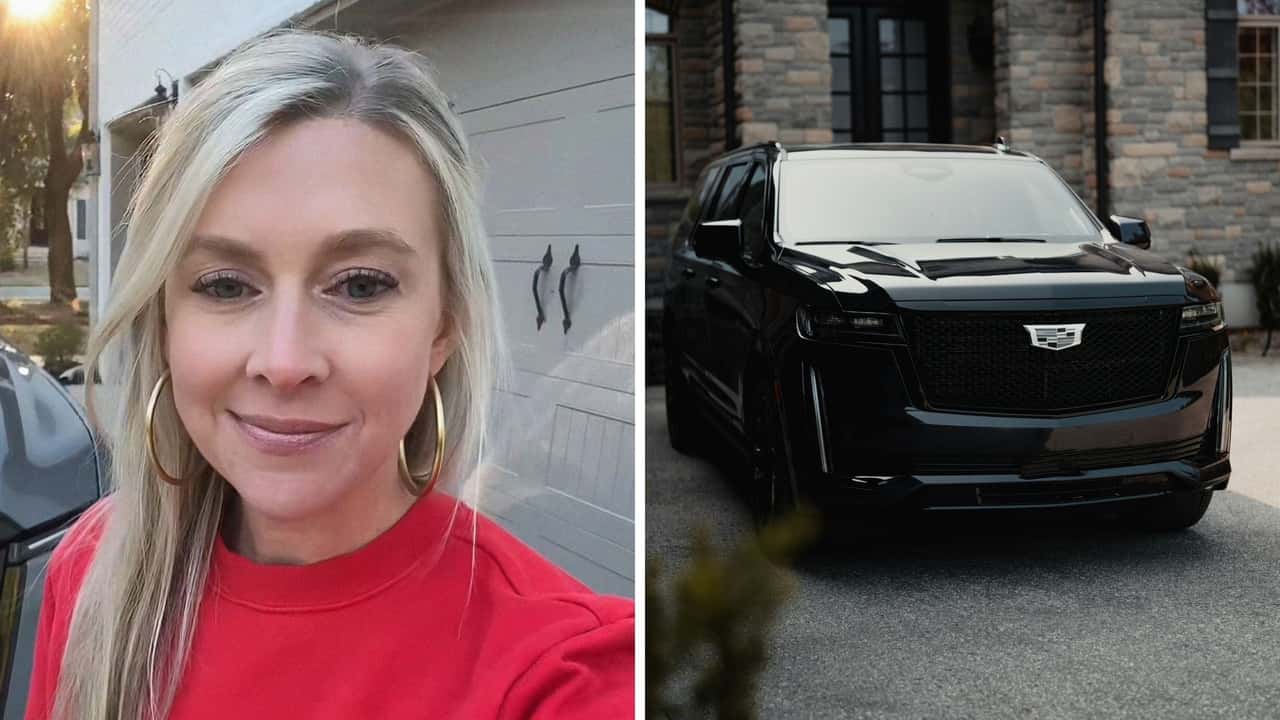
“I just purchased a car and I had no idea I should care about the window sticker.”
Spending six figures on a luxury SUV usually comes with a sense of certainty: You know exactly what you’re buying. But when a Florida woman took delivery of her new Cadillac Escalade, she says the vehicle arrived without its window sticker. The missing piece of paper would eventually cast doubt on the entire purchase.
A series of viral TikToks from Pensacola-area resident Chelsea Hoffman (@cdhoffman) lay out the many problems and conflicts she’s experienced with her dealer since late 2025. An ongoing engine malfunction has been exacerbated by sale documentation she claims was altered, casting doubt on the legitimacy of her purchase.
“When I bought the car, there was no window sticker, only a transport sticker,” she said in a clip that’s been viewed more than 540,000 times. “I have requested a copy of the original sticker from the GM directly at least seven times. Not only have they not provided it, but I have confirmation from the manufacturer that they had the window sticker modified.”
Under federal law, every new vehicle sold in the United States is required to display a Monroney window sticker at the point of sale. The rule stems from the Automobile Information Disclosure Act of 1958, which requires manufacturers to disclose a vehicle’s MSRP, standard equipment, optional equipment, and destination charges before a sale is completed. The intent is to ensure transparency and allow consumers to compare vehicles accurately before purchase.
The sticker itself is issued by the manufacturer, not the dealer, and is meant to reflect how the vehicle left the factory. While dealerships can request reprints in limited circumstances, such as damage or loss during transport, consumer advocates note that the original configuration and pricing information should remain consistent.
Hoffman says that wasn’t her experience.
According to her TikTok videos and the documentation she shared, the Escalade she purchased came with a printed window sticker during the sales process. However, the physical label was missing from the vehicle. Instead, she says the SUV carried only a transport sticker marked “not for sale,” typically used while vehicles are in transit between facilities.
Automotive retail experts say that while paperwork errors do occur, the absence of a window sticker at delivery is unusual for a brand-new vehicle, especially one priced well above $100,000.
Consumer guidance from the Federal Trade Commission and state motor vehicle agencies generally recommends that buyers verify the window sticker against the vehicle before signing final paperwork. That includes confirming trim level, drivetrain, wheels, and major options, all of which can materially affect price.
In Hoffman’s case, she says the discrepancy centered on wheels listed on the sticker she was shown but not installed on the vehicle she received. She later alleged that the sticker was modified after the sale at the dealer’s request, a claim she says is supported by written correspondence from General Motors representatives assigned to her BBB Auto Line case.
As Hoffman’s videos spread, viewers flooded the comments sections with advice. Several users suggested that the original window sticker could be retrieved through a VIN search or a vehicle history report.
While VIN build sheets can show how a vehicle was configured at the factory, consumer advocates note that they are not the same thing as a Monroney label. Services like Carfax may display original MSRP data for some brands, but coverage varies by manufacturer and model year, and not all window stickers are archived or publicly accessible.
Former dealership employees who commented on Hoffman’s videos also disagreed about whether dealers can legally reprint or alter stickers. Experts generally agree that while replacement labels can be issued, altering equipment descriptions after a sale, particularly if it affects price or perceived value, raises compliance concerns.
Documentation questions weren’t the only problem Hoffman says she encountered. Within weeks of purchase, she reported experiencing engine-related issues that required repeated dealer visits. According to her account, the vehicle spent extended periods awaiting diagnosis, with no clear resolution.
Those issues eventually pushed her to pursue a manufacturer buyback under Florida’s lemon law, which covers vehicles that suffer substantial defects within a defined time or mileage window and cannot be repaired after a reasonable number of attempts.
Florida’s lemon law process allows consumers to seek repurchase or replacement through manufacturer arbitration programs, including BBB Auto Line, which is administered independently but recognized by automakers.
Hoffman says her initial buyback request was denied, prompting her to escalate through Florida’s lemon law and BBB Auto Line procedures. After weeks of negotiation, she says GM ultimately agreed to repurchase the vehicle, though she has publicly expressed concerns about the clarity of the settlement terms.
Under most state lemon laws, repurchase amounts can vary depending on mileage, usage, and allowable deductions. Consumer protection attorneys often advise buyers to document every repair attempt, service visit, and communication, particularly when disputes over vehicle condition or configuration are involved.
Consumer advocates say Hoffman’s case highlights why the Monroney label still plays an important role, even in an era of digital contracts and online disclosures.
Unlike dealer invoices or finance paperwork, the window sticker is meant to be a fixed reference point: a snapshot of how the vehicle was built and priced at the factory. When that reference point is missing, altered, or disputed, buyers can find themselves arguing over what they believed they purchased rather than what can be proven.
That distinction becomes especially important when mechanical defects arise, and lemon law protections come into play, where documentation consistency can influence outcomes.
While Hoffman’s situation is unusual, consumer protection experts say it offers a broader lesson. Buyers are encouraged to photograph the window sticker at delivery, retain copies of all sales documents, and verify that listed equipment matches the vehicle before finalizing a purchase, particularly on high-value vehicles where options can add tens of thousands of dollars to the price.
As Hoffman’s case continues to play out, she says her goal in sharing the experience publicly is accountability, not just for her situation, but for other buyers who may not realize what to look for until it’s too late.
Motor1 reached out to Hoffman via direct message and commented on the clip. We’ll update this if she responds.
We want your opinion!
What would you like to see on Motor1.com?
– The Motor1.com Team