“That’s terrifying.”
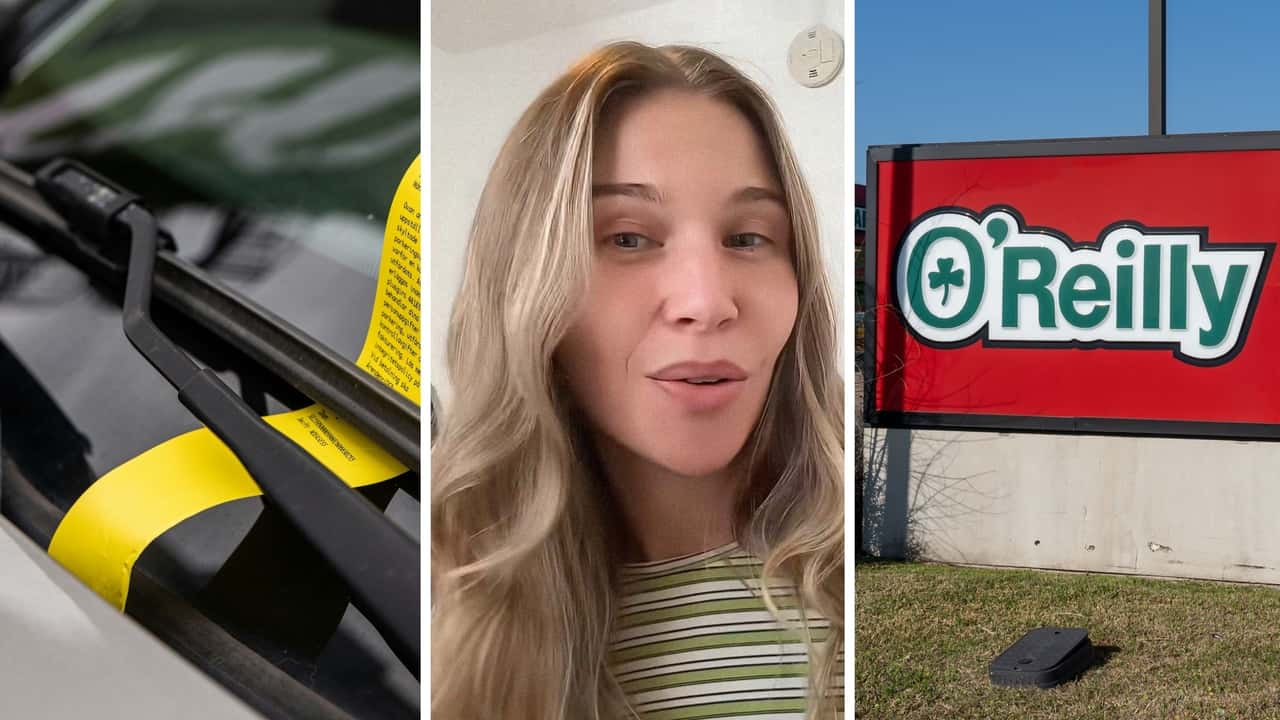
A woman says a routine trip to O’Reilly Auto Parts took a disturbing turn after an employee allegedly used her customer information to contact her afterward.
Carly Butler (@carlyrbutler) says she went to O’Reilly to buy windshield wipers ahead of incoming rain, believing employees would install them for free if she bought them there.
Butler says the worker initially put on the “wrong size,” even after she provided her car’s year, make, and model, along with her license plate number. She returned the wipers for another size and said the worker told her she needed to create an account to process the exchange, which required giving the store her phone number.
The worker installed the replacement wipers, Butler says, and she left thinking everything was fine.
Then the calls started.
The next morning, Butler says she received multiple phone calls and then a text asking how she was doing.
Another call followed from the same number. The man identified himself as “Daniel” and told Butler they had met the day before.
He also told her he thought she was “cute” and wanted to take her on a date, Butler says.
When she asked where they had met, she says he was initially vague. Then she realized who he was: the O’Reilly employee.
“This guy went into the [expletive] system [and] looked up my phone number so he could text me,” Butler says. “Like, that has to be illegal.” As of Monday evening, Butler’s video had more than 699,900 views.
Butler’s question—whether an employee can pull a customer’s phone number from a store system and use it to ask her out—doesn’t have one simple answer.
O’Reilly’s privacy policy treats phone numbers, physical addresses, job titles, and telephone numbers as “personal information.” The company says it may collect contact information to process returns and exchanges, manage customer accounts, communicate about orders and respond to customer requests.
The policy also says O’Reilly takes steps to safeguard personal information from “unauthorized access,” modification, disclosure, or use. Those measures include restricting access to employees who “need to know” the information, training workers on privacy and security, and maintaining internal rules governing how personal data is gathered and utilized.
Nothing in that list suggests customer information is collected so employees can use it for dating purposes.
That doesn’t automatically make the conduct Butler describes a crime—no matter how creepy it is.
No single federal law broadly makes every improper use of a customer’s phone number criminal. Whether an employee’s conduct violates a privacy, harassment, stalking, or computer-access law varies by state.
Federal regulators nevertheless tell businesses to tightly control employee access to customer accounts and data.
The Federal Trade Commission recommends following the “principle of least privilege,” meaning workers should access only the personal information they need to do their jobs. The agency specifically warns businesses to restrict customer databases to employees with a legitimate business reason to use them.
So Butler’s larger concern is well founded: a phone number given to process an exchange is customer data, not information handed personally to a curious employee.
Many viewers said the moment Butler mentioned giving the employee her license plate number, the story started to feel off.
“Did we all make the same face when she said ‘license plate’?” one commenter asked.
“Plate number?????? Noooooo ma’am. What???” another viewer wrote.
Someone else responded even more strongly.
“License plate IMMEDIATELY put up a red flag. That’s terrifying,” the commenter said.
One person even suggested Butler get new license plates.
“TAKE YOUR LICENSE [PLATES] TO THE DMV AND EXCHANGE FOR NEW ONES!!!! I have NEVER had anyone ‘need’ my plate info,” they wrote.
Others focused less on the plate itself and more on what they thought the employee may have been doing.
“He sold you the wrong wipers on purpose just so you’d have to give him your info,” one commenter speculated.
Several viewers urged Butler to report the interaction.
“Call corporate, report him, get his [expletive] fired,” one person wrote.
“Please report him to corporate. That’s so scary,” another commenter added.
Motor1 contacted Butler via TikTok direct message. O’Reilly Auto Parts didn’t immediately respond to an email seeking comment. We’ll be sure to update this if either responds.
We want your opinion!
What would you like to see on Motor1.com?
– The Motor1.com Team