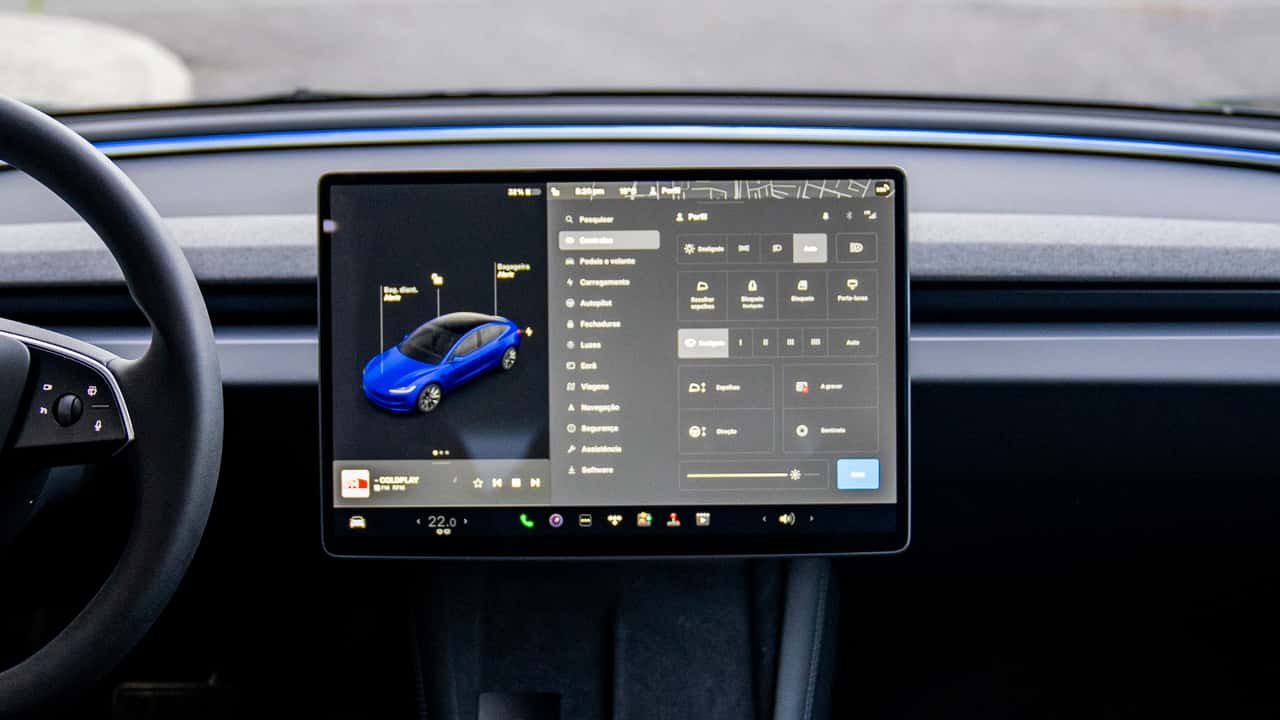
A recent study found that 21 connected vehicles and 30 companion apps sent driver and vehicle data to outside companies.
Northeastern University researchers tested 21 vehicles from 19 brands and found that 19 of them sent data to outside companies, often without drivers ever knowing it happened. The study paired those vehicles with their companion smartphone apps.
Nicole Zagson, a doctoral candidate in cybersecurity at Northeastern and a study co-author, put it bluntly: “Whether or not consumers are aware, big tech companies are all over the vehicles that we drive.” The findings cover both the car itself and the app on your phone.
Cadillac Lyriq
The researchers ran their tests at the organization’s Auto Test Center in Connecticut between October 2024 and August 2025. They logged network traffic from each vehicle while it sat idle, ran through every available feature, and drove at speeds from 5 to 45 mph.
Nineteen of the 21 cars contacted at least one third party over Wi-Fi during testing. The researchers also drove 11 electric vehicles into a car-sized Faraday enclosure to block cellular signals entirely, checking whether blocked traffic simply rerouted over Wi-Fi instead.
The vehicles sending data to the widest range of outside advertising and analytics companies included the Cadillac Lyriq, the Chevrolet Blazer, the Lucid Air, and both the Tesla Model 3 and the Cybertruck. That list spans old-guard automakers and newer EV makers alike. The practice doesn’t appear tied to one business model.
Vehicle telemetry, which is the stream of data a car sends about its own systems and surroundings, differs from what the paired smartphone app collects. A deep look at how carmakers gather driver data shows the practice has been building for years, well before this study measured it directly.
Energy Assist myChevrolet app
The app side of the study turned up the sharper findings. Researchers tested 30 companion mobile apps, and 28 of them sent data to at least one outside advertising or analytics company, according to the published results.
Roughly a quarter of the apps tested transmitted personally identifiable information such as owners’ names, vehicle identification numbers (VINs) and precise locations. That’s a different category from anonymized engineering data. A VIN tied to a name and an address can identify a specific driver and track their daily movements.
Four General Motors apps, myCadillac, myChevrolet, myBuick and myGMC, were found pairing VINs with either an email address or location data. Ford’s own telematics practices made headlines separately after the automaker began sharing driving data with insurers, a reminder that the app layer and the insurance layer can overlap.
Sarah Elizabeth Gillespie, a co-author of the study, said the testing suggests there’s no way around the practice right now. “It does not appear that a customer can buy a new car that does not track you.” Researchers also noted that most drivers never read the terms they accept when setting up a vehicle app. The sharing happens with technical consent but little real awareness.
Google Built-In, The Weather Channel App
The companies on the receiving end read like a roster of the internet’s biggest advertising platforms. Amazon, Google, Meta, Microsoft, Pinterest, Snap and Yahoo all appeared among the top recipients of driver data across the tested vehicles and apps.
Some automakers told the researchers that their contracts bar third parties from reselling or independently reusing the data they receive. The study’s authors said those contractual limits were hard to verify from the outside, and they found little evidence of enforcement.
Not every connected feature in a modern car raises the same concerns. Plenty of onboard sensors exist purely for safety and driver assistance. Where personal data ends up after it leaves the vehicle is a separate question.
The researchers described their work as a snapshot of 21 vehicles and 30 apps. The systems they tested were already on the road well before this study measured them, leaving an open question for the rest of the market.
More Privacy Concerns:
Source:
Northeastern University via Consumer Reports
We want your opinion!
What would you like to see on Motor1.com?
– The Motor1.com Team