“Does it matter…?”
When you’re trading in your car at a dealership, it’s natural to wonder whose side the salesperson is really on. Are they trying to help you get the best deal, or are they working to lowball your trade-in value?
According to one car salesman, the answer might surprise you.
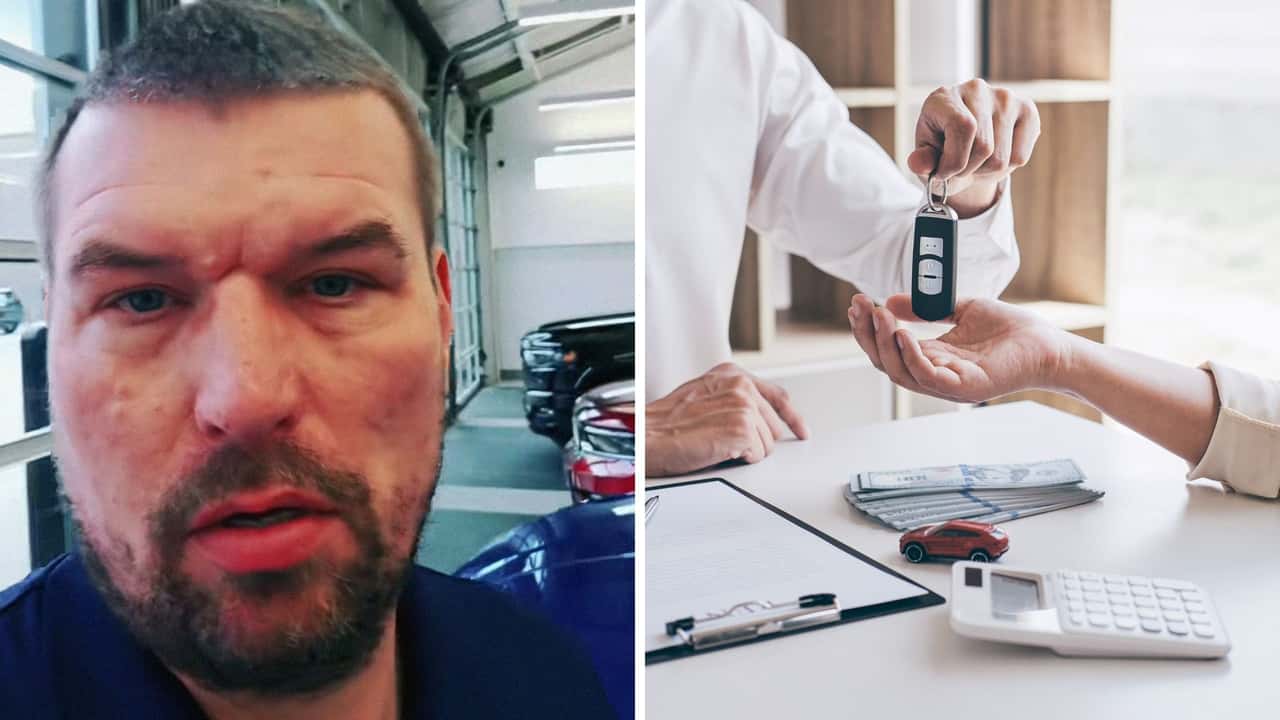
In a TikTok video, car salesman Kane (@drivenbykane) addresses a common misconception about how trade-ins work at dealerships.
“We often press the appraiser to get you more money for your trade,” Kane says in the video.
His claim challenges the widely-held belief that salespeople are incentivized to offer customers as little as possible for their trade-ins. According to Kane, the opposite is actually true.
“Salespeople want you to get as much money for your trade as possible,” he continues. “Sounds like it’s not true, but it is.”
Kane’s statement suggests that salespeople actively advocate for customers during the appraisal process, pressuring the appraiser to bump up the trade-in value. But why would they do this if it means the dealership has to pay more for your old car?
The logic, according to Kane’s perspective, likely comes down to closing the deal. A customer who feels they’re getting fair value for their trade-in is more likely to complete the purchase. If a salesperson can secure a higher trade-in offer, it reduces the customer’s out-of-pocket cost on the new vehicle, making the deal more attractive and easier to close.
The appraisal process itself is thorough and data-driven. According to Auto Cheat Sheet, the used-car manager inspects every aspect of your vehicle—from body condition and tire tread to fluid levels and vehicle history reports via services like AutoCheck. Their goal is to determine reconditioning costs and find discrepancies that affect value. The process typically takes 15 to 30 minutes.
Edmunds explains that the final trade-in offer follows a simple formula: trade-in offer = market value – reconditioning cost – dealer profit margin. Dealerships use real-time market data from sources like Black Book, NADAguides, and Kelley Blue Book to determine what your vehicle could sell for, then subtract the cost of getting it lot-ready.
But here’s where Kane’s perspective makes sense: Salespeople are typically paid on commission for the sale of a new vehicle, not for minimizing your trade-in value. According to Core Commissions, car salespeople typically earn 20–40% of the front-end gross profit on each sale, with additional bonuses for meeting sales targets or moving specific inventory.
A salesperson’s primary goal is to close the deal. If a higher trade-in value makes you more likely to buy, then it’s in the salesperson’s interest to advocate for that higher appraisal. They make their money when you drive off the lot in a new car, not from lowballing your trade-in by a few hundred dollars.
“Of course. Salesperson just want the sale. A higher trade value makes that easier. The salesperson is (almost) always working for the customer to get that sale done,” a top comment read.
“Does it matter how you steal from people ? Congratulations on talking to the appraiser,” a second person said.
Motor1 reached out to Kane via TikTok direct message and comment. This story will be updated if he responds.
We want your opinion!
What would you like to see on Motor1.com?
– The Motor1.com Team