‘I don’t know, man.’
A car seller at a North Carolina Ford dealership shared that he worked with a customer who was worried about having to make immediate payments on a new vehicle.
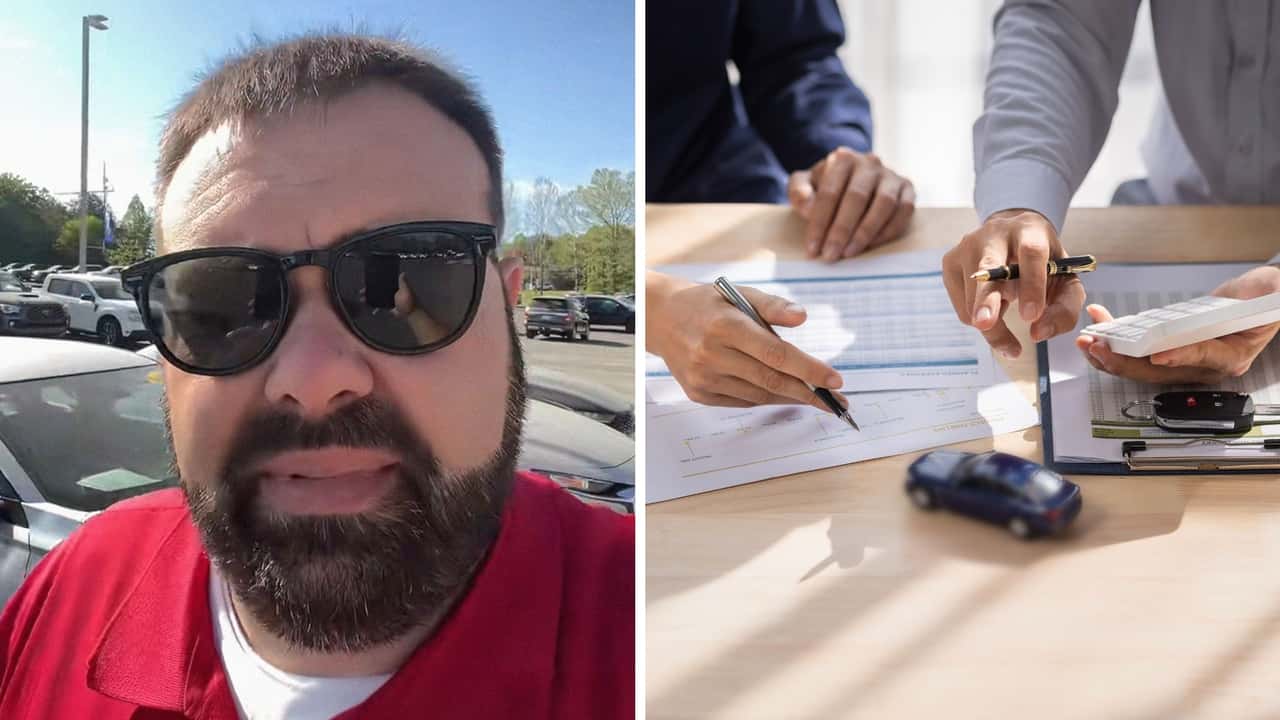
The general manager of Foothill Ford, who goes by Rollin’ Rob (@rsut27) on TikTok, outlined how he arranged this deal for a client. But is there a catch?
“So, we did a deal last night with a customer about a Nissan Frontier, pre-owned…traded in a motorcycle. We actually traded for two motorcycles yesterday. Anyway, what’s really cool about this customer is he’s got a huge vacation planned this summer. And he’s like, ‘I don’t know, man. I don’t know if I really could do this right now,” referring to the customer’s trepidation about committing himself to a car payment.
The sales rep said that he took the prospective buyer’s pending vacation into account. This prompted them to arrange his financing so that his first payment on the vehicle wouldn’t be due for three months.
“Look guys, we hooked him up. His first payment’s not due for 90 days. Three months. He doesn’t have a payment for three months. So now, he gets to enjoy his vacation and a new Nissan truck,” he told his viewers.
Following this, he stated that this type of financial arrangement could be made for other interested buyers as well.
There are numerous dealerships that offer a similar payment structure for buyers interested in financing a vehicle. For example, this Hyundai dealership located in Ocala, Florida, touts the same promotion, as does Toyota of Greenville in South Carolina.
If you spot a dealer financing office that lets buyers start making payments on a new vehicle months after driving it home, should you take the deal? It depends on whether deferring payment on a vehicle is right for you.
If you’re in dire need of a new car and could benefit from the liquidity of not having to pay for 90 days, this could be a good option. However, you’re ultimately only deferring those payments until a later date, so you’re going to have to fork over that money at some point.
Plus, new cars depreciate rather quickly. So, down the line, if you want to sell or trade in your car, and you’ve been making the minimum payments on it, you may find yourself owing money on that vehicle if you decide to unload it before your car note’s been paid in full.
As with any car deal, buyers must closely scrutinize the deals they’re signing in order to understand exactly what they’re getting into. As the finance outlet Bad Credit writes, some of these deferred 90-day auto loans still accrue interest during that 90-day window. What’s more, these financing options often come with higher interest rates.
Consequently, you could be paying more for the same car in the long run, and you’ll be stacking up interest charges during those three months. Which, on a $30,000 car, is a heck of a lot of compound interest.
Let’s take a look at this straightforward auto loan calculation on a $30,000 out-the-door price for a vehicle. Next, we’ll set a 60-month loan term at a 7% interest rate with no money down in New Jersey (7% sales tax). According to Calculator.net, buyers will pay $5,642.16 in interest alone. On top of the $2,000 in title, registration, and additional fees, over that five-year period, that $30,000 car will cost you $39,741.16.
But let’s say those payments are deferred for three months. That 7% interest rate applies to the entire $30,000 auto loan. This means an additional $2,100 in interest is added to the total cost of your vehicle.
If you’re looking for a deferred auto loan, make sure to request that the deal you’re getting also comes with no interest during this deferment period. This way, you’re not incurring any additional expenditures on the total cost of the car you’re purchasing. If that’s not possible, then it might be in your best interest to buy a more affordable car. This way, you’re not getting hit with higher premiums just because you needed your auto loan payments to be postponed for a quarter of a year.
Seasoned car buyers recommend that it’s generally better to secure financing for a vehicle on your own instead of utilizing a dealership’s financing department. At the very least, you can come prepared with a pre-authorized loan amount before buying a car. This then forces the dealership’s financing department to try to secure you a better rate. If they can, you just saved yourself some money. And if they can’t, then you nabbed yourself a lower total car cost than you would have had you simply walked into the dealership.
And to maximize the value of a car purchase, most financial experts would warn against buying the latest and greatest models. Self-made millionaire David Bach calls it “the single worst financial decision” people make. This is due to the disproportionately high depreciation rates vehicles have in their first 3-5 years of ownership. Opting for models from historically reliable brands just coming off a lease could save you a lot of cash.
Motor1 has reached out to Foothill Ford via email for further comment. We will update this story if it responds.
We want your opinion!
What would you like to see on Motor1.com?
– The Motor1.com Team