“As someone who is in the fuel industry, you are correct.”
For something as common as it is, it’s surprising just how little the average person knows about filling up on gasoline.
While you may think you have a handle on the whole process, there are numerous questions that the day-to-day driver often cannot answer. For example, what do the different octane numbers mean? Is it really dangerous to use your cell phone at the pump? And are you pumping your gas at the correct speed?
Given this lack of knowledge, it’s no surprise that numerous rumors and theories have emerged about the refueling process. There’s one that seems more common than most—and it has to do with the refueling of the station itself and how it can harm your car.
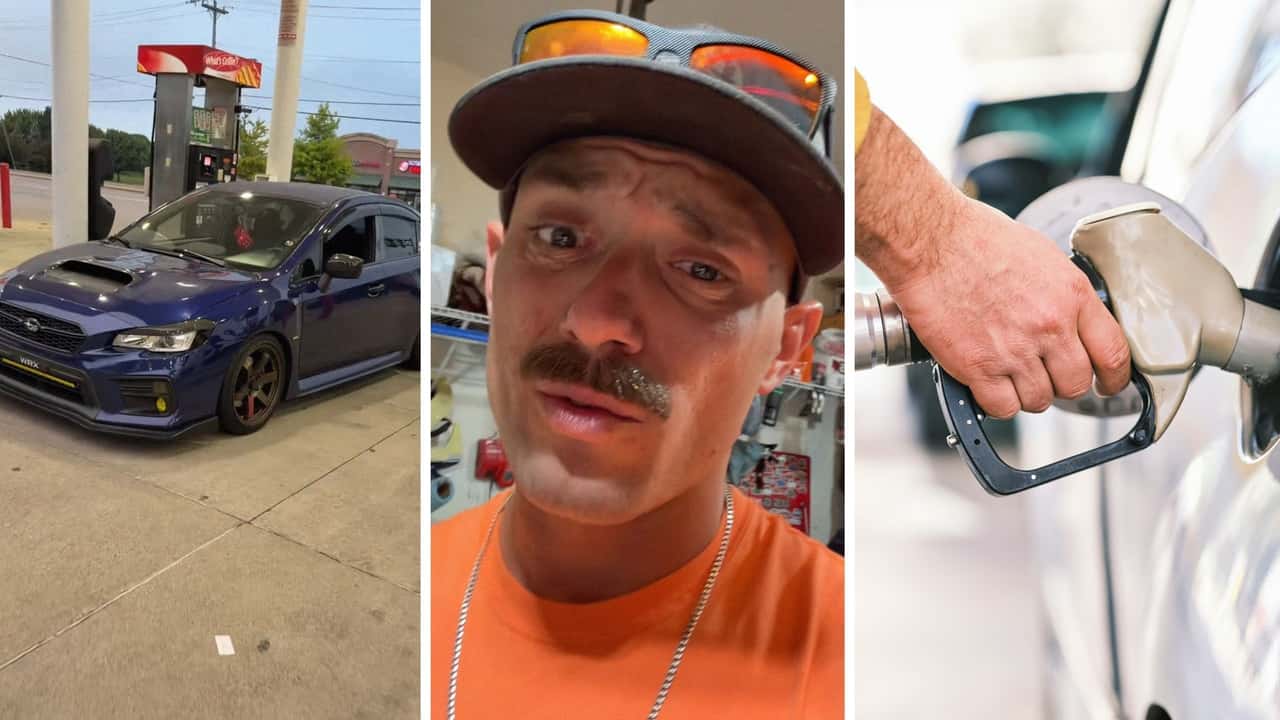
In a video with over 793,000 views, TikTok user @lapisbluewrx513 shows a gas station that appears to be a Speedway. It is being refilled by a tanker truck.
“Tell me if I’m right or wrong,” he starts. “I’ve always been told not to get gas at the gas station when the tanker truck is pumping the fuel because all the sediment at the bottom of the tanks underground, it’s getting all stirred up. You don’t want that in your car.”
The TikToker is not alone in this belief. A quick internet search will reveal numerous threads across various social media platforms inquiring about this same idea. Some insist that sediment is the problem, while others claim that the tanker truck can introduce water into the fuel mix—and thus your tank.
So, is there any truth to the idea?
It (probably) doesn’t matter if you fuel up while a tanker truck fills the underground tanks.
Refueling stations are required by law to have a series of filters installed on every pump. This means that, if there was any sediment being churned up, it would more than likely be filtered out by the time it reaches the nozzle.
Not only that, but the gas has already been filtered multiple other times by the time it hits your car.
Could some sediment make its way through all of these filters and into your engine? Technically, sure, even if the chances are pretty slim. This is why some, like AAA, still say that drivers may want to avoid stations that have recently refilled.
That said, there doesn’t seem to be much evidence that cars in the modern era are being damaged by tank sediment. There are occasional cases where it has been claimed, but they are so few and far between that it should not be a concern for the average driver.
In the comments section, many drivers insisted that stories about tanker trucks stirring up sediment were just myths.
“Wrong. They are all filtered and checked frequently unless you’re at some old time gas station,” wrote a user.
“You’re wrong. Anyone that says you’re right is also wrong. From an actual fuel hauler,” added another.
“Pumps have filters,” noted a third.
That said, many claimed they avoided pumps being refilled, whether due to superstition or something else.
“I never do, will go down the road,” said a commenter.
“As someone who is in the fuel industry, you are correct. Yes there are two filters before it gets to your car buuuutttt,” offered a second.
In a direct message sent via TikTok, the creator said that, while he has not personally heard of engine issues resulting from this, he still chooses to avoid recently-refilled gas stations.
“Whether it’s true or not, is up to science. I can see where that can be an old school superstition because they use different style tanks now. But if it’s an older gas station, have they really been kept up and serviced properly?” he wrote.
“My superstition kind of goes out the window if I pull up to the gas station and the tanker truck left 10 minutes prior,” he continued. “Once the tanker truck leaves, how long does it take the mixture to settle if there’s anything to mix at all? Judging from my comment section, it tends to be water.”
He also admitted to following another gas superstition.
“I never let the fuel light stay on too long,” he added. “I feel like it’s bad for the fuel pump.”
Speedway didn’t immediately respond to an email seeking comment. This article will be updated if it does.
We want your opinion!
What would you like to see on Motor1.com?
– The Motor1.com Team