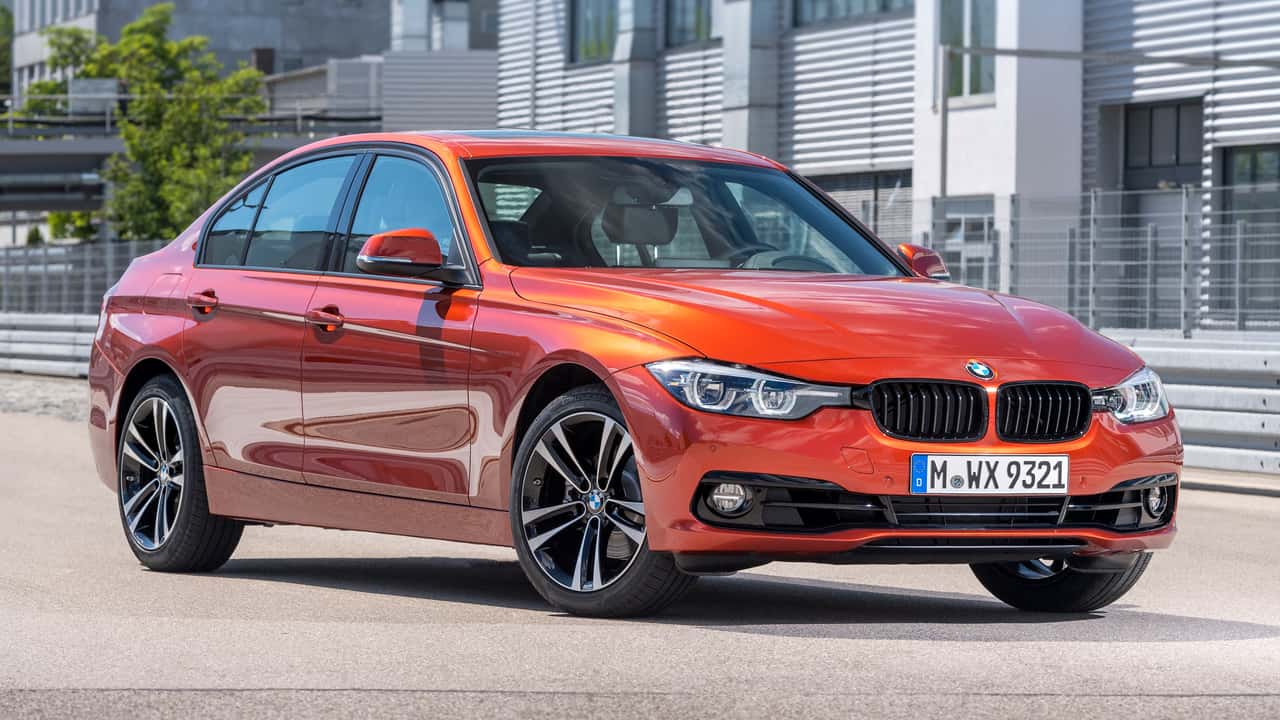
German regulators flagged a faulty starter relay on BMW 3, 5 and 7 Series sedans, prompting a free recall fix through the dealer network.
BMW is recalling 189,130 sedans built between July 29, 2014, and November 12, 2020, after German regulators flagged a starter relay that lets water seep into its housing. The Kraftfahrt-Bundesamt is tracking the campaign under reference 16791R.
Corrosion inside that relay can short-circuit the starter and, in the worst case, ignite the engine compartment. Owners of affected 3 Series, 5 Series, and 7 Series cars should expect a dealer letter and a free fix.
According to BMWblog, the campaign covers three of BMW’s core sedan nameplates across two generations each. It spans the F30-generation 3 Series through the early G20, the F10 through the G30 5 Series, and the F01/F02 through the G11/G12 7 Series.
2020 BMW 540i xDrive Sedan (G30)
That range matters because it shows the defective relay was not limited to a single platform. BMW carried the same part, tagged internally as 0012820600 and 0012840600, across a redesign cycle that touched hundreds of thousands of sedans built worldwide over six model years.
Owners can check status through BMW’s recall lookup using their vehicle identification number, the standard method dealers use to confirm eligibility. It is the same process BMW used for a smaller 27,720-unit sedan recall earlier this year, and the fastest way to know if a specific car needs the repair.
This is not BMW’s only recent starter-related fire campaign, either. A separate, larger action covers 744,234 vehicles built between mid-2020 and early 2026 with RWT starter relays prone to internal abrasion, a distinct defect that partly overlaps in production dates but involves a different failure mode entirely.
2020 BMW 7 Series Sedan (G11)
The problem starts with a seal that does not fully block moisture from reaching the relay’s internal contacts. Once water gets in, it does not evaporate cleanly, it sits against the metal and starts corroding the contact surfaces over time.
Corroded contacts do not just fail quietly. As resistance builds at the corrosion point, current can arc across the gap instead of flowing normally, and that arcing generates heat right next to wiring insulation and other combustible material under the hood.
Drivers might notice hard or inconsistent starts, a burning smell near the engine bay, or dashboard warning lights tied to the electrical system before things escalate. BMW has not detailed a full warning-sign list, so any starting irregularity on an affected car is worth a dealer visit rather than a wait-and-see approach.
The fix itself is straightforward as technicians replace the entire starter motor rather than just the relay, which eliminates the water ingress path altogether. It is the same remedy BMW used on a related X3 starter recall, and it mirrors how other automakers have handled comparable defects, including a 2024 Volkswagen Jetta fire-risk recall tied to a different underhood component.
Motor1’s Take: If your car is affected, book the dealer repair as soon as you get the letter. Electrical smells or hard starts deserve immediate inspection.
Repairs could take time if many owners call at once, so schedule early. Watch for further notices if BMW expands the investigation or finds more affected parts.
More From BMW:
Source:
BMWblog
We want your opinion!
What would you like to see on Motor1.com?
– The Motor1.com Team