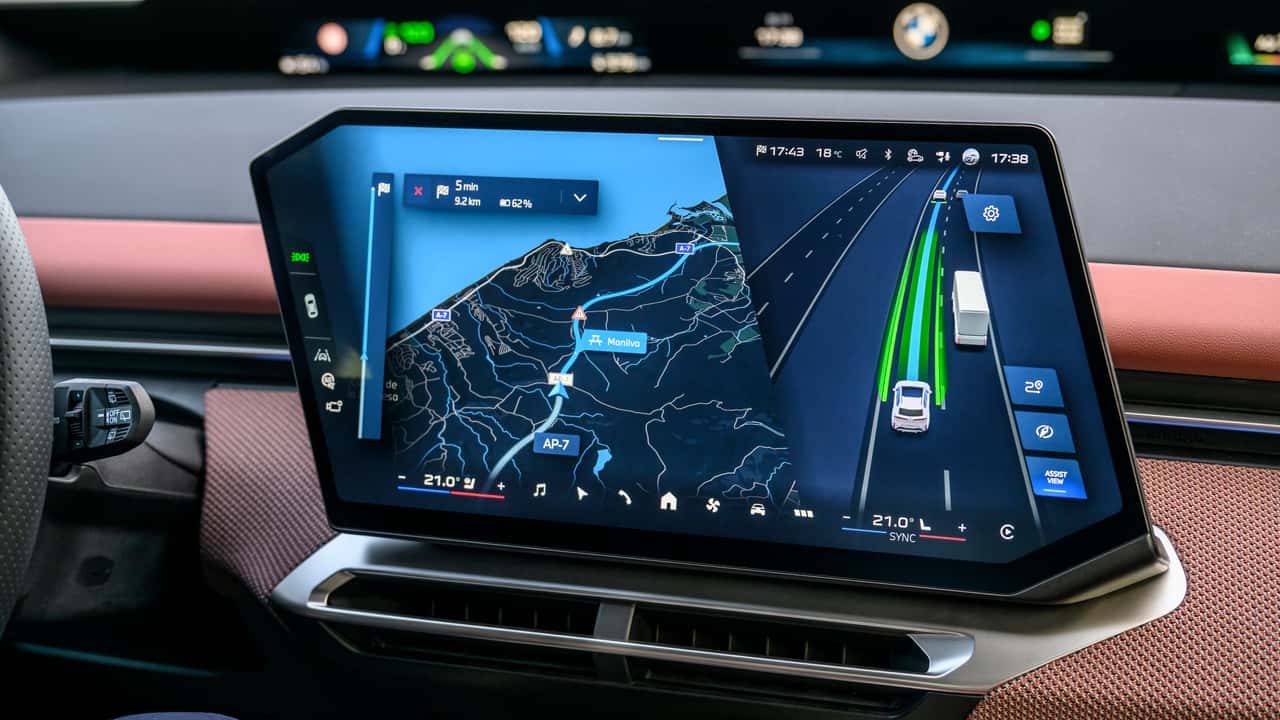
New BMW iX3 models in EU markets capture near-miss footage and sensor data to refine driver-assistance behavior while enforcing privacy-by-design safeguards.
BMW has launched a video-data program that turns participating iX3 owners into real-world safety testers. From April 2026, selected new-generation models with the right hardware record short clips when the car detects a risky situation in certain markets.
The aim is to train driver-assistance software on real near-miss events instead of relying only on simulations. BMW’s regulatory material says it may collect video from customer vehicles of the new model generation, including the iX3, i3, 7 Series and X5, if they run the specified operating system and sensor package.
BMW argues that lab work is not enough, so the program needs real-world vehicle data to capture scenarios simulations struggle to reproduce. In practice, every clip pulled from a customer’s 2026 BMW iX3 goes through machine-learning models that refine driver-assistance and semi-automated driving functions. Once the algorithms improve, BMW sends updated software back to cars over the air, so owners do not need a dealer visit.
Fleet operators should note that the initiative covers the iX3, i3, 7 Series and X5 only when they carry the required software and sensors, and not every future model sold across the European Union.
BMW Exit Warning Assistance System
The system does not store every errand or school run. It triggers around safety-relevant situations, such as hard braking or a near-miss during a lane change, the kind of events that expose the limits of assisted-driving software.
Each captured event is capped at 120 seconds of unedited video that combines exterior camera footage with data from the car’s exterior sensors. That span covers what led up to an incident and what followed without creating a rolling archive of every mile driven.
Privacy safeguards apply before and after September 2026. Until then, BMW says faces and license plates of other road users are blurred in the vehicle before transmission. Once the footage reaches its systems, vehicle identification numbers are deleted after a short period and further depersonalization continues.
From September 2026, where local law allows, video can first upload to BMW’s IT backend without in-vehicle blurring to support driver-assistance development. BMW then deletes the vehicle identification number and applies extra depersonalization steps on its own systems.
The program stays consent-based under BMW’s vehicle-data access policy, so owners opt in instead of being automatically enrolled. BMW says the process complies with applicable data-protection rules, which are tightening as Brussels increasingly asks automakers to back driver-assistance safety claims with real road data.
Motor1’s Take: This changes how regulators judge driver-assist safety claims. Fleets should expect faster over-the-air fixes when recurring issues show up.
Privacy safeguards will become the headline issue. Authorities will test whether anonymization and consent practices meet the rules. If they don’t, expect tighter limits on data collection.
More From BMW:
Source:
BMW
We want your opinion!
What would you like to see on Motor1.com?
– The Motor1.com Team