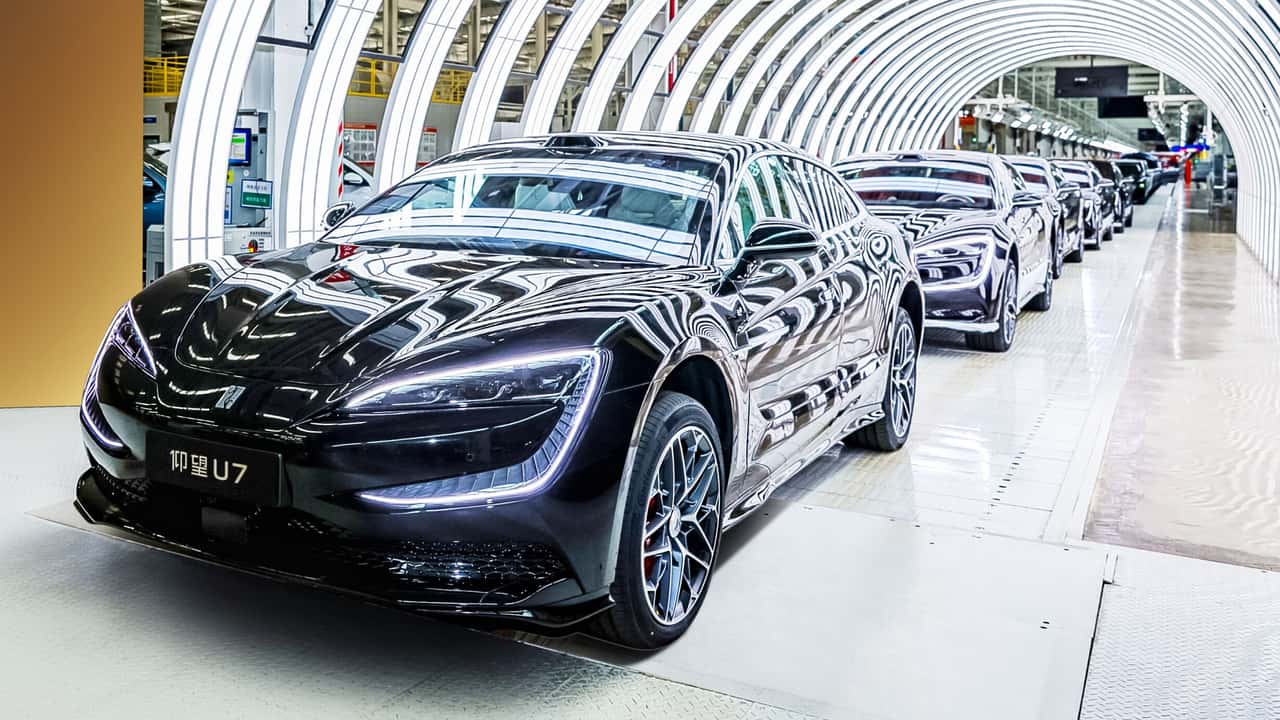
Trump signals he could accept Chinese automakers building US plants with American workers while still blocking Chinese-built vehicle imports.
Chinese automakers building cars on American soil, with American workers, is now something Donald Trump says he would accept. He made the point on Fox News days before Xi Jinping’s Washington visit puts US-China auto policy under a much brighter light.
Trump’s line drew a hard boundary at the same time. Plants built here are fine, he said, but Chinese-made vehicles imported through Mexico are not, and that distinction is already shaping how automakers, dealers, and workers read his administration’s next move.
Speaking on “The Ingraham Angle,” Trump told host Laura Ingraham, “If China wanted to come in and open a plant to build their cars here, I’d be okay with that.” He tied the offer to one condition: American workers on the line.
He reached for a familiar comparison, noting that Japanese automakers built US plants decades ago and “hire our people.” Trump framed jobs as the whole point, saying flatly that “the most important thing is that Americans get jobs,” not where a badge on the hood originated.
The comments land as the Trump administration turns up pressure on Ford’s Chinese manufacturing partnerships, a fight that has forced Ford to defend deals the White House calls a security risk. Transportation Secretary Sean Duffy’s letter to CEO Jim Farley called Ford’s ties to Chinese firms a matter of “profound concern.”
Duffy’s letter named specifics and cited Ford’s licensed battery technology from CATL at its Marshall, Michigan plant, a Geely joint venture in Spain, reported hybrid-component talks with BYD, and Lincoln Nautilus production staying in China until 2030. Ford has said the CATL deal is licensing, not foreign ownership, but the criticism has not let up.
Nothing about Trump’s remarks changes the restrictions that keep Chinese-built vehicles out of American driveways. He was explicit that finished cars shipped from China, or assembled in Mexico and routed north, stay blocked regardless of any US factory deal.
Trump warned the market would be “overrun” without that wall, arguing the US “has never allowed” Chinese-built imports and does not intend to start now. It is the reason Geely’s path into the US market has run through partnerships and licensing rather than direct vehicle sales.
For American automakers already competing against cheaper EVs, the distinction counts. A Chinese-branded plant hiring US workers looks a lot like the Japanese playbook Trump cited, but it would still mean a new domestic competitor for Ford, GM, and Stellantis on their own turf.
The timing keeps this from being an abstract policy question, since Xi Jinping’s Washington visit sits roughly ten days out, and Ford’s ongoing pressure over its China exposure gives trade negotiators an obvious flashpoint. Duffy’s letter and Trump’s Fox News comments now sit on the same table Xi’s delegation will find waiting.
Motor1’s Take: Trump’s comments shift the fight from where cars are built to who owns the factories and technology. Automakers will likely rethink partnerships and joint ventures to fit inside the new political lines.
Lawyers, dealers, and unions will push regulators for simple, predictable rules that protect jobs and sales. Watch whether Washington treats licensing deals and battery plants as local investment or as foreign control by another name.
More On Trump And China:
Source:
Fox News via Bloomberg
We want your opinion!
What would you like to see on Motor1.com?
– The Motor1.com Team