Mate Rimac says Euro automakers shouldn’t try to beat China at its own game because they’ll lose.
The European automotive industry is in trouble, and Mate Rimac has a pretty simple solution: Stop trying to beat the Chinese at their own game. That means fewer giant screens, fewer buttons replaced by touch-sensitive surfaces, and less obsession with charging speeds. Instead, Bugatti’s boss argues that European automakers should focus on something China can’t replicate as easily: luxury and craftsmanship with genuinely premium materials.
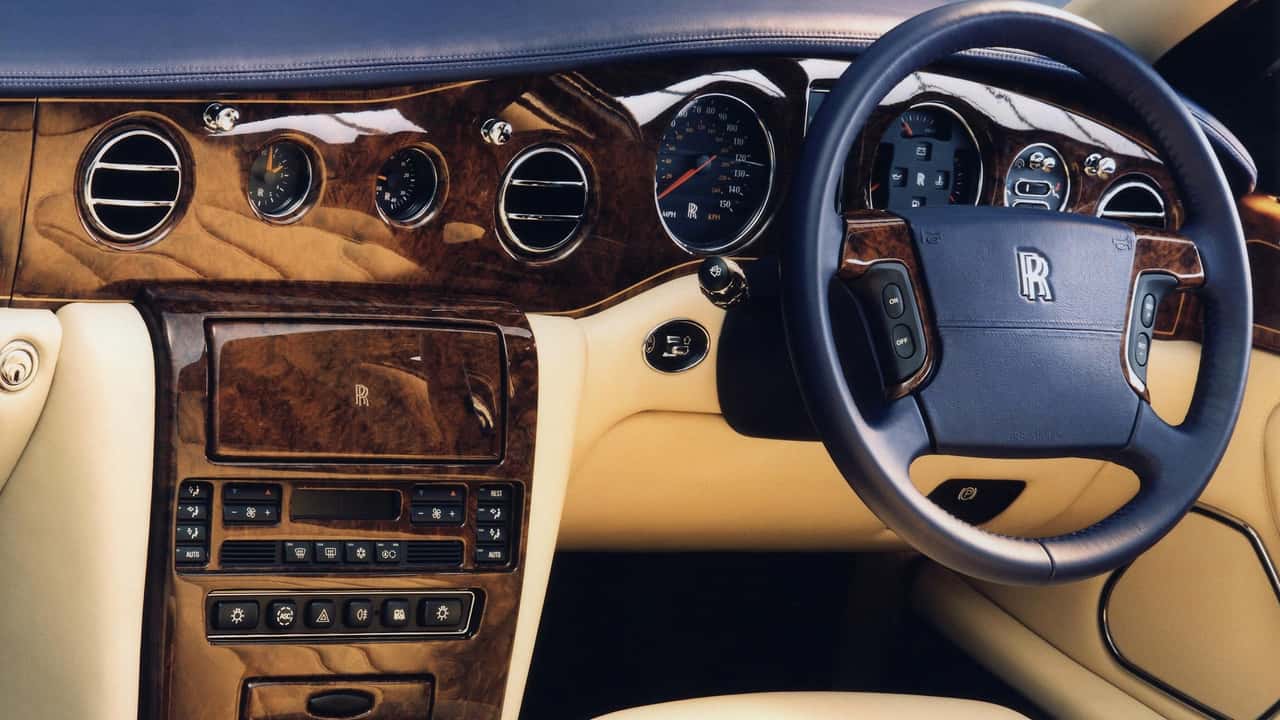
Rimac makes his point while poking around the interior of a Rolls-Royce Silver Seraph (aka Bentley Arnage), pointing to the leather, wood, and other high-quality materials used in the cabin. The message is pretty clear: This is what luxury used to look like, and perhaps it’s something the European automotive industry has lost sight of while chasing the latest tech trends.
The automotive industry has spent the last few years turning the interior into a tech demo. Screens have gotten larger, physical controls have disappeared, and automakers routinely brag about how much computing power they’ve packed into their latest cars. None of that necessarily makes a car feel more luxurious.
A 12-inch display is still a 12-inch display, whether it’s in a €30,000 family crossover or a €300,000 luxury car. In some cases, the cheaper car can even have a larger screen. That’s where Rimac’s argument gets particularly interesting. He believes European automakers need to find their niche in much the same way Switzerland did with watchmaking. Swiss companies don’t try to make the world’s cheapest watches. They focus on craftsmanship and exclusivity, selling relatively small volumes while capturing a huge share of the industry’s profits.
It’s an appealing strategy for companies at the top end of the market. Brands such as Bugatti, Rolls-Royce, Bentley, and even some of the more expensive offerings from BMW, Porsche, and Mercedes can charge a premium for hand-finished interiors, exotic materials, and the feeling that you’re buying something genuinely special.
But there’s a rather large problem with applying that philosophy to the entire European car industry: not everyone can become Bugatti. Its former parent company, Volkswagen, can’t suddenly turn the Golf into a six-figure luxury hatchback and expect millions of buyers to stick around. Renault can’t cover every Clio in leather and carbon fiber. Skoda can’t transform the Octavia into a Swiss watch on four wheels. Even premium automakers such as BMW and Mercedes still need relatively affordable models to keep their factories running and their sales volumes high.
Bugatti La Maison Pur Sang Veyron 20 Years
That’s the part of Rimac’s argument that needs some qualification. Yes, European automakers probably shouldn’t blindly copy every Chinese trend. There is a legitimate question about whether buyers actually want enormous screens replacing conventional controls, or whether charging speeds alone are enough to win customers. And there is certainly value in offering something beyond a list of technical specifications.
But mainstream automakers have a completely different problem from Bugatti. They need to build cars that millions of people can actually afford. You can’t solve Europe’s competitiveness problem by making every car more expensive, because plenty of customers aren’t shopping for hand-stitched leather, exotic wood, and individually finished trim. They want a practical car that gets them to work, fits the family, and doesn’t cost a fortune.
Another uncomfortable reality is that Chinese automakers aren’t limited to building bargain-basement cars with enormous screens. They’re moving upmarket, too, and increasingly offering impressive materials, fancy interiors, and technology at prices European manufacturers may struggle to match. Simply adding leather and removing screens won’t magically create an unbeatable product.
Bugatti Tourbillon
Still, Rimac’s broader point is worth considering. Europe doesn’t necessarily need to win by having the biggest display, the fastest-charging battery, or the longest list of software features. It needs to figure out what makes its cars worth buying in the first place.
For Bugatti, the answer is obvious: exclusivity, craftsmanship, and absurd amounts of money. For the rest of the industry, the answer probably has to be a little more complicated.
More From Bugatti:
We want your opinion!
What would you like to see on Motor1.com?
– The Motor1.com Team