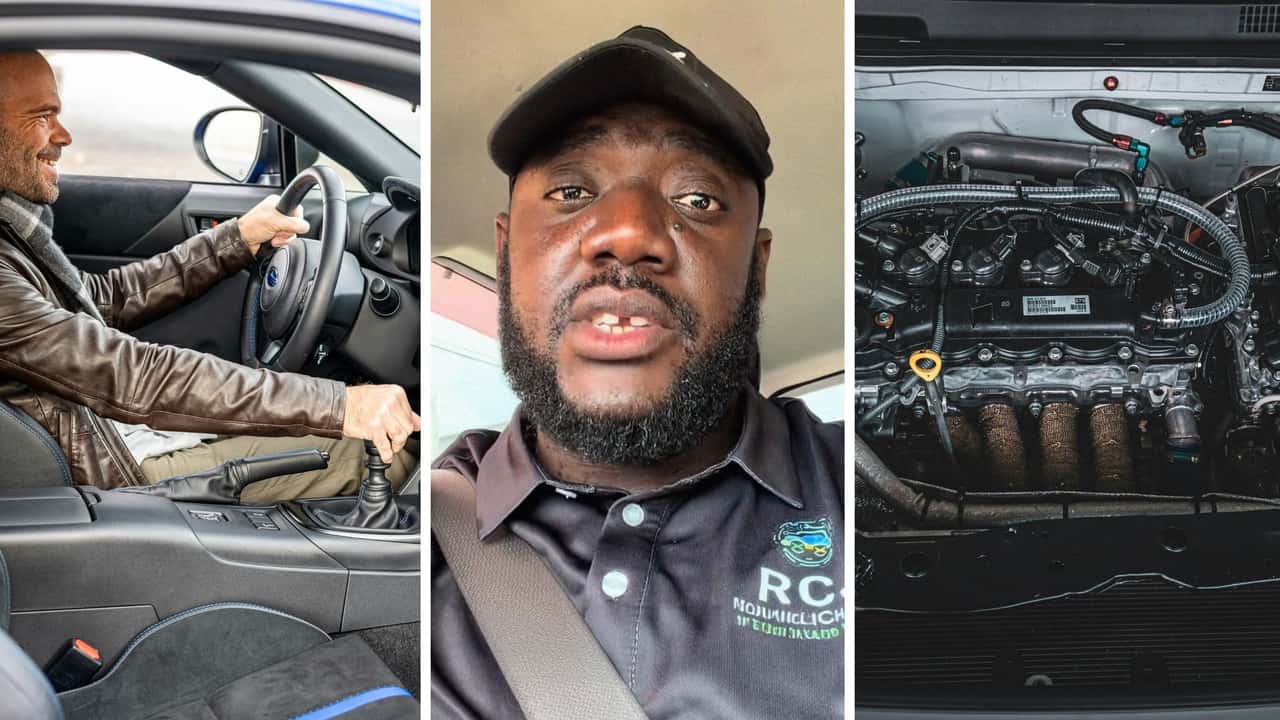
“That’s how you keep destroying transmissions.”
When it comes to your car’s transmission, death by a thousand cuts isn’t just an overused literary term. The ugly truth is that years of seemingly harmless little habits inflict damage that adds up over time, leading to an expensive and aggravating failure.
That’s the warning from mechanic RCJMobileMecanics (@rcjmobilemechanics), who wants inattentive drivers to realize the damage that their poor shifting behavior is causing. He points his finger at the seemingly harmless move of shifting from drive into reverse before the vehicle is completely stopped.
“Say for instance, you’re reversing and you’re putting the vehicle in drive before you completely come to a stop. What you’re doing is grinding the gears,” he said in a clip that’s been viewed more than 164,000 times. “That’s how you keep destroying transmissions.”
That’s far from being just one mechanic’s opinion. Mazda warns in its owner’s manuals that shifting into Reverse while the vehicle is moving can damage the transmission, and specifically instructs drivers to come to a complete stop before shifting into or out of reverse. The automaker also cautions against shifting into park while the vehicle is moving.
In a standard automatic transmission, clutches and other internal components help transfer power to the wheels. Shifting from reverse to drive while the vehicle is still rolling backward can force those components to work against the car’s momentum, producing unnecessary stress and heat.
Don’t worry and start booking a rebuild if that sounds like you. One hurried shift won’t destroy a transmission, and some modern vehicles also have electronic safeguards designed to prevent damaging gear changes.
But repeatedly subjecting a transmission to that kind of stress is a risk drivers can easily avoid, and should improve their “shifting hygiene” as soon as possible.
Judging by the reactions to the video, plenty of drivers recognize the behavior, including some who have already encountered expensive transmission trouble.
“My transmission went out 2 weeks ago and I’m not gonna lie I do this a lot so it makes sense,” wrote one commenter, who said they’d recently purchased another car and needed to break the habit. The warning clearly struck a nerve, though there’s no way to know whether their shifting behavior caused the failure.
Other viewers weren’t about to let impatient motorists rush them into making the same mistake.
“I come to a complete stop. Idc who’s waiting,” wrote one viewer, who was joined in their stance.
“Exactly! I get yelled out for coming to complete stops lol,” another replied.
There were also some drivers who seemed confident their vehicles could withstand almost anything.
“Unless you got a Toyota you can do whatever you want,” joked one, who later claimed to own three high-mileage Toyotas that still drive like new despite regularly making the maneuver.
Toyota’s reputation for durability notwithstanding, there’s no reason to assume its transmissions are immune to unnecessary mechanical stress.
The mechanic also notes that failing to service a transmission on schedule is as serious of a problem as improper shifting. That part of his warning prompted a separate conversation revealing how little some drivers know about the maintenance involved, with one wondering, “How do you service the transmission.”
“By changing the fluid on time,” another viewer responded, which prompted another to ask, “What fluid? Oil change ?” Clearly, the disappearance of auto shop and general mechanics courses in high schools has created an epidemic of drivers with little to no automotive knowledge.
According to AAA, automatic transmission fluid serves several critical functions, including lubrication, cooling, hydraulic operation, and protection of internal components. Using the wrong fluid or neglecting required service can affect shifting performance and shorten the transmission’s life.
But there’s no hard and fast rule for determining how often that fluid should be changed.
Consumer Reports advises that recommended service intervals can range from as little as 30,000 miles to more than 100,000 miles, depending on the vehicle. Some newer transmissions are designed to operate for extended periods without a fluid change, while others require more frequent attention, particularly under severe driving conditions.
Of course, even meticulous maintenance won’t cover up consistently abusive driving habits. The mechanic’s advice is simple and pretty inarguable: “Try and come to a complete stop before shifting the gears,” he offers.
For some, it’s a new habit that will take conscious effort to take hold. But it’s a no-brainer tradeoff compared with the inconvenience and expense of transmission repairs.
Motor1 reached out to the creator via direct message and comment on the clip. We’ll update this story if he responds.
We want your opinion!
What would you like to see on Motor1.com?
– The Motor1.com Team