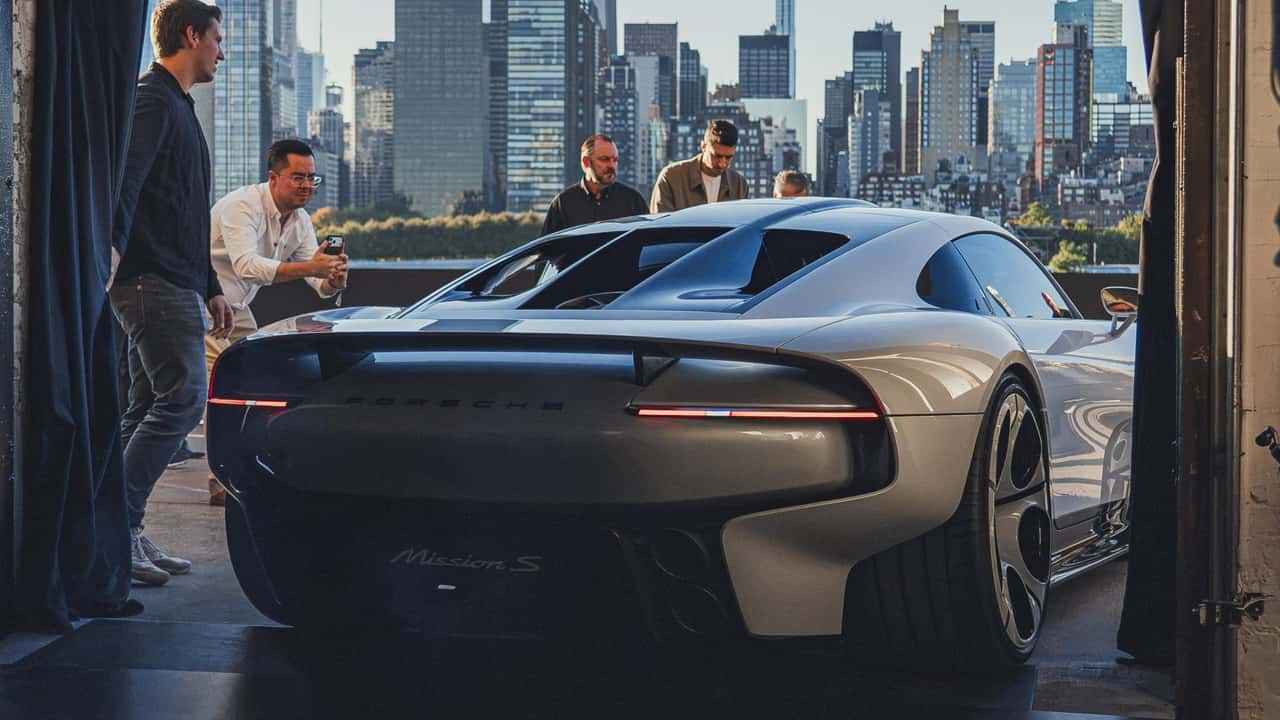
The new mid-engined supercar will stick with combustion and/or hybrid power because no one really wants an electric version.
Porsche continues to embrace electrification, but it has drawn a clear line for its upcoming supercar. The company is developing a new mid-engined machine to sit above the 911, and it won’t offer a fully electric version. The reason? According to CEO Michael Leiters, “There won’t be a BEV on that platform because there is no demand, in this segment, for an EV there.”
That’s a pretty blunt assessment from an automaker that has already ventured into all-electric territory with the Taycan, Macan, and Cayenne. Not only that, but the 718 Boxster and Cayman are also set to return next year without combustion engines. However, Porsche apparently sees a difference between selling EVs to a broad audience and convincing supercar buyers to ditch combustion altogether. For this particular project, customer demand takes priority over going fully electric.
The good news for enthusiasts is that Porsche plans to give the new platform plenty of flexibility. The hardware underpinning the Mission S will support internal combustion engines, conventional hybrids, and plug-in hybrids, allowing the company to tailor the powertrain to the car’s intended character. However, a purely battery setup isn’t part of the plan.
2026 Porsche Mission S concept
That leaves the door open to everything from a relatively lightweight, combustion-powered sports car to a more complex electrified machine with additional performance on tap. Porsche hasn’t revealed the final configuration, but the company clearly wants to preserve the freedom to build its flagship around an engine rather than a large battery pack.
It’s an interesting stance at a time when automakers are investing heavily in electric performance. Porsche isn’t abandoning EVs, but it appears unwilling to force them into a segment where buyers still want the sound, response, and character of a combustion engine. The decision also underscores that electrification won’t follow the same path across the lineup, with Zuffenhausen already promising there will never be an electric 911.
Of course, saying there is no demand doesn’t mean nobody would buy an electric Porsche supercar. It means the company doesn’t currently see enough customer interest to justify developing one for this platform. That’s an important distinction, particularly as the market for high-end performance cars evolves.
2026 Porsche Mission S concept
For now, Porsche is betting that its future flagship will be better served by gasoline power, with hybrid assistance available where it makes sense. In a world where almost every performance-car announcement seems to involve another EV, that might be the most revealing part of the Mission S story.
Porsche isn’t alone in questioning whether buyers want an electric powertrain in the high-end segment. Lamborghini CEO Stephan Winkelmann has described EVs as an “expensive hobby,” arguing that the “market and customer base are not ready.” The Italian automaker has also backed away from plans to put its 2+2 Lanzador as a pure EV into production, choosing instead to rework the gran tourer as a hybrid.
Pagani has faced the same problem. The Italian boutique automaker spent years exploring an electric Utopia, but ultimately scrapped the project after dealers and customers didn’t want it: “We showed the idea to our dealers and our customers, but no one showed interest.”
A recent video from Mate Rimac circulating on social media offers another telling example of the challenges facing electric supercars and hypercars in 2026. Only 71 customers bought the Nevera, well short of the original production target. Rimac had planned to build 150 examples of its electric hypercar, but demand fell short despite its extraordinary technical specifications. The numbers suggest that eye-watering acceleration and cutting-edge technology aren’t always enough to persuade wealthy buyers to spend millions on a performance car without an engine.
Ultimately, these brands are confronting the same problem: building an electric supercar is one thing, but finding enough customers willing to buy one is another. For now, the traditional appeal of combustion engines still carries considerable weight at the top of the performance-car market. Until that changes, automakers may think twice before replacing an engine’s roar with the near-silent rush of electrons.
More From Porsche:
Source:
We want your opinion!
What would you like to see on Motor1.com?
– The Motor1.com Team