Bidirectional hardware lets the Audi A2 E-Tron power tools, campsites, and homes today, with grid support waiting on regulators.
Audi just gave its smallest electric car a job beyond driving. The A2 E-Tron now supports bidirectional charging, which means the battery can run a job site tool, a campsite fridge, or a house during an outage.
Audi detailed the function on November 12, describing two modes that work today and a third still waiting on outside approval. The split affects anyone cross-shopping this compact EV on more than range and price.
Audi A2 e-tron Bidirectional charging: Vehicle-to-load (V2L)
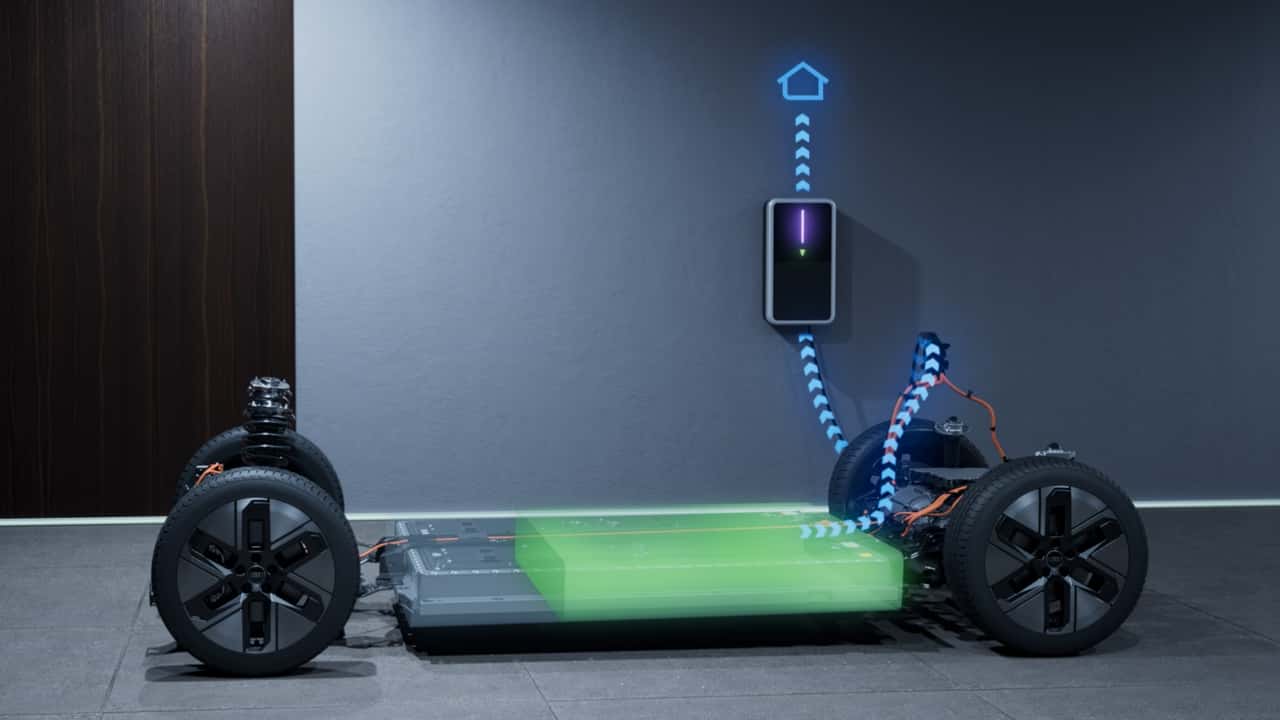
Audi A2 e-tron Bidirectional charging: Vehicle-to-Home (V2H)
Vehicle-to-Load lets the car power external devices directly, the kind of setup that turns a parked A2 E-Tron into a backup generator for tools or camping gear. Audi positions Vehicle-to-Home as the more structured option, feeding stored battery energy into the house itself.
V2H needs a compatible bidirectional DC wallbox at home, hardware the garage-variety charger does not provide. Audi limits the exchange to a 20 to 80 percent state of charge window, and the car will only draw power from the grid below that band or only feed power to the house above it.
Vehicle-to-Grid, the mode that would let owners sell power back to the utility, is not live yet. Audi says it depends on regulation, charging infrastructure, home installation and the right electricity tariff lining up.
That staggered rollout fits how Audi has built out the A2 E-Tron generally. The entry-level model getting V2H support first suggests Audi expects the feature to spread across the lineup rather than stay reserved for flagship trims.
The A2 E-Tron ships in three configurations: a 52-kWh and a 61-kWh pack, both using lithium iron phosphate chemistry, plus an 84-kWh pack built on nickel-manganese-cobalt cells. The phosphate packs use a cell-to-pack layout, skipping the module stage to pack more energy into the same space.
DC fast charging runs from 100 to 183 kW depending on the battery, with a 10 to 80 percent top-up taking 24 minutes on the 52-kWh pack, 26 minutes on the 61-kWh pack, and 29 minutes on the 84-kWh pack under Audi’s test conditions. A new component called OCDC 2.0 combines the onboard charger and DC/DC converter into one unit, and Audi paired it with a revised algorithm built for the flatter voltage curve that makes phosphate cells harder to read accurately.
Thermal management runs constantly during both charging and discharging, tracking battery temperature and current flow alongside the battery management controller, which handles state of charge and aging estimates. That system has to work overtime once a battery is also feeding a house rather than just a drivetrain, and it is part of why Audi built V2H around a dedicated wallbox instead of a standard charger.
These figures follow Audi’s earlier claim that the A2 E-Tron delivers up to a 401-mile range on its largest battery, a number that gives the bidirectional functions a bigger energy reserve to draw from than most compact EVs can offer.
More From Audi:
We want your opinion!
What would you like to see on Motor1.com?
– The Motor1.com Team