“If I pay 900 to fix my problem…”
After paying almost $1,000 for car repairs, the last thing anyone wants to hear is that more expensive work is still needed. That’s the situation a Volkswagen owner found themselves in recently, before being saved by a mechanic.
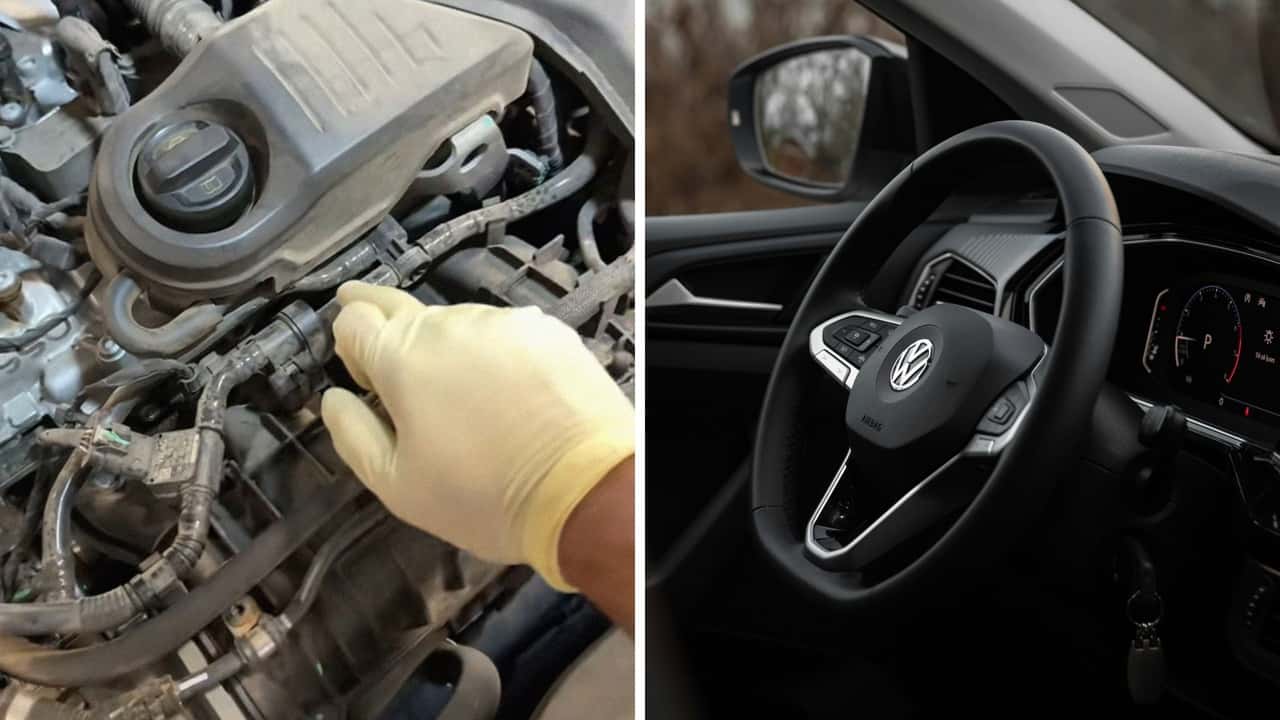
A video by creator Menjicar (@menjicar) shows the $946 bill for the initial repairs by a different garage, which was focused on a problem with the car’s evaporative emission control system (ECU). With the car’s check engine light still showing, the initial repair crew decided the owner needed to have an expensive engine control unit installed.
“After spending $900, check engine light is still on,” the unidentified narrator explains in the TikTok, which has been viewed more than 24,000 times. “They’re telling her now that she needs the ECU, which is basically the computer for the engine. She got fed up.”
That frustration pushed the owner to seek a second opinion. Menjicar was recommended by a friend of hers.
Instead of jumping straight to expensive components, the mechanic started with the basics. A scan of the car’s outboard diagnostics pulled a specific trouble code, which pointed to a small leak in the vehicle’s “evap” system.
“We get a bunch of other codes, but they’re history codes and passive codes, so nothing to worry about,” he explains, narrowing the focus to the one issue that actually mattered.
From there, he turned to a smoke machine, which is an acceptable if uncommon tool for tracking down evaporation problems. By pushing smoke through the sealed system, tiny leaks became easy to detect.
He found a pinhole leak in a line connected to the evaporative system, which is designed to capture and recirculate fuel vapors from the gas tank. Even a small breach in that system can trigger a check engine light, but it’s typically far less severe and much cheaper than a failed engine control unit.
On many Volkswagen models, however, the repair isn’t as simple as replacing a short section of hose. The affected line is part of a larger assembly that includes sensors and a purge valve, meaning the proper fix requires replacing the entire unit.
The mechanic gave the owner a choice between a temporary patch and a full replacement. She chose the more expensive but more responsible option of a full replacement.
“So we end up going with a new hose from the dealer,” he says, noting that the original plastic lines can become brittle over time and become prone to cracking.
Once installed, the system is sealed, all trouble codes are cleared, and the issue that prompted nearly $1,000 in earlier repairs is finally resolved. We’re never told the final bill for the replacement of the hose, but it was certainly a less expensive part that took a lot less time to install than an ECU.
For the mechanic, situations like this are as much about people as they are about parts.
“Honestly, I feel so bad for situations like this where customers spend hundreds or even thousands, and the problem never gets fixed,” he said.
In cases like this, he explained that he’ll sometimes ease up on labor charges or skip certain fees to help offset what a customer has already spent chasing the wrong fix. That doesn’t mean the original shop is off the hook, and in a follow-up comment with a viewer of the clip, he said he had encouraged the owner to go back to the original garage and push for at least some kind of refund.
That tension between doing right by the customer who’s in front of you and holding others accountable quickly became a big part of the conversation in the comments on the clip.
“If I pay 900 to fix my problem and the problem is not fixed… hell no I’m not paying that,” one viewer wrote, echoing a sentiment that drew broad agreement.
Others focused on the long game, arguing that honesty like this is what builds a steady customer base over time. There was some pushback on this, though, with some commenters saying that it’s not the second mechanic’s responsibility to absorb any of the financial fallout from a failed repair elsewhere.
In the comments, the mechanic acknowledged that point but didn’t back off from his approach.
What we learn from a situation like this is that a dashboard warning can pretty quickly turn into a costly repair cycle if the underlying issue isn’t clearly identified from the start. Some faults are straightforward once properly traced, but getting there often depends on whether the right diagnostic steps are taken before bigger decisions are made.
Motor1 reached out to Menjicar via direct message and commenting on the video. We’ll update this if he responds.
We want your opinion!
What would you like to see on Motor1.com?
– The Motor1.com Team