“You should have had a shop inspect it.”
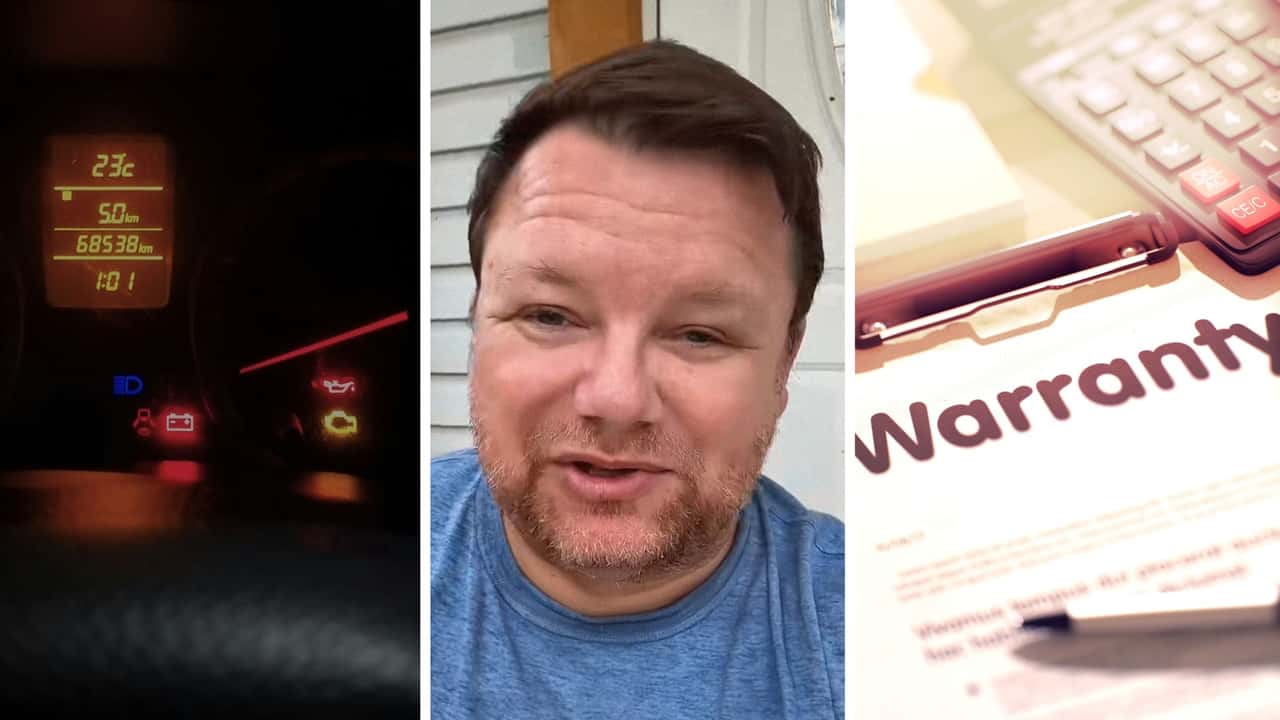
A father who purchased a used car so he could regularly visit his daughter in the hospital says he’s now $8,000 in the hole after its check engine light turned on 48 hours after he bought it.
The man, who goes by Drum Naysh (@drumnaysh) online, says that despite purchasing a warranty with the used Nissan, he was forced to sell it for less than a third of what he paid for it just a few months later.
In a TikTok about the Pathfinder, he says he was rolling around in an old Honda Accord. He says that he doesn’t have a regular income stream, budgeting for monthly car payments is a bit tricky. Which is why he opted to purchase a used vehicle outright.
After saving up and finding the Nissan, he checked it out and says everything initially looked great. The check engine light didn’t come on when he was driving and the seller assured him that everything was fine with the car. So he bought it.
However, his honeymoon with the Nissan was short-lived. Two days later, he says the check engine light came. He then took it to an O’Reilly Auto Parts for diagnostics. A rep from the store used an OBD-II scan tool to assess what was wrong with the car. However, the codes that came back didn’t display there was “anything immediate[ly]” wrong with the vehicle.
Naysh says he opted to buy a powertrain warranty for the car since it was used and he wanted peace of mind. He adds that the “aftermarket warranty” coverage should foot the bill for “anything catastrophic.” The only stipulation for the warranty was that the car needed to be driven a certain number of miles before a claim could be made.
Upon meeting that threshold, he decided to bring the car to three separate shops who he says diagnosed the car with a large number of problems. He says the biggest issue is that car’s history indicates it previously suffered a “catastrophic engine failure from engine sludge.”
While the warranty covered the timing change he needed, Naysh says it didn’t cover the engine sludge because it was a “pre-existing condition.”
He also claims the shop didn’t want to address the sludge issue because it couldn’t guarantee that their work would actually fix the problem.
According to Naysh, vehicle records from a Nissan dealership says that the car’s long engine block needed to be replaced due to sludge. Naysh says that this problem was diagnosed on the car “six weeks before” the dealership, Royal Premier Motors, sold him the car.
Naysh claims that the dealership refused to compensate him for the engine sludge problems because they sold it as is. Additionally, he said that the seller said that he took too long to get back to them about the vehicle’s problems. But Naysh said that he had no say in the matter as his car was in a shop for about a month.
“All of this is within the timeframe the warranty is still active,” he added, which only further compounded his frustration. “We’ve only had the vehicle since July. It’s been in the shop since the middle of September. So whenever our local Nissan dealership was unable to really do anything with it, they offered us a trade. They offered $3,000 for the vehicle. We had to trade it in to mitigate our losses,” he explains. Naysh notes that urgently needed a vehicle as he had to travel back and forth to the hospital in order to visit his daughter who is receiving care there.
He took a huge hit on the trade-in. He says he bought it for $10,000 and sold it for $3,000 a few months later.
“We wanna get compensated for the money that we lost. The used dealership is basically saying you know, hey, sucks to be us,” he told his viewers. Also, he said that Royal Motors said they weren’t informed of any damage to the car’s engine at the time of purchase. Now, Naysh says he and his family are doing “investigative work” to determine whether or not the engine sludge issues were disclosed at purchase.
Unfortunately, he says no lawyer would take the case because his potential damages aren’t high enough.
“We didn’t do anything wrong, we saved up money. Paid cash for a vehicle,” Naysh says. “And now I have a car payment, after the whole benefit of this thing was to not have a car payment. So I’m incurring damage on this whole thing.”
As is purchase agreements put buyers on the hook for any repairs after purchase. However, in many states, Texas included, laws protect consumers from deceptive or fraudulent business practices. The Texas Deceptive Trade Practices-Consumer Protection Act clearly indicates that companies can still be held liable if they are found guilty of misleading consumers about the condition of an item.
“A consumer may maintain an action where any of the following constitute a producing cause of economic damages… (1) the use or employment by any person of a false, misleading, or deceptive act or practice… (b)(1) In a suit filed under this section, each consumer who prevails may obtain: (1) the amount of economic damages found by the trier of fact. If the trier of fact finds that the conduct of the defendant was committed knowingly… or intentionally, the consumer may recover… a total of not more than three times actual damages…”, the legislation reads.
Naysh may be able to contend that, per the Motor Vehicle Commission’s rules and regulations for Texas, “the selling dealer has a responsibility to look to the issue of good title and accurate representations… [and] All records must be maintained and easily accessible to TxDMV personnel.”
Texas’ state DMV says: “Prohibited practices include using false, deceptive, or misleading representations relating to the sale or lease of a motor vehicle.” It also states that dealers are obligated to perform thorough inspections of vehicles and maintain records regarding mechanical viability.
So if the dealership is maintaining that they weren’t apprised of the car’s sludge issue, Naysh could argue that these records were freely available online, they had a duty to inspect the vehicle, and he wasn’t made aware of this problem.
Naysh told Motor1, “The Buyers Guide was marked As Is. What surprised us was everything else on that same paperwork. When we asked the salesperson to put the coverage in writing, they hand wrote: ‘3 month, 4500 mile, see docs’ right in the Dealer Warranty section of that Buyers Guide.”
He said they also sold him a third party service contract—with a pretty telling caveat.
“When we finally got a copy, it excluded sludge and anything that wasn’t working at the time of sale,” he added. “Later we learned that six weeks before we bought the car, a Nissan dealer’s repair order had recorded engine sludge, misfire codes and a needed engine replacement.”
He also said that the staff took the car to get its state emissions test. He claims the state records show a misfire code.
“Nobody mentioned it to us. We saved up and paid $10,992.56 cash in July, and by October we had to trade it in for $3,000,” Naysh said. “The dealer has denied any wrongdoing and declined a refund, so we’ve sent them a formal notice under the Texas Deceptive Trade Practices Act and filed complaints with the Texas DMV and the Texas Attorney General.”
“We’re not claiming to know what the dealer knew. We’re just pointing to what the records show, and hoping it helps someone else ask the right questions before they buy.”
Motor1 has contacted Royal Premier Motors via email for further information. We’ll update this if it responds.
We want your opinion!
What would you like to see on Motor1.com?
– The Motor1.com Team