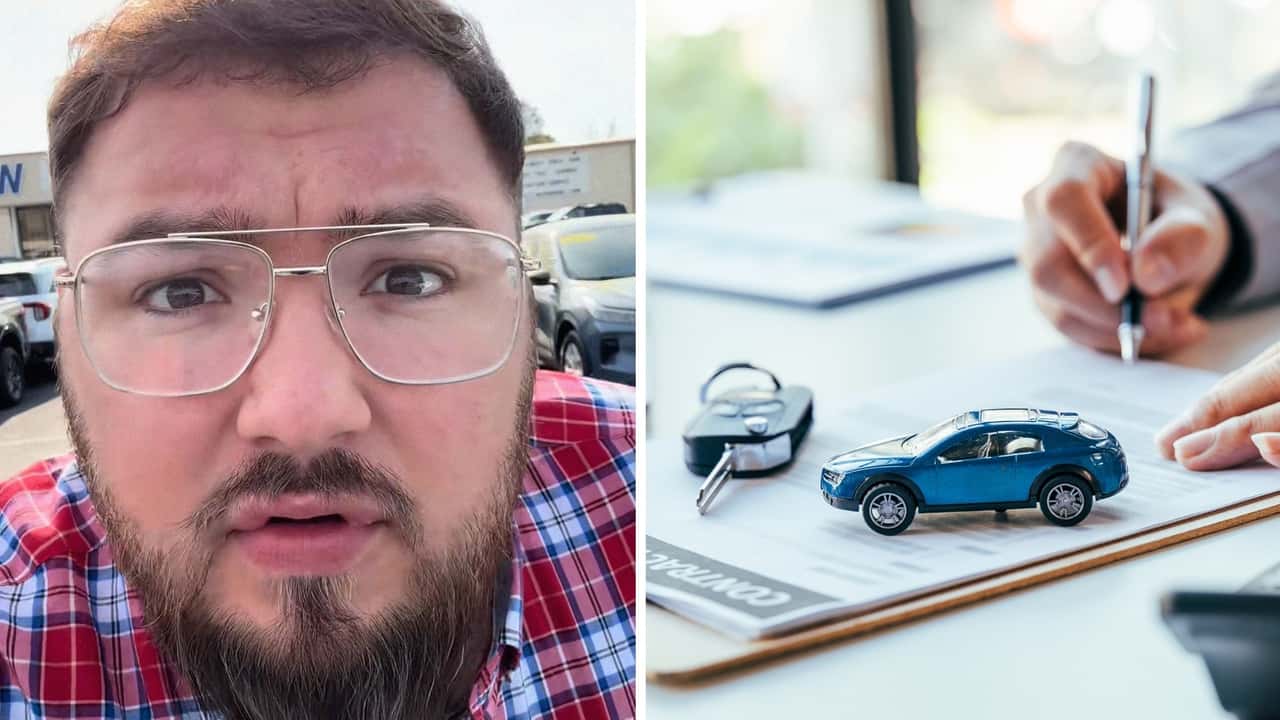
‘Dealerships are going to hate me for telling you this.’
A car seller is urging prospective buyers to save themselves money by ditching professional car negotiators.
Josh (@joshdealsonwheels), who sells cars out of Roanoke Rapids, North Carolina, shared some tips buyers can utilize in their own car-buying ventures. He contends that the premiums consumers pay to these negotiators aren’t necessary, just as long as they’re willing to follow a haggling protocol in their quest for the best car price.
“You do not need to pay someone $500 to $1,000 to negotiate your car deal. Let me tell you why,” the man says to his viewers. “This isn’t me saying that I hate what they do. I absolutely love what they do, you know, but what you’re paying for is their knowledge. And I’m here to give you that knowledge completely for free,” he promises.
Following this, the car enthusiast goes on to break down to viewers how car negotiators secure the best deals for their clients. “Number one: get pre-approved through your bank … two: do your research. If you’re buying a new vehicle, figure out the rebates and incentives and find the cheapest one out there,” he adds.
He went on to state the modus operandi used car buyers should follow as well: “Now, if you’re buying a pre-owned vehicle, what you need to do is figure out whether you’re getting a good deal. Use stuff like Autotrader,” he recommends.
Josh says that the number-one weapon auto dealerships have in their arsenal is a lack of awareness on the buyer’s part. And that’s what they use to extricate the most money out of their customers.
“Number three: don’t pay any hidden fees. So, if they’re throwing on hidden theft protection or hidden windshield repelling and stuff like that, you don’t need that stuff. Now, if you do, that’s completely your choice. But if the dealership is telling you that you have to pay for that stuff in order to get the vehicle, you can always go to a different dealership or negotiate it to where you don’t have to pay for it at all, and you get it for free,” he advises.
“Number four is gonna be negotiate. Stop using phrases like, ‘Is this the best you can do?’ Use phrases like, ‘If you can get to this number, I’m ready to buy it right now.’ Now this is next-level stuff. So what you’re going to do is call the dealership before you get there and get the out-the-door numbers and negotiate over the phone. That way you’re not wasting your time.”
Anyone who’s purchased a car through a dealership knows that it feels more like a war of attrition than a happy day of commerce. Sellers will perform a whole song-and-dance of checking numbers with a manager in a back room. Other employees of the chain will “check in” with you to make the sale feel like some consequential tribunal rather than a business attempting to squeeze as much money as possible from a person just trying to get a reliable car for their family.
So, avoiding the car dealership entirely would probably make many buyers very happy. But will dealerships even allow you to negotiate the price of a car outside of the showroom? As Josh mentions in his video, car sellers want to get you onto their own turf. This way, they can have the upper hand in negotiations and try to tire you out.
As this Money Under 30 post states, “Dealers hate negotiating by phone or email because they can’t apply as much pressure and because it’s easier for you to hang up or ghost them over email.” Furthermore, the same piece says that while buyers can indeed request a price this way, “good dealers will smooth-talk you into making an ‘appointment’ at the dealership without giving a price.” To combat this pressure, the author, a former car salesman, said you can apply pressure yourself. Just tell the sales rep that you’ll come in once you’ve worked out a firm price over the phone or by email. This way, you make a promise of sale, and they give you something in return.
Used Cars reinforces this fact, urging car buyers to simply hang up and contact another dealership if a seller won’t work out a deal over the phone. The outlet says that dealership visits can be time-consuming and frustrating, and that a visit to the showroom should be reserved for inspecting the car and signing on the dotted line for the previously agreed-upon price.
What’s more is that there are some car dealerships that have “no haggle” pricing policies. I.e., the amount listed for the car is what buyers pay. More sellers have embraced this business model after Carvana implemented selling structures, and Tesla introduced fixed pricing for its cars.
This particular practice has been scrutinized as offering a mixed bag of results for consumers. Real Car Tips says that whether buyers are given the best price largely depends on the dealership. As with any car purchase, customers should familiarize themselves with all available deals in their area and check the competition’s prices.
Being willing to travel can also net you big savings on a car. As Car Buyers USA writes, local demand for a vehicle can affect its pricing. For instance, if you’re living in an area with a booming agricultural industry, then you may not get a great deal on a large pickup truck. Conversely, smaller sedans like a used Hyundai Ioniq hybrid or a Toyota Prius may be subject to better negotiation in this same region. So, always check how long a car’s been sitting on a dealer lot. The longer it’s been waiting to be purchased, the better chance you have at whittling down its price, as car sellers will be itching to offload it.
Motor1 has reached out to Josh via email for more car-buying advice. We will update this story if he responds.
We want your opinion!
What would you like to see on Motor1.com?
– The Motor1.com Team