Jose Munoz argues Chinese brands could erode US margins like Europe unless tariffs and strict market-access rules stay firmly in place.
Jose Munoz has watched this movie before. Hyundai’s CEO spent roughly a decade running Nissan’s China operations, and on Thursday in San Jose, California, he told Reuters what that experience taught him about Washington’s next big automotive problem.
Chinese automakers have already gutted profit margins across Europe by undercutting rivals on price. Munoz warned the US could see the same pattern “at different levels” unless tariffs and other market-access rules stay in place.
Munoz was direct. Chinese vehicles are running 30% to 40% cheaper (roughly a third to nearly half the price) than competing models in markets like Italy, Spain and France, he said, even with the European Union’s tariffs and minimum-pricing rules on Chinese-built EVs already in effect.
Britain shows what happens without those guardrails. The country left the EU in 2020 and never matched Brussels’ tariffs, and Munoz says the result speaks for itself, as he told Reuters. “The UK, which in the past was a very profitable, very strong market, has become like China. All the top sellers are Chinese because there are no barriers.”
The numbers back him up. Chinese-branded cars made up more than 9% of EU sales in the first half of the year, per the European Automobile Manufacturers’ Association, while Britain’s Society of Motor Manufacturers and Traders put that figure at 15% of new registrations earlier this year.
Munoz is not calling for a total lockout. He wants Washington to attach specific conditions to any Chinese entry into the US market “to be able to minimize the impact,” while acknowledging bluntly that “the impact is going to be there for sure.” Ford CEO Jim Farley has voiced a similar timeline, telling employees in July that Chinese brands could realistically reach US shores within five to 10 years, a concern echoed elsewhere as Honda reacts to China’s growing strength as an auto parts supplier.
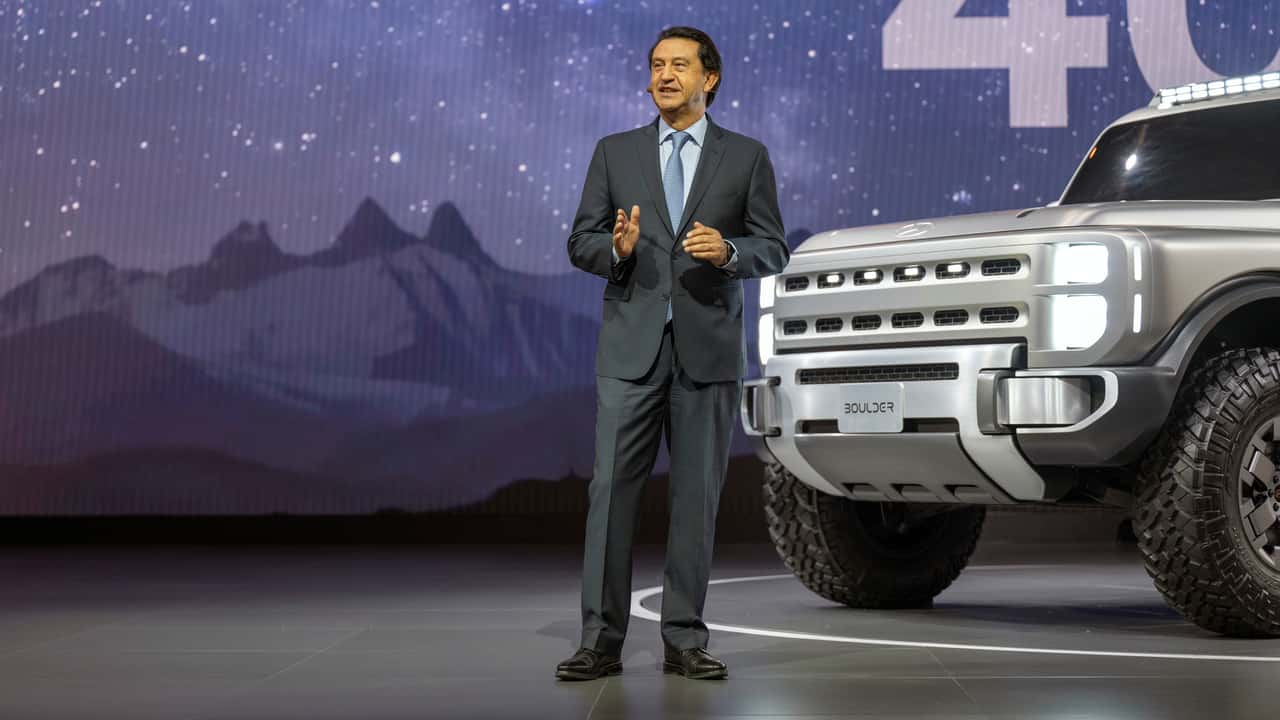
José Muñoz – President and CEO, Hyundai Motor Company at NYIAS 2026
The China warning was not the only news out of Munoz. Asked about Hyundai’s in-house Level 2++ driver-assistance system, the executive confirmed the company needs more time gathering data and validating safety before it ships.
That system, pitched as comparable to Tesla’s Full Self-Driving software, was originally targeted for late 2027. Hyundai Motor Group has now pushed the launch back to late 2029, a two-year slip the company attributes to safety validation rather than a technical dead end.
The delay lands at an awkward moment. Hyundai is simultaneously racing to expand US manufacturing, with plans to add 500,000 units of North American production capacity by 2030 and lift domestic parts sourcing above 80 percent from roughly 60 percent today.
Munoz has been candid about why that buildout matters beyond software timelines. He credits existing US tariff policy with accelerating Hyundai’s American manufacturing push, pointing to models like the Alabama-built Santa Fe as proof that localization already pays off under current trade rules.
Motor1’s Take: Munoz’s warning doubles as a progress report on the last few years of US industrial policy. Tariffs have not just kept some Chinese models out, they have pushed Hyundai and others to sink real money into US plants and suppliers.
The next fight is about the rules around any Chinese entry rather than a simple yes-or-no ban. If Washington ties access to local production, battery sourcing and safety standards, shoppers may still see cheaper vehicles, but more of the value will stay on this side of the ocean.
More From Hyundai:
Source:
Reuters
We want your opinion!
What would you like to see on Motor1.com?
– The Motor1.com Team