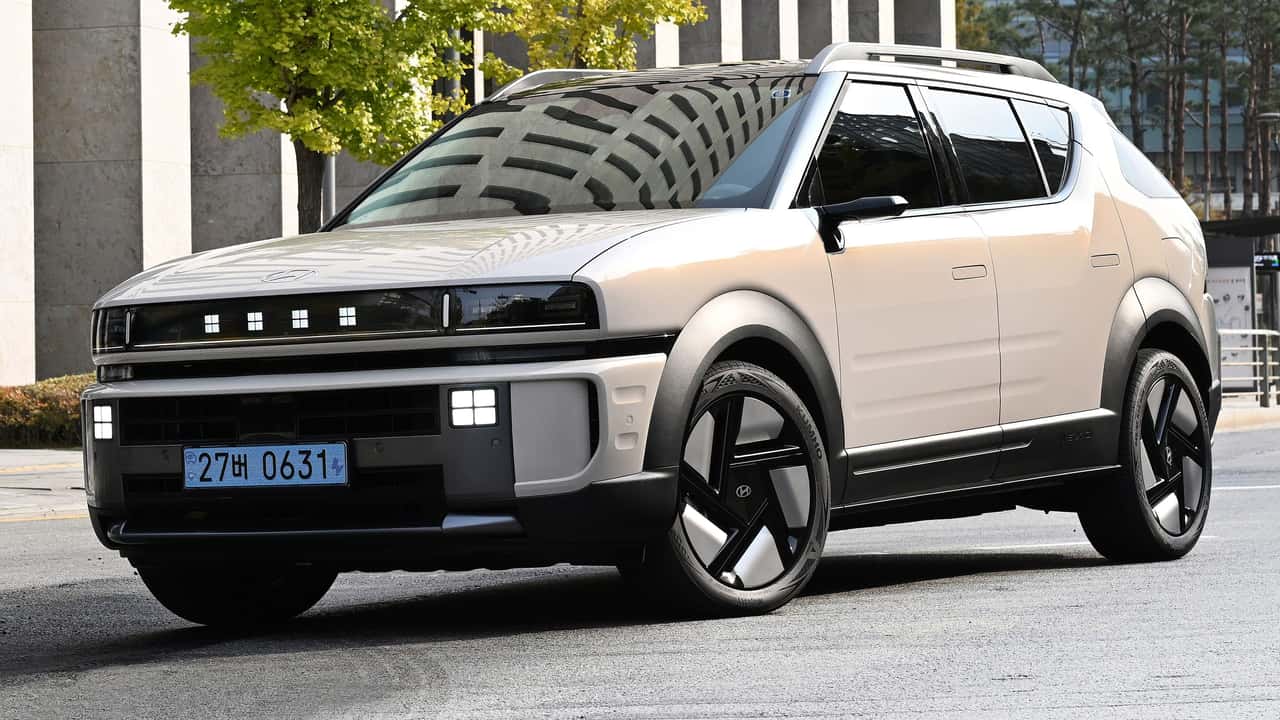
Hyundai remains committed to hydrogen but admits that attracting enough buyers is its main hurdle.
Hydrogen-powered cars haven’t exactly taken the world by storm, but Hyundai isn’t ready to abandon the technology. Despite battery-electric vehicles gaining momentum in many parts of the world, the South Korean automaker believes fuel-cell vehicles still have a place in the automotive industry. There’s just one major problem: finding enough customers willing to buy them.
“Hydrogen isn’t dead for passenger vehicles,” said Scott Nargar, Hyundai Australia’s Senior Manager of Future Mobility and Government Relations. Speaking to CarExpert magazine, he confirmed that the company is still evaluating its next-generation fuel-cell car but acknowledged that demand remains a major hurdle.
“The biggest thing is you’ve got to find is customers,” Nargar explained. It’s a straightforward assessment of the challenges facing hydrogen passenger cars. Developing the technology is one thing, but convincing enough people to buy a vehicle that depends on a limited refueling network is considerably harder.
2026 Hyundi Nexo
Hyundai has already gained experience with the Nexo, its hydrogen-powered crossover, and is considering what comes next. The second-generation model has yet to establish itself in more markets, but the company isn’t ruling out further investment in fuel-cell passenger vehicles.
The challenge isn’t unique to Hyundai. Toyota has also spent years developing hydrogen technology, most notably through the Mirai sedan, while BMW remains committed to fuel cells as an alternative to battery-electric powertrains. The German luxury automaker plans to introduce an iX5 Hydrogen later this decade. Toyota and BMW strengthened their partnership in 2024 to jointly develop a third-generation fuel-cell system and reduce production costs.
BMW’s involvement is particularly interesting because it doesn’t view hydrogen as a replacement for battery-electric vehicles. Instead, the German luxury brand sees fuel cells as another way to slash emissions. Toyota feels the same way by continuing to invest in battery-electric, hybrid, plug-in hybrid, and hydrogen powertrains.
2026 Hyundai Nexo interior
Of course, hydrogen passenger cars haven’t caught on for good reasons. Fuel-cell technology remains expensive, and the severe lack of refueling stations makes ownership impractical, if not downright impossible, in many markets. Unlike battery-electric vehicles, which benefit from a rapidly expanding charging network and the convenience of home charging, hydrogen cars require dedicated infrastructure that’s costly to build and maintain.
Nargar also acknowledged that hydrogen technology remains more expensive than battery-electric alternatives. Even commercial vehicles face a considerable cost premium over traditional combustion-powered trucks and electric alternatives.
That doesn’t mean Hyundai sees no potential. The company believes hydrogen could play a role in future transportation, particularly in markets with the natural resources to produce it using renewable energy. However, expanding the refueling network and making the technology more affordable will be essential to attracting private buyers.
For now, Hyundai, Toyota, and BMW are keeping the technology alive, even as the industry increasingly shifts its attention toward battery power. Hydrogen is highly unlikely to become the dominant solution for passenger cars, but these automakers clearly aren’t ready to write it off. The technology has a future; finding enough people willing to pay for it is another matter.
Not every automaker shares Hyundai’s, Toyota’s, and BMW’s commitment to hydrogen. Several major players have scaled back or abandoned their fuel-cell ambitions altogether, choosing to focus their resources on battery-powered EVs instead. Mercedes, for example, discontinued development of hydrogen fuel-cell passenger cars after years of research, while Honda ended production of the Clarity Fuel Cell.
Other manufacturers, including Volkswagen, have also cooled on the technology, arguing that battery-electric powertrains offer a more practical and efficient route to zero-emission motoring in passenger cars. Stellantis went a step further in 2025, scrapping its hydrogen fuel-cell program and canceling plans for hydrogen-powered commercial vans because of limited infrastructure and a lack of commercial viability.
General Motors also decided to discontinue next-generation fuel-cell development, shifting its focus to battery EVs. These decisions highlight how difficult it has become to justify investing billions in a technology that still struggles to attract customers, especially when the refueling infrastructure isn’t anywhere near ready to support multiple hydrogen models in series production.
Hydrogen Isn’t Dead:
Source:
We want your opinion!
What would you like to see on Motor1.com?
– The Motor1.com Team